
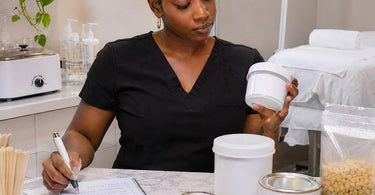
Quality wins every time... but smart purchasing makes sure quality does not eat your entire profit margin for breakfast! If you have ever compared professional waxing supplies from different suppliers, you know the frustration. One supplier sells wax in 14-ounce cans, another offers 800-gram bags, and a third advertises a spectacular deal on a five-pound package. Suddenly, choosing wax feels less like running a successful beauty business and more like taking a surprise math exam. The good news? Once you understand how to compare wax pricing when suppliers use different package sizes, you can identify genuine savings, avoid misleading bargains, and make purchasing decisions that protect your bottom line without compromising your clients' experience.
For busy salon owners, waxing specialists, and spa managers, professional wax purchasing is about much more than finding the lowest sticker price. Package sizes, product usage, shipping charges, formula performance, and inventory turnover all influence what you actually spend. A little math today can prevent a lot of expensive surprises tomorrow.
Why Comparing Wax Package Prices Can Be So Confusing
Professional wax manufacturers package their products in numerous formats. Hard wax may arrive in one-pound bags, 2.2-pound bags, kilogram packages, or larger bulk quantities. Soft wax frequently comes in cans labeled by ounces, milliliters, or grams. Roll-on wax is generally sold in cartridges, sometimes individually and sometimes by the case.
These packaging differences make direct price comparisons surprisingly difficult. A $19 container might look more affordable than a $45 bag, but the larger package could contain significantly more usable product.
There is another complication: different suppliers sometimes describe package quantities using different measurements. Comparing pounds with kilograms is manageable once you convert the units. Comparing a container labeled in milliliters with one labeled in ounces requires extra care because fluid volume and product weight are not interchangeable.
The solution is to establish a consistent measurement system before comparing prices.
Step 1: Convert Wax Packages Into the Same Unit of Measurement
The most reliable starting point is calculating the price per unit of wax. For products sold by weight, choose either grams or ounces and convert every package into that same unit.
Here are several useful conversions:
- 1 pound = 16 ounces by weight.
- 1 kilogram = approximately 2.205 pounds.
- 1 kilogram = 1,000 grams.
- 1 ounce by weight = approximately 28.35 grams.
- 2.2 pounds = approximately 998 grams.
For example, imagine Supplier A offers a 14-ounce package of hard wax for $18, while Supplier B offers a 2.2-pound bag for $38.
Supplier A: $18 divided by 14 ounces = approximately $1.29 per ounce.
Supplier B: 2.2 pounds multiplied by 16 = 35.2 ounces. Then $38 divided by 35.2 ounces = approximately $1.08 per ounce.
Although Supplier B has a considerably higher package price, its wax costs approximately 21 cents less per ounce.
That difference can become meaningful when your waxing room is booked from morning until evening.
Step 2: Calculate the Price Per Ounce or Gram
The basic wax pricing formula is simple:
Price per unit = Package price divided by total package quantity in the same unit.
Consider three hypothetical professional hard wax options:
- Wax A: 16 ounces for $22 = $1.38 per ounce when rounded.
- Wax B: 35.2 ounces for $42 = $1.19 per ounce.
- Wax C: 80 ounces for $88 = $1.10 per ounce.
Wax C offers the lowest unit price in this example, but that does not automatically make it the right choice for every waxing studio.
A busy salon performing dozens of waxing services each week might use that larger package quickly. A solo esthetician offering occasional waxing appointments may prefer a smaller package that preserves cash and reduces long-term storage requirements.
Explore Bulk Wax Deals to compare purchasing options, but remember that bigger only means better when the savings make sense for your actual business.
Step 3: Watch Out for Weight Versus Volume Measurements
This detail deserves special attention because it can quietly sabotage an otherwise excellent pricing comparison.
Some soft wax containers are labeled in fluid ounces or milliliters, which measure volume. Others display ounces or grams by weight. These quantities are not necessarily equivalent.
A 500-milliliter can of wax does not automatically contain 500 grams of product. Wax density varies by formulation, so accurate weight comparisons require the manufacturer's net weight information or a documented density conversion.
Similarly, 16 fluid ounces does not necessarily equal 16 ounces by weight.
If two suppliers list only volume, compare their prices per milliliter or fluid ounce. If one lists volume and another lists weight, request the net weight or reliable product specifications before making a direct comparison.
Never assume that a familiar-looking number represents the same amount of actual wax. Your calculator is helpful, but it cannot magically turn milliliters into grams without additional information!
Step 4: Compare Hard Wax, Soft Wax, and Roll-On Wax Separately
Different wax formats serve different purposes, and their purchasing costs should be evaluated in the context of the services they support.
Hard Wax Pricing
Professional Stripless Hard Wax is commonly selected for services involving smaller or more sensitive areas, including brows, underarms, and bikini waxing. Because the wax itself forms the removable strip, separate removal strips are generally unnecessary.
Hard wax may be offered as beads, pellets, tablets, blocks, or other formats. The physical shape does not establish how much wax you will use during treatment. Application thickness, flexibility, working characteristics, and technician technique all affect consumption.
When comparing hard wax suppliers, evaluate cost per ounce alongside practical performance during your actual services.
Soft Wax Pricing
Soft Strip Wax for Effective Salon Hair Removal is typically applied in thin layers and removed with waxing strips. It is frequently used for larger body areas, depending on the formula and service protocol.
A lower soft wax price may be appealing, but your overall service calculation should also include wax strips and rolls, applicators, and any differences in product consumption.
A formula that spreads efficiently may offer a competitive cost per service even when its container price is higher.
Roll-On Wax Pricing
Roll-On Wax Cartridges introduce another purchasing consideration: the cartridge itself.
Compare the amount of usable product, cartridge price, compatible heating equipment, and expected number of treatments per cartridge. Confirm whether cartridges are sold individually or as multipacks and whether the advertised price represents one cartridge or the complete package.
Comparing different wax formats solely by their unit prices can be misleading. The more useful comparison is the total cost of completing the same service with each suitable system.
Step 5: Calculate Your Real Wax Cost Per Service
Knowing the price per ounce is valuable. Knowing your cost per appointment is even better.
Imagine your preferred hard wax costs $1.10 per ounce. Through normal service tracking, you determine that your studio uses an average of 2.5 ounces during a particular waxing treatment.
Your wax expense is approximately $2.75 per service.
Now imagine switching to another suitable formula costing $1.35 per ounce. If that product requires only 1.8 ounces for the same treatment, the wax expense is approximately $2.43.
Surprise! The more expensive wax per ounce is actually less expensive per completed service.
This is why experienced purchasing decisions consider application efficiency rather than relying exclusively on supplier pricing.
To measure your own usage, track the amount of wax consumed across a representative group of appointments. Record the starting and ending product weight, account for unused product and waste, and divide total consumption by the number of services.
Repeat the process for different treatment categories, since an eyebrow wax and a full-leg wax have very different consumption patterns.
Step 6: Include Every Disposable Supply in Your Service Cost
Wax is the star of the appointment, but the supporting cast still expects to be paid.
A realistic waxing supply budget should account for more than the primary formula.
Include the estimated cost of:
- Professional wax spatulas and applicators.
- Disposable waxing strips, when required.
- Single-use gloves and other appropriate protective supplies.
- Pre-wax cleansing products.
- Post-wax skin care products.
- Disposable table coverings and other treatment-room consumables.
- Product waste and materials consumed during normal setup or cleanup.
For example, a hypothetical service might require $2.40 in wax, $0.45 in applicators, $0.35 in strips, and $0.80 in additional consumables. That creates a total direct materials cost of $4.00.
These figures are illustrative, not universal service averages. Your actual expenses depend on your procedures and the products you select.
Browse Pre & Post-Waxing Products when planning the full supply requirements of your treatment menu.
Step 7: Factor Shipping Into Your Wax Pricing Comparison
Picture this: you discover an amazing wholesale wax price, celebrate your purchasing brilliance, and reach checkout. Suddenly, the shipping charge arrives like an uninvited guest who expects the nicest chair.
Shipping can substantially change the actual cost of wax, especially with heavy bulk orders.
Suppose Supplier A charges $40 for 35.2 ounces of wax, plus $12 shipping. The total delivered cost is $52, or approximately $1.48 per ounce.
Supplier B charges $44 for the same weight and offers shipping at no additional charge. Its delivered cost is $1.25 per ounce.
Supplier B is more economical in this example despite the higher product price.
Always evaluate the final delivered cost, including applicable shipping, handling, taxes, and other relevant charges. When one shipment contains multiple products, use a consistent and reasonable method to allocate shared shipping expenses.
Be aware that promotional shipping thresholds, restrictions, and delivery policies may change. Verify the terms applicable to your order instead of assuming that yesterday's deal is still available.
Step 8: Evaluate Bulk Discounts Without Overbuying
Wholesale discounts can make a meaningful difference for high-volume waxing businesses. Purchasing larger quantities may reduce unit costs and minimize the frequency of reordering.
However, a discount only creates savings when the purchased inventory can be used appropriately.
Before placing a large order, ask yourself:
- How many waxing services do we perform during an average month?
- How much wax do we consume per service?
- How long will the proposed order last?
- Does the product have manufacturer-specified storage conditions or shelf-life limitations?
- Do we have enough suitable storage space?
- Will this purchase interfere with cash needed for payroll, rent, or other essential expenses?
A studio that consistently uses 15 pounds of wax per month may benefit from larger purchasing quantities. A boutique salon using two pounds monthly needs to assess the economics differently.
The goal is not to own the most wax in the neighborhood. The goal is to have the right amount of dependable product available when clients book.
Step 9: Compare Formula Performance Before Committing to a Supplier
Professional wax products are not interchangeable simply because they have similar package weights or attractive prices.
Application characteristics, flexibility, melting behavior, working temperature instructions, and suitability for specific services can influence both product consumption and treatment efficiency.
For example, if one suitable formula spreads consistently and allows a technician to complete the treatment without unnecessary reapplication, it may reduce material consumption and support a more efficient appointment.
Conversely, a less expensive wax that requires frequent additional applications may increase both material expenses and service time.
When evaluating options from collections such as ItalWax, Berodin, Cirepil, and Waxness, compare the specific formulas that meet your service requirements rather than assuming every product within a brand performs identically.
Review manufacturer instructions and ingredient information, confirm equipment compatibility, and use an appropriate evaluation process before introducing a new product into regular services.
Client comfort, treatment consistency, and safe professional technique should never be sacrificed for a few cents in theoretical savings.
Step 10: Build a Wax Supplier Comparison Spreadsheet
You do not need complicated accounting software to make better purchasing decisions. A straightforward spreadsheet can organize your options and make genuine price differences easier to spot.
Create a separate row for each product and record the following information:
- Supplier and wax product name.
- Wax type and formula.
- Package quantity and measurement unit.
- Price per package.
- Number of packages required for any discount.
- Total order cost and applicable delivery charges.
- Delivered cost per ounce or gram.
- Average quantity consumed per service.
- Estimated wax cost per service.
- Storage requirements and expected inventory turnover.
For an additional layer of analysis, include your estimated monthly appointment volume and calculate the projected monthly wax expense for each option.
For example, if you complete 120 appointments monthly and one suitable wax costs $2.80 per service while another costs $2.35, the difference is $54 per month, or $648 across 12 months at that same volume.
Those savings are worth considering, especially when multiplied across several treatment categories. However, they should be weighed against any additional equipment expense, training, product waste, or differences in treatment time.
Step 11: Do Not Forget Equipment and Compatibility Costs
Changing wax suppliers or formats can occasionally require changes to the equipment used in your treatment room.
For instance, switching from traditional wax cans to a different heating system may involve purchasing compatible warmers, inserts, or cartridge heaters.
Review your existing Professional Wax Warmers for Salons & Spas before making a purchasing decision.
If a new system requires an additional $180 investment and reduces your wax expense by $0.60 per appointment, you would need approximately 300 appointments to recover that equipment cost through wax savings alone.
That calculation assumes the estimated savings remain consistent and excludes any differences in labor, accessories, maintenance, or other operating expenses.
Knowing the approximate break-even volume helps you decide whether a change supports your business goals or simply creates another piece of equipment that needs a home.
Step 12: Establish a Consistent Wax Reordering Strategy
Once you identify the right purchasing arrangement, develop a reliable system for maintaining inventory.
Begin by calculating average weekly consumption. Then consider your supplier's normal delivery schedule, order processing time, and the amount of backup inventory appropriate for your appointment volume.
A simple reorder-point calculation is:
Average daily wax consumption multiplied by supplier lead time in days, plus appropriate safety stock.
For example, if your studio consumes 12 ounces daily and your supplier typically requires five days for delivery, you would expect to use approximately 60 ounces during that period. Adding a suitable safety-stock allowance can help protect against delivery delays or unexpectedly busy booking periods.
Keep track of actual lead times and adjust your reorder quantities as your appointment volume changes.
Reliable inventory is especially important when your clients expect consistent services and your staff depends on familiar formulas.
Common Wax Pricing Mistakes That Can Hurt Salon Profits
Even experienced business owners occasionally make purchasing decisions that look excellent on paper but disappoint in practice.
Watch for these common mistakes:
- Comparing package prices instead of unit prices: A lower purchase price does not necessarily mean better value.
- Mixing weight and volume: Grams, ounces by weight, milliliters, and fluid ounces must be handled correctly.
- Ignoring shipping charges: Always compare delivered costs.
- Assuming all wax formulas require the same amount: Actual consumption depends on the product and service technique.
- Buying excessive inventory: Large orders can tie up cash and create unnecessary storage challenges.
- Overlooking accessories: Strips, applicators, and other consumables influence total service cost.
- Switching without evaluating performance: A lower-cost product is not necessarily the better choice for every treatment.
- Forgetting equipment expenses: New formats may require additional tools or compatible heating systems.
A few minutes of careful comparison can prevent these small mistakes from becoming expensive habits.
How Pure Spa Direct Helps Professionals Shop More Strategically
Pure Spa Direct understands that professional waxing businesses need dependable supplies, practical purchasing options, and products suited to real treatment-room demands.
As a professional beauty and wellness distributor, Pure Spa Direct offers access to a broad selection of waxing products and related supplies from established brands. That variety allows salon owners and estheticians to explore different wax formats, package quantities, and supporting products while planning their purchasing strategy.
Whether you are evaluating hard wax, replenishing soft strip wax, exploring bulk wax purchasing options, or assembling supplies from Complete Waxing Kits for Salons & Spas, comparing your options with a clear cost-per-service method helps you shop with greater confidence.
The best buying decision is the one that supports your service quality, inventory needs, and long-term profitability.
Frequently Asked Questions About Comparing Wholesale Wax Prices
Is Buying Wax in Bulk Always Cheaper?
Not necessarily. Bulk packages often offer lower unit prices, but shipping charges, purchasing minimums, storage requirements, and unused inventory can reduce or eliminate those savings. Compare the total delivered cost and expected usage before ordering.
Should I Compare Wax Prices Per Pound or Per Ounce?
Either measurement works as long as you use the same unit for every product being compared. Many professionals find ounces convenient for calculating service consumption, while grams can be useful for products labeled in metric measurements.
How Do I Compare a 500-Milliliter Wax Can With a One-Pound Wax Package?
You need reliable weight information for the product measured in milliliters, or an appropriate density conversion. Milliliters measure volume, while pounds measure weight. Without additional information, the quantities cannot be compared directly on a weight basis.
What Matters More: Price Per Ounce or Price Per Service?
Both are useful, but cost per service is generally more meaningful for operational purchasing decisions. It reflects how much product your studio actually uses to complete an appointment and can reveal differences that unit pricing alone misses.
How Often Should a Salon Review Its Wax Purchasing Costs?
A monthly or quarterly review is a practical starting point for many businesses. Review sooner if supplier pricing changes, service volume shifts substantially, shipping policies change, or you introduce a new waxing formula.
Can a More Expensive Professional Wax Save Money?
Yes. A higher-priced wax may cost less per completed treatment if it requires less product or supports more efficient application. Test the economics using your own service consumption records rather than assuming the lowest unit price always produces the lowest treatment cost.
The Bottom Line: Compare the Cost, Not Just the Container
Learning how to compare wax pricing when suppliers use different package sizes gives professional beauty businesses an important advantage. By standardizing measurements, calculating delivered unit costs, tracking actual product consumption, and accounting for the complete treatment process, you can make smarter purchasing decisions with greater confidence.
Remember that the lowest sticker price is not automatically the lowest operating cost. A carefully selected wax should fit your services, perform consistently, support your technicians, and make financial sense for your appointment volume.
Ready to put those numbers to work? Explore Waxing Supplies for Professionals and Bulk Wax Deals at Pure Spa Direct to discover purchasing options for your business.
Because your treatment room should be working hard to make clients feel fabulous, not working overtime to pay for wax!
