
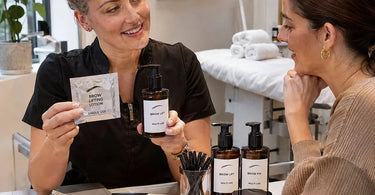
Smart solutions, great results... and fewer half-empty brow treatment containers collecting dust in your supply cabinet! Choosing between single-use and multi-use packaging might seem like a tiny purchasing decision, but for busy beauty professionals, it can affect everything from treatment consistency and sanitation to appointment profitability. Whether your business specializes in brow lamination supplies, professional tinting, brow henna, or complete eyebrow transformations, the packaging surrounding your favorite formulas deserves just as much attention as the formulas themselves. After all, gorgeous brows are wonderful, but gorgeous brows with a sensible cost per treatment? Now we are talking business!
Single-use sachets, individual treatment portions, tubes, bottles, jars, and dispensing systems each offer distinct advantages. The trick is understanding how your service volume, product stability, sanitation procedures, and actual consumption influence which option delivers the greatest value. A package that looks economical on the shelf may become surprisingly expensive when unused product expires, while individually packaged treatments can sometimes justify their higher unit cost through convenience and reduced waste.
Here is how professional brow artists, estheticians, salon owners, and spa managers can compare packaging formats without sacrificing quality, efficiency, or their carefully managed supply budgets.
What Is the Difference Between Single-Use and Multi-Use Brow Treatment Packaging?
Single-use brow treatment packaging contains a designated amount of product intended to be opened and used according to the manufacturer's instructions, often for one treatment or a defined application. Common examples include sealed sachets of brow lamination solution, individually portioned conditioning treatments, and disposable treatment ampoules.
Multi-use packaging contains enough product for multiple applications and is designed to be dispensed repeatedly while remaining usable under the manufacturer's stated storage and handling conditions. Examples include professional tint tubes, pump bottles, squeeze containers, and larger jars of brow treatment products.
One important distinction: packaging size alone does not determine whether a product is truly single-use. Some small sachets have manufacturer-approved storage instructions after opening, while others must be discarded immediately. Similarly, a large container is not automatically suitable for repeated professional use unless its formulation, packaging, and manufacturer instructions support that application.
Always treat the specific product label as the deciding authority rather than assuming that every sachet or bottle follows the same rules.
Single-Use Brow Packaging: Small Portions With Big Practical Advantages
Single-use packaging is particularly attractive for professionals who value predictable preparation, simple inventory management, and minimal exposure of unused product to the treatment environment.
Consider a brow artist offering lamination services only a few times per week. Opening a large container of processing solution might appear economical initially, but that advantage disappears if the product must be discarded before the salon can use the remaining contents.
Individually sealed portions can help solve this problem by keeping unopened product protected until needed.
Advantages of single-use packaging include:
- Reduced exposure: Unopened portions remain sealed until the scheduled treatment.
- Predictable allocation: Designated portions make treatment consumption easier to estimate.
- Convenient preparation: Preportioned formulas can simplify workstation setup.
- Inventory flexibility: Professionals can open only the quantities needed for appointments.
- Freshness management: Unused sealed portions avoid the repeated opening associated with larger containers.
- Travel convenience: Compact sachets can make organizing approved mobile brow service supplies easier.
Single-use packaging is especially useful for newer service menus, occasional appointments, seasonal demand, and specialized brow treatments with limited booking frequency.
However, individual packaging is not automatically waste-free. A sachet may contain more product than one client requires, and leftover material might need to be discarded. Each portion also introduces its own packaging material, which can increase the amount of packaging discarded per treatment.
And yes, opening several tiny packets while wearing gloves can occasionally feel like performing origami during a very important eyebrow emergency. A little workstation preparation goes a long way.
Multi-Use Brow Packaging: More Product, More Flexibility, and More Responsibility
Multi-use containers can be excellent choices for established brow studios with steady appointment schedules. Larger packaging often provides a lower purchase price per milliliter or gram, especially when professionals consistently consume the product before its approved expiration or discard date.
For example, a technician performing numerous weekly tinting appointments might find that a professional tube of color provides convenient portion control and favorable treatment economics.
Professionals comparing options within professional lash and brow tint should consider container design alongside shade selection, developer compatibility, and the manufacturer's application instructions.
Advantages of multi-use packaging include:
- Potentially lower unit costs: Larger quantities may reduce the cost of purchasing each usable unit.
- Adjustable portions: Technicians can dispense quantities appropriate for different treatments.
- Less individual packaging: One container may replace numerous separately wrapped portions.
- Convenient access: Frequently used formulas remain available for repeated appointments.
- High-volume efficiency: Busy salons may consume products quickly enough to minimize expiration-related waste.
The disadvantages become more significant when products are opened infrequently, exposed to air repeatedly, dispensed improperly, or stored outside the recommended conditions.
A bargain-sized bottle is not a bargain if half of it gets thrown away. Your supply closet may appreciate the company, but your profit margin probably will not.
Compare the True Cost Per Brow Treatment, Not Just the Package Price
One of the most common purchasing mistakes is comparing the sticker prices of two products without calculating how much usable product each package actually provides.
The relevant question is not simply which package costs less. It is which packaging format delivers the lowest practical cost per completed service while maintaining the required standards for product performance and hygiene.
Use this basic formula:
Usable product cost per treatment = Total product purchase cost divided by the number of treatments actually completed from that purchase.
For a more complete comparison, add any incremental disposable supplies, packaging-related handling expenses, and discarded product costs that are not already reflected in the usable-treatment calculation.
Imagine a salon evaluating two hypothetical brow treatment formats.
Option A: Single-use sachets
- Box purchase price: $48
- Usable individual treatment portions: 12
- Completed treatments: 12
- Product cost per treatment: $4.00
Option B: Multi-use bottle
- Container purchase price: $60
- Nominal capacity: 25 treatments
- Actual treatments completed before required disposal: 15
- Actual product cost per treatment: $4.00
Although the bottle offers a theoretical cost of $2.40 per treatment if all 25 portions are used, its actual cost rises to $4.00 when only 15 treatments are completed. In this illustrative scenario, both formats have identical usable product costs.
If the salon uses all 25 bottle portions safely within the permitted period, the multi-use format becomes significantly less expensive per service. If the salon completes fewer appointments, individual sachets may become the more economical choice.
These figures are examples rather than current product prices or manufacturer yield claims. Actual results depend on the formulation, recommended application quantity, usable life, and service volume.
Freshness and Product Stability: Why Packaging Matters
Brow treatment formulas are not all equally sensitive to environmental exposure. Some products contain ingredients whose performance can change after opening, particularly when air, moisture, temperature, or repeated handling affects stability.
This consideration is especially important for chemical processing systems used in professional brow lamination.
Depending on the formulation, repeated exposure to air may influence product performance over time. Properly sealed, unopened individual portions can help limit that exposure until the treatment begins.
Multi-use containers may also preserve product effectively when their formulation and packaging are specifically designed for repeated dispensing.
Before purchasing, check these details:
- The expiration date or recommended shelf life before opening.
- The manufacturer's stated usable period after opening.
- Required storage temperature and humidity conditions.
- Whether refrigeration is permitted, required, or prohibited.
- Instructions for resealing or protecting the container.
- Warnings regarding changes in color, odor, texture, or performance.
- Whether the product must be discarded immediately after opening.
Do not assume an opened sachet remains safe or effective for several days simply because another brand permits that practice. Manufacturer-approved handling periods can vary considerably between products and individual processing steps.
Similarly, never extend a product's usable life based only on its appearance. A formula can lose intended performance without displaying an obvious visual change.
Salon Hygiene: The Packaging Is Only Part of the Protection
Clean packaging supports professional sanitation, but it cannot replace proper handling procedures. Both single-use and multi-use products can become contaminated through incorrect dispensing, dirty implements, or unsuitable storage.
For products intended for multiple clients, dispense the required quantity into a clean, appropriate treatment container without allowing used tools or applicators to contact the remaining stock.
Never return leftover client portions to the original package. Discard excess dispensed product according to the manufacturer's directions and applicable sanitation requirements.
Professionals can support a consistent workflow with applicators and spatulas, appropriate mixing bowls, and protective gloves selected for the service.
Reusable tools must be cleaned and disinfected as required by their intended use, manufacturer instructions, and applicable regulations. Disposable applicators must not be reused between clients.
Work surfaces and reusable equipment also need appropriate cleaning and disinfection between appointments. Browse professional cleaners and disinfectants to support your salon's established sanitation program.
Remember that single-use packaging does not automatically mean sterile packaging. Unless a product specifically claims and documents sterility, do not describe it as sterile merely because it comes in an individually sealed portion.
How Treatment Volume Changes the Best Packaging Choice
Appointment frequency should play a major role in purchasing decisions. A brow bar completing dozens of services each week has different consumption patterns than a facial spa offering occasional brow enhancements.
Low-volume brow services: Individually packaged treatments can make sense when appointments are infrequent or unpredictable. Sealed portions help avoid opening more formula than the schedule requires.
Moderate-volume brow services: A combination of formats may work well. Popular products can be stocked in multi-use containers, while less frequently requested treatments remain in individual portions.
High-volume brow studios: Multi-use packaging may provide favorable economics when technicians use the contents consistently within the manufacturer's approved timeframe.
Multiple treatment rooms: Individual packages can simplify distributing treatment portions among stations. Multi-use containers may also work when each station has a properly managed dispensing and inventory system.
Mobile brow professionals: Compact sealed portions may reduce the number of opened containers transported between locations, although travel and storage must still follow product labeling and local requirements.
Rather than selecting a single packaging policy for every brow service, match each product to the way your team actually uses it.
Packaging Choices for Brow Lamination, Tinting, and Henna
Different eyebrow treatments create different packaging requirements. Reviewing product categories individually helps professionals avoid an overly simplified purchasing strategy.
Brow lamination: Processing lotions, neutralizing solutions, and conditioning treatments may have different stability requirements. Sachets are common for measured processing steps, while certain supporting products may be supplied in bottles or tubes. Always follow the complete system instructions rather than mixing products or changing processing methods based on packaging convenience.
Brow tinting: Professional color products are frequently available in tubes or other multi-use formats. Controlled dispensing allows technicians to prepare an appropriate amount of product for each service. Explore options from Refectocil Original, Intensive Tint, and other professional tint collections while checking the packaging and directions of each specific item.
Brow henna: Depending on the system, products may be supplied in small packets, jars, or other containers. Moisture protection, measuring accuracy, and storage instructions are important considerations. Professionals comparing brow henna should review preparation requirements and approved storage conditions rather than choosing solely by package weight.
Brow finishing and conditioning: Certain serums and grooming products may be designed for repeated use through pumps, tubes, or controlled dispensing systems. These packages can be convenient when they effectively protect the contents and fit the salon's usage patterns.
Regardless of treatment type, confirm that each formula is approved for the intended brow-area application. Follow manufacturer directions for client screening, allergy testing where indicated, application procedures, and precautions around the eyes.
Compare Tubes, Pumps, Jars, and Sachets
Two products can both qualify as multi-use while offering very different dispensing experiences. Container design can affect convenience, product exposure, and the amount of material left behind.
Sachets: Useful for measured portions and maintaining the unopened portions separately. Consider opening convenience, portion size, and disposal requirements.
Squeeze tubes: Often suitable for controlled dispensing of creams and tint formulas. Evaluate how easily the product can be measured and whether the closure remains clean.
Pump bottles: Can provide convenient dispensing with limited direct contact with the bulk product when used correctly. However, not every pump produces an exact measured dose, so verify actual output.
Jars: May offer straightforward access to creams or powders but require particular attention to clean dispensing methods. Never dip previously used implements into shared product.
Dropper containers: Can provide controlled delivery for suitable liquid formulas. Avoid allowing the dropper tip to contact skin, tools, or other potentially contaminated surfaces.
For compatible products that are specifically approved for transferring, suitable bottles and jars may support organized salon storage. However, do not repackage reactive brow processing chemicals unless the manufacturer explicitly permits it. Container compatibility, labeling, identification, and stability matter.
Do Single-Use Packages Always Create More Waste?
Not necessarily. Packaging waste and discarded product are two separate factors that need to be evaluated together.
Individual sachets typically introduce more separate packaging components per treatment, but they may prevent a salon from discarding substantial quantities of expired or unusable formula.
Larger containers may generate less packaging waste relative to the quantity purchased, provided the product is consumed before it must be discarded.
For an accurate comparison, monitor both empty packaging and unused formula. A large bottle that is routinely discarded half-full may not deliver the environmental or financial advantages initially expected.
Recyclability also depends on the actual packaging materials and local recycling capabilities. Do not assume a sachet, laminated pouch, pump, or plastic tube is recyclable without checking the relevant material and disposal guidance.
The practical goal is to select the smallest overall waste burden that still supports safe, consistent treatment delivery.
Build a Brow Treatment Inventory System That Prevents Expensive Surprises
Even excellent packaging cannot compensate for poor inventory rotation. A simple tracking system can help salons understand their actual usage and identify products that consistently expire before being consumed.
Record each product's name, lot number when available, purchase date, expiration date, opening date, manufacturer-approved after-opening period, and typical consumption per service.
For multi-use products, clearly identify the required discard date after opening and ensure staff follow it. For individually packaged products, track how many sealed portions remain and when their expiration dates occur.
Use a first-expiring, first-out approach when organizing eligible stock. Store products under the conditions required by their labels, and avoid exposing temperature-sensitive supplies to excessive heat or sunlight.
Salon managers can also establish a simple reorder threshold based on actual appointment demand and supplier lead times.
For example, if a studio averages 20 brow treatments weekly and maintains two weeks of appropriate working inventory, its planning target might begin around 40 treatment portions, adjusted for product-specific yields, delivery timing, and a reasonable safety margin.
This method is much more reliable than ordering whatever looks attractive during a supply sale and hoping the appointment calendar catches up.
A Practical Packaging Comparison Checklist for Salon Buyers
Before committing to a new format, compare prospective products using the same evaluation criteria.
- Actual usable quantity: How many completed services can the package realistically support?
- Purchase price: What is the total cost of the package or kit?
- Cost per completed treatment: What does the product cost after realistic spoilage and unused portions are considered?
- Opening restrictions: How long can the product remain usable after opening?
- Dispensing convenience: Can technicians measure the formula accurately and consistently?
- Sanitation requirements: Can the remaining product be protected from contamination during normal use?
- Storage conditions: Does the salon have suitable space and temperature control?
- Service demand: Will appointments consume the package before the required discard date?
- Waste: How much unused formula and packaging is discarded?
- Training: Can every technician follow the manufacturer's procedures correctly?
- Inventory availability: Can replacement products be ordered reliably without excessive overstocking?
Compare at least two or three realistic purchasing options using these questions. A format that wins on package price may lose on product freshness, while another that appears expensive may offer better actual treatment economics.
When a Hybrid Brow Packaging Strategy Makes the Most Sense
Many professional salons benefit from stocking both individual and multi-use products rather than declaring one format the universal winner.
A practical hybrid system could use single-use lamination processing portions for occasional appointments while keeping frequently requested tint shades in manufacturer-approved multi-use tubes.
Conditioning treatments and finishing products can then be selected according to their individual shelf-life requirements, dispensing needs, and usage patterns.
This approach also creates opportunities to coordinate complementary services. A salon already offering lash lift and perm treatments might review whether approved products share appropriate uses across its service menu, following the manufacturer's instructions for each specific application.
Likewise, professionals offering brow shaping alongside treatments can organize professional waxing supplies and pre- and post-waxing products around their appointment schedules without assuming these products have identical storage or sanitation requirements.
The objective is not simply to reduce the number of containers in the supply cabinet. It is to make every purchase support predictable service delivery.
Frequently Asked Questions About Brow Treatment Packaging
Is single-use brow treatment packaging more hygienic?
Individual portions can reduce repeated exposure of unopened product, but sanitation still depends on proper handling. Single-use packaging is not a substitute for clean workstations, appropriate applicators, hand hygiene, and manufacturer-approved procedures.
Can one brow lamination sachet be used for multiple clients?
Only if the specific manufacturer permits multiple applications or approved storage after opening, and only when all handling requirements can be met. Products explicitly designated for one-time use must be discarded as directed. Do not transfer permissions from one brand or formula to another.
Are multi-use brow products always cheaper?
No. Larger containers may offer a lower theoretical cost per treatment, but the savings depend on how much product is actually used before its approved discard date.
Should a new brow artist purchase sachets or bottles?
For uncertain appointment volume, appropriately sized individual portions may make inventory management easier. However, a multi-use product can still be economical if its approved usable period and expected consumption make sense for the business.
Does single-use packaging guarantee fresher results?
It can help protect unopened portions from repeated exposure, but results also depend on formulation quality, storage conditions, expiration dates, and proper application. No packaging format guarantees treatment performance.
Which packaging format works best for a busy brow bar?
Frequently used multi-use products can provide strong value when their full contents are consumed safely and efficiently. Single-use formats may remain preferable for certain processing formulas, specialty treatments, or products with specific stability requirements.
Make Every Brow Treatment Purchase Work Harder for Your Business
Choosing between single-use and multi-use brow treatment packaging is ultimately about matching professional product requirements to the realities of your salon. Both formats can play valuable roles, and neither should be judged by purchase price alone.
Consider product stability, sanitation, actual appointment volume, portion accuracy, storage requirements, and realistic treatment costs. Then select the format that makes consistent professional service easier while reducing unnecessary waste and inventory surprises.
Pure Spa Direct helps beauty professionals shop a broad selection of salon and spa supplies from professional manufacturers and brands. As a wholesale distributor rather than a manufacturer, Pure Spa Direct provides access to multiple product categories so businesses can evaluate supplies that fit their specific services and purchasing preferences.
Explore lash and brow service supplies, discover professional lash and brow enhancement products, or compare brow treatment supplies for your next inventory order.
Because beautiful brows deserve excellent products, smart purchasing decisions, and a salon supply budget that looks just as polished as the finished results. Your clients notice the brows. Your bottom line notices everything else!
