
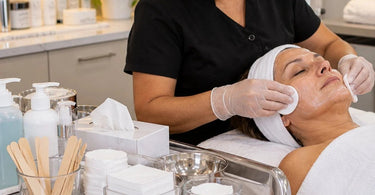
Great results are within reach... and so is a more profitable treatment room when you know exactly what your supplies cost. A 60-minute facial might look beautifully simple from the client's perspective, but behind those relaxing 60 minutes is a collection of cotton rounds, facial sponges, gloves, applicators, protective coverings, and other essentials quietly adding to your expenses. Individually, these items may cost only pennies, but multiply those pennies by dozens or hundreds of appointments, and suddenly your supply cabinet has a surprisingly expensive personality. Learning how to estimate the cost of professional spa supplies used during each facial helps you protect profit margins, manage inventory, and make smarter purchasing decisions without compromising the treatment experience.
The good news? You do not need an accounting degree, a complicated spreadsheet, or a calculator wearing a tiny business suit. You simply need a consistent method for identifying what gets used, determining its unit cost, and adding everything together. Here is how to turn your facial supply expenses into numbers you can actually use.
Why Disposable Supply Costs Matter More Than You Think
Disposable supplies are easy to overlook because most are inexpensive individually. A cotton round might cost a few cents, while a disposable applicator could cost even less. However, recurring expenses deserve attention precisely because they repeat with every appointment.
For example, imagine your facial department spends an average of $3.00 on disposable supplies per treatment. At 100 facials per month, that represents $300 in monthly disposable expenses. At 300 facials, the expense becomes $900. Over 12 months, that second scenario adds up to $10,800.
Now imagine reducing the average cost by just $0.40 per facial through smarter ordering, accurate portioning, and less unnecessary waste. At 300 monthly appointments, that saves $120 each month, or $1,440 annually.
That is money your business can put toward education, equipment maintenance, better inventory systems, or other priorities. Small savings become meaningful when they happen consistently.
Understanding these numbers is especially important when evaluating promotional pricing, facial packages, memberships, and commission structures. A facial that appears profitable based only on its service price can become less attractive once all operating expenses are considered.
Step 1: Create a Complete Disposable Supply Checklist
Start by documenting a typical 60-minute facial from preparation through cleanup. The goal is to identify every disposable item used during a standard appointment rather than relying on memory after the treatment.
Common disposable supplies may include:
- Cotton rounds and cotton squares: Used for toner application, cleansing, and product removal.
- Facial sponges: Used for removing cleansers, masks, and other treatment products.
- Esthetic wipes and gauze: Used during cleansing, extractions, and other appropriate treatment steps.
- Disposable gloves: Used according to the procedure, exposure risks, and applicable infection-control requirements.
- Wooden spatulas: Used for dispensing products hygienically or applying certain masks.
- Disposable headbands: Used to keep hair away from the treatment area when the spa does not use reusable headbands.
- Protective table coverings: Used when required by the treatment protocol or facility policy.
- Disposable applicators: Used for targeted product application or specialty treatments.
- Cleanup materials: Used to clean and disinfect treatment surfaces between clients.
Browse professional cotton, sponges, and wipes, protective gloves and masks, and applicators and spatulas when building your supply checklist.
Remember that not every facial uses every item. A basic hydration facial, an extraction-focused treatment, and a specialty exfoliation service may have different disposable requirements. Create a separate checklist for each major protocol rather than forcing every treatment into the same supply estimate.
Step 2: Calculate the Cost Per Individual Item
Once you have identified your disposables, determine the actual cost of one usable piece. This is the foundation of accurate treatment costing.
The formula is simple:
Cost per item = Total package cost / Number of usable items in the package
Suppose you purchase a package of 500 cotton rounds for $12.50.
$12.50 / 500 = $0.025 per cotton round.
If your standard facial uses eight rounds, the treatment cost is:
8 x $0.025 = $0.20.
Now consider a package of 100 disposable facial sponges costing $18.00.
$18.00 / 100 = $0.18 per sponge.
If the facial uses two sponges, the expense is $0.36.
These figures are illustrative calculations, not advertised product prices. Use your actual wholesale invoices, package quantities, and treatment usage to determine your business's numbers.
When comparing compressed sponges or other bulk consumables, compare the cost per usable piece rather than the package price alone. A larger package may look expensive at checkout while providing a significantly lower cost per treatment.
Step 3: Build a Sample 60-Minute Facial Cost Breakdown
Let's put the method into action with a hypothetical standard facial. Imagine a service that includes cleansing, skin analysis, exfoliation, extractions when appropriate, a treatment mask, moisturizer, and finishing products.
The following example uses assumed purchasing prices and usage quantities. Your actual costs may differ substantially based on suppliers, product quality, location, and service protocols.
| Disposable Supply | Quantity Used | Cost Per Unit | Cost Per Facial |
|---|---|---|---|
| Cotton rounds | 8 | $0.025 | $0.20 |
| Facial sponges | 2 | $0.18 | $0.36 |
| Esthetic wipes | 6 | $0.045 | $0.27 |
| Disposable gloves | 2 pairs | $0.14 per pair | $0.28 |
| Wooden applicators | 3 | $0.04 | $0.12 |
| Disposable headband | 1 | $0.35 | $0.35 |
| Protective table covering | 1 | $0.48 | $0.48 |
| Disposable mask applicator | 1 | $0.12 | $0.12 |
| Allocated cleanup supplies | 1 treatment allowance | $0.30 | $0.30 |
| Total | $2.48 |
In this example, the estimated disposable supply expense for one 60-minute facial is $2.48.
That is your baseline direct disposable cost before making adjustments for waste, additional protection requirements, specialty treatments, or other consumables.
Notice that the example includes two pairs of gloves rather than assuming one pair lasts throughout the appointment. Glove changes must follow the task and applicable infection-control practices. Cost reduction should never determine whether necessary protective equipment is used.
Step 4: Include Waste, Damaged Items, and Actual Usage
Real treatment rooms do not operate with perfect mathematical efficiency. Sometimes an esthetician needs an additional cotton round. Sometimes a sponge is dropped. Occasionally, an applicator is removed from its packaging but never used.
These small situations are normal, and an accurate cost estimate should account for them.
One approach is to apply a modest allowance to your calculated disposable expense. For illustration, suppose your spa uses a 10% planning allowance.
$2.48 x 10% = $0.248.
$2.48 + $0.248 = $2.728, or approximately $2.73 per facial.
The 10% figure is only an example, not an industry standard. A better long-term method is to measure actual waste and usage over several weeks.
For example, if your team completes 120 standard facials and uses 1,080 cotton rounds, average usage is nine rounds per facial. If your original protocol assumed eight, update the cost sheet to reflect reality.
That tiny difference matters more than arguing with the supply closet about where everything went.
Also distinguish unavoidable additional consumption from preventable waste. Gloves needed for appropriate task changes and cleaning materials required for proper disinfection are legitimate operating expenses, not waste to eliminate.
Step 5: Separate Disposable Supplies From Back-Bar Skincare Products
One of the most important distinctions in facial costing is the difference between disposable supplies and professional skincare products.
Disposable supplies include items such as cotton, wipes, gloves, and single-use applicators. Back-bar products include cleansers, exfoliants, serums, treatment masks, moisturizers, and sunscreen.
Both contribute to the total material expense, but tracking them separately gives you better information.
Suppose the disposable cost of your facial is $2.73, including the illustrative waste allowance. Your skincare product usage might look like this:
- Cleanser: $0.55 per treatment.
- Exfoliating product: $0.85 per treatment.
- Treatment mask: $1.20 per treatment.
- Serum: $0.95 per treatment.
- Moisturizer and sunscreen: $0.70 per treatment.
These hypothetical skincare costs total $4.25.
Combined with $2.73 in estimated disposable expenses, your overall treatment material cost becomes $6.98.
This distinction allows you to determine whether changes in expenses are coming from consumable supplies, skincare product selection, treatment protocols, or purchasing practices.
Explore advanced facial treatment products and professional skincare products when reviewing your back-bar selection.
For accurate skincare costing, measure the quantity dispensed per treatment. Divide the container's usable volume or weight into the purchase cost, then multiply by the amount applied. Account for product left in packaging when it cannot be dispensed.
Step 6: Remember the Costs That Are Not Disposable Supplies
Your disposable estimate is only one component of overall facial profitability. It does not represent the entire cost of providing a 60-minute service.
Additional expenses may include esthetician wages or compensation, payroll-related expenses, rent, utilities, scheduling software, insurance, equipment depreciation, payment processing fees, laundry, and reusable tool maintenance.
For example, reusable professional towels do not belong in your single-use disposable count. However, laundering them costs money, and towels eventually require replacement.
Similarly, a facial steamer is equipment rather than a disposable supply. Its purchase, maintenance, and operating costs should be allocated separately if you want to calculate the complete cost of delivering a treatment.
Keep these expense categories separate in your records so you can understand what each one contributes. You can then combine them when evaluating service prices and margins.
Step 7: Turn Your Per-Facial Estimate Into a Monthly Supply Budget
Once you know your average disposable cost, forecasting becomes much easier.
Use this formula:
Monthly disposable supply budget = Estimated facials per month x Disposable cost per facial
Using the hypothetical $2.73 cost per treatment:
| Monthly Facials | Estimated Monthly Disposable Expense | Estimated Annual Expense |
|---|---|---|
| 50 | $136.50 | $1,638.00 |
| 100 | $273.00 | $3,276.00 |
| 200 | $546.00 | $6,552.00 |
| 350 | $955.50 | $11,466.00 |
These projections assume the same supply cost and treatment mix throughout the year. Actual spending will change as supplier prices, appointment volume, and treatment protocols change.
For spas offering several facial types, forecast each service separately and add the totals together. A treatment menu with basic, advanced, and specialty facials should not rely on a single universal disposable allowance.
Monthly forecasts also make it easier to plan purchasing quantities. Instead of ordering whenever a cabinet looks suspiciously empty, you can estimate how much inventory the next several weeks will require.
Step 8: Compare Wholesale Purchasing by True Unit Cost
Wholesale purchasing can create meaningful savings, but larger package quantities do not automatically guarantee better value.
Consider two hypothetical options for disposable facial wipes:
- Package A contains 200 wipes for $10.00, producing a unit cost of $0.05.
- Package B contains 1,000 wipes for $40.00, producing a unit cost of $0.04.
If your spa uses six wipes per treatment, Package A costs $0.30 per facial while Package B costs $0.24.
The difference is only $0.06 per treatment. At 250 appointments per month, however, the lower-cost option saves $15 monthly, assuming comparable suitability and usage.
Before placing a larger order, evaluate shipping, storage requirements, product consistency, packaging, inventory turnover, and whether the supplies meet your professional needs.
Pure Spa Direct is a wholesale distributor serving professional spa, salon, and wellness businesses, making it a convenient place to compare categories of treatment-room essentials. Explore salon and spa business supplies or browse the Dukal collection and Intrinsics collection when reviewing supply options.
Compare product specifications and current pricing before purchasing, particularly when switching materials or package formats.
Step 9: Reduce Unnecessary Waste Without Sacrificing Hygiene
There is a meaningful difference between running an efficient treatment room and cutting corners. The first helps profitability. The second can create risks, inconvenience, and unhappy clients.
Effective efficiency improvements include organizing supplies by treatment, measuring average consumption, training staff on appropriate product dispensing, and keeping inventory clearly labeled.
Consider assembling standardized facial supply kits containing the expected number of cotton rounds, applicators, sponges, and other essentials. This approach may simplify setup, reveal actual consumption patterns, and reduce excessive grabbing from large open containers.
However, supply kits should not restrict staff from accessing additional gloves, wipes, or other materials when needed for safe service delivery.
Never reuse an item designated for single use. Follow manufacturer instructions, infection-control requirements, and applicable local regulations for cleaning, disinfecting, personal protective equipment, and disposal.
Keep appropriate professional cleaners and disinfectants available and budget for their actual use. Required sanitation is part of operating a professional spa, not an optional expense to eliminate.
Step 10: Evaluate Disposable Versus Reusable Options Carefully
Some treatment-room categories offer both disposable and reusable options. Choosing between them can affect purchasing costs, laundry expenses, storage requirements, and workflow.
For instance, your spa may use disposable headbands or washable fabric headbands. Disposable versions generate a direct cost every time they are used. Reusable versions require an initial purchase, laundering, appropriate handling, and eventual replacement.
To compare the options, estimate the total cost of each approach over a realistic period.
A reusable headband costing $6.00 and lasting 60 properly maintained uses would have a purchase-cost allocation of $0.10 per use. You would then add the average laundering and handling expenses to determine the true per-treatment cost.
Do not assume that every disposable item has a reusable substitute. Single-use gloves, contaminated materials, and other items requiring disposal must be handled according to their intended use and applicable requirements.
For products that genuinely offer a choice, evaluate hygiene, labor, client comfort, and workflow alongside cost. The least expensive-looking option is not necessarily the most economical or appropriate.
Step 11: Create a Simple Facial Supply Cost Tracking Sheet
You do not need elaborate software to monitor disposable expenses. A spreadsheet containing a few essential columns can provide the information you need.
Include the following fields:
- Supply name and product identification.
- Supplier and purchase date.
- Total purchase price.
- Shipping or other allocated acquisition costs.
- Usable quantity per package.
- Calculated unit cost.
- Average quantity used per facial.
- Estimated cost per facial.
- Last review date.
Calculate a landed unit cost when relevant by including allocated shipping and other acquisition expenses in the total cost before dividing by usable quantity. For example, a $40 package with $5 in allocated shipping and 1,000 usable pieces has a landed cost of $0.045 per item.
Review the sheet monthly or whenever major supplier prices change. Recheck treatment usage whenever your team introduces new products, modifies procedures, or adds equipment-assisted services.
Regular updates prevent outdated assumptions from quietly becoming permanent features of your pricing strategy.
Step 12: Use Your Numbers to Make Better Facial Pricing Decisions
Once you understand your supply expenses, you can make more informed decisions about your facial menu.
Imagine your 60-minute facial sells for $95. Your disposable supplies cost $2.73, and your back-bar skincare products cost $4.25.
Your total estimated material expense is $6.98.
$6.98 / $95 x 100 = approximately 7.35%.
That means direct treatment materials represent roughly 7.35% of the service price in this example.
It does not mean the remaining 92.65% is profit. Labor, occupancy, equipment, payment fees, and other operating expenses still need to be accounted for.
However, knowing the material percentage makes it easier to compare treatment protocols, evaluate discounts, and understand how changes in purchasing costs affect service economics.
If you introduce a specialty facial that uses additional disposable applicators, gauze, protective materials, or other treatment-specific supplies, calculate those additions before setting its price.
Likewise, when building facial packages or membership offerings, multiply the material cost by the expected number of appointments rather than treating the supply expense as a one-time charge.
Common Mistakes That Distort Facial Supply Estimates
Even experienced spa operators can underestimate disposable expenses when the tracking process is inconsistent.
Using package prices instead of unit prices: A $30 box may provide excellent value or poor value depending on how many usable pieces it contains.
Forgetting preparation and cleanup: Supplies used before the client arrives and after the client leaves belong in the treatment's operating cost.
Assuming every facial uses the same materials: Specialty facials may require a different disposable supply checklist.
Ignoring actual consumption: A written protocol is useful, but observed usage provides a stronger basis for forecasting.
Mixing skincare product costs with disposables: Both matter, but separating them reveals which expenses are changing.
Overlooking shipping and purchasing costs: The true acquisition cost may be higher than the listed item price.
Comparing products based only on cost: Quality, suitability, absorbency, durability, and required usage can change the real cost per service.
Reducing necessary infection-control supplies: Safe and compliant treatment practices must remain the priority.
A good cost sheet is not supposed to make your treatment room feel like an interrogation room for cotton rounds. It should give your business enough clarity to make practical decisions confidently.
Quick Answers About Facial Disposable Supply Costs
How much should disposable supplies cost for a 60-minute facial?
There is no universal amount because treatment protocols, products, purchasing arrangements, and required protective materials differ. The hypothetical example in this guide totals $2.48 in base disposables or approximately $2.73 after an illustrative 10% allowance. Calculate your own figure using actual invoices and observed usage.
Should gloves be included in the disposable supply estimate?
Yes. Include the number of gloves or pairs actually required for the procedures performed. Do not reduce necessary glove changes merely to achieve a lower target cost.
Are disposable sheets included in the calculation?
Yes, if your standard facial protocol uses a single-use sheet or protective covering. If your spa uses reusable linens, track laundry and replacement costs separately.
How frequently should disposable supply costs be reviewed?
A monthly review is a practical starting point, with additional updates after supplier price changes, treatment modifications, or significant shifts in usage.
Should I calculate costs separately for different facial services?
Absolutely. A classic facial and an advanced facial may have different material requirements. Separate estimates make service comparisons and pricing decisions more accurate.
Better Supply Tracking, Smarter Purchasing, Stronger Spa Operations
Estimating disposable supply costs for a 60-minute facial is one of those small business habits that can deliver lasting benefits. By identifying every single-use item, calculating its unit price, recording actual consumption, and reviewing expenses regularly, you gain a clearer understanding of what it takes to deliver each service.
Start with one facial protocol, calculate the supplies used, and build a repeatable tracking system. Then expand the process across your treatment menu. Over time, your supply estimates become useful tools for inventory planning, wholesale purchasing, service pricing, and operational improvements.
Whether you are stocking a solo esthetician suite or coordinating a busy multiroom spa, Pure Spa Direct offers access to a broad selection of professional supplies through categories such as Spa Essentials, Professional Cotton, Sponges, and Wipes, and Facial Treatment Products.
Beautiful facial results and thoughtful business management belong together. Your clients can keep enjoying the relaxing treatments they love, while you enjoy a clearer picture of the costs behind every appointment. And that is one glow-up your bottom line will appreciate.
