
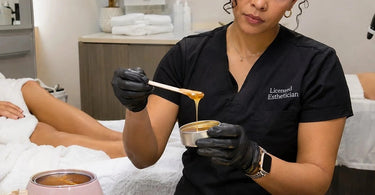
Your path to better results starts with a little experimentation before committing your salon budget to a mountain of wax. Testing professional wax samples is one of the smartest ways to discover which formulas genuinely perform well for your technicians, clients, and service menu. After all, a wax that looks absolutely fabulous in a product description might behave like stubborn bubble gum once it reaches your treatment room. Before ordering enough wax to stock a small island, take the time to evaluate application, hair removal, client comfort, product consumption, and overall cost. A thoughtful testing process can help you find a reliable favorite without turning your supply closet into a museum of questionable purchasing decisions.
For busy estheticians, waxing studios, spas, and salon owners, choosing the right professional wax is about much more than fragrance, color, or the price printed on the container. The best formula for your business should complement your services, work with your equipment, deliver consistent results, and support efficient appointments. Whether you specialize in Brazilian waxing, facial waxing, brow shaping, or full-body hair removal, understanding how to evaluate samples can make your next bulk purchase considerably more successful.
Why Testing Professional Wax Samples Matters
Buying wax in bulk can offer attractive savings, but those savings depend on purchasing a formula your team can actually use efficiently. A lower-priced wax may require thicker applications, more product per service, longer setting times, or additional cleanup. Meanwhile, a formula with a higher price per pound may stretch further and help technicians complete appointments with fewer complications.
Sampling helps uncover these differences before you commit to a larger order. It also allows your team to assess how a wax performs with different hair textures, service areas, and application techniques.
Think of the sample stage as a working interview. The wax needs to demonstrate that it deserves a permanent position in your treatment room. Pretty packaging is lovely, but performance is what earns the job.
Step 1: Identify the Waxing Services You Need to Support
Before opening a sample, review your current waxing menu. Different services can place different demands on a wax formula, so choosing one product solely because it performed well on a single area may not provide a complete picture.
Start by identifying your highest-volume services. Consider whether your business primarily performs Brazilian waxing, bikini waxing, underarm waxing, facial waxing, eyebrow shaping, leg waxing, back waxing, or a combination of treatments.
Hard wax is frequently selected for smaller or more delicate areas because it sets and can be removed without a fabric or paper strip. Browse Professional Stripless Hard Wax to explore formulas designed for professional hair removal.
Soft wax is often used for larger areas where thin, even application and efficient strip removal are priorities. The Soft Strip Wax collection offers options for studios that rely on this method.
Some businesses also incorporate Roll-On Wax Cartridges for selected body services. These systems should be evaluated with their compatible equipment and application requirements.
There is no universal winner for every salon. A boutique brow studio and a high-volume Brazilian waxing business may have very different priorities, even when both owners are equally passionate about perfectly organized supply cabinets.
Step 2: Compare Ingredients and Manufacturer Instructions
Before testing performance, review each sample's ingredient list, product label, and manufacturer instructions. This information helps you determine whether the wax is appropriate for the services you plan to offer.
Professional wax formulas may contain different combinations of resins, synthetic polymers, waxes, oils, pigments, fragrances, and other ingredients. These differences can influence flexibility, texture, adhesion, fragrance, and handling characteristics.
Pay particular attention to the following considerations:
- Ingredient sensitivities: Review potential allergens and relevant client sensitivities, including ingredients such as rosin or added fragrance when present.
- Working temperature: Confirm the manufacturer's recommended temperature range and heating procedure.
- Application technique: Determine the intended application thickness, removal method, and recommended service areas.
- Product compatibility: Check whether the wax requires particular warmers, cartridges, strips, or preparation products.
- Storage requirements: Review shelf life, storage conditions, and any instructions for handling opened packaging.
Never assume that all low-temperature waxes operate at the same setting or that two products with similar appearances can be handled identically. Follow the instructions for each specific formula.
If your team wants to compare established professional waxing lines, explore collections from ItalWax, Berodin, Lycon, and Cirepil. Compare individual products and their stated directions rather than assuming every formula within a brand performs the same way.
Step 3: Evaluate Melting Time and Working Consistency
Once you have reviewed the product instructions, begin the practical evaluation using appropriate Professional Wax Warmers. Use a clean, compatible setup for each sample and follow its manufacturer's heating procedure.
Record how long the product takes to reach its recommended working consistency. Consider the quantity being heated, starting temperature, warmer capacity, and equipment settings, since these variables influence melting time.
Next, evaluate the consistency during application. Does the wax spread smoothly? Does it remain manageable during a normal service? Does it become excessively stringy, clumpy, or difficult to control?
For hard wax, observe whether the formula can be applied at the thickness recommended by its manufacturer while forming a usable removal edge. For soft wax, assess whether it creates a consistent, thin layer suitable for strip application.
Use an appropriate thermometer to verify product temperature when directed or needed. A warmer's dial position does not necessarily represent the actual temperature of the wax. Always perform the required heat-safety checks before applying wax to skin.
A formula that handles beautifully during a five-minute demonstration should also remain practical throughout a busy appointment schedule. Nobody wants a wax that behaves perfectly for the first client and develops a dramatic personality by lunchtime.
Step 4: Test Spreadability and Product Control
Spreadability has a direct impact on technician efficiency and product consumption. During each trial, observe how easily the wax moves across the treatment area and whether the technician can maintain the intended application thickness.
Evaluate the product using suitable Professional Wax Spatulas and Applicators. Use consistent tools and techniques whenever possible so differences between wax formulas are easier to identify.
Ask your technicians to consider whether the wax offers predictable control, creates excessive strings between the applicator and treatment area, or requires frequent adjustments to maintain smooth application.
For hard wax, observe flexibility and the integrity of the removal edge after the product sets. A wax that repeatedly cracks or breaks under correct working conditions may slow down services and create additional cleanup.
For soft wax, evaluate the consistency of the coating and its compatibility with Quality Wax Strips and Rolls. The strip should work effectively with the wax when both are used according to product instructions.
Remember that technician familiarity matters. Allow a reasonable learning period before concluding that a formula is difficult to use. Sometimes the problem is the wax. Sometimes the wax is perfectly innocent and simply needs a different application technique.
Step 5: Evaluate Hair Removal Performance
Hair removal effectiveness is one of the most important criteria when selecting a professional wax for bulk purchasing. A formula that leaves excessive hair behind can increase appointment time, product use, and client frustration.
Once technicians are familiar with the product, arrange controlled trials with appropriately screened, consenting participants. Follow applicable licensing requirements, sanitation procedures, manufacturer instructions, and your established client consultation protocol.
Compare performance on suitable hair types and service areas, recording results separately rather than combining everything into one overall impression.
Consider the following questions:
- Does the wax remove the targeted hair effectively with the manufacturer's recommended technique?
- Does it perform consistently on the hair textures commonly encountered in your salon?
- Does it leave significant hair behind despite proper application and removal?
- Does the wax maintain its intended flexibility or strip adhesion during removal?
- Does the formula produce excessive residue or require unusual cleanup?
- Can technicians maintain an efficient workflow without compromising safe technique?
Do not repeatedly wax the same area simply to force a satisfactory result. Repeated applications can increase the risk of skin irritation or injury. Follow the manufacturer's guidance and your professional safety protocols for dealing with remaining hairs.
Also remember that no professional wax can guarantee perfect removal for every hair type, growth stage, or client. The goal is dependable, repeatable performance under appropriate treatment conditions.
Step 6: Assess Client Comfort and Skin Response
Client comfort deserves its own category on your sample evaluation sheet. A wax might receive enthusiastic reviews from technicians for easy spreading but still require further evaluation if clients consistently report an unpleasant experience.
For appropriately screened participants, record feedback on perceived heat, pulling sensations, overall comfort, and the immediate appearance of the treatment area.
Use a consistent rating scale, such as one through five, to make observations easier to compare. Document the service area, application method, and any relevant product preparation details.
Waxing can cause temporary redness and discomfort, and responses vary among individuals. Watch for unusual irritation or other adverse reactions, stop the service when appropriate, and follow established safety procedures. Do not interpret one comfortable appointment as proof that a product is suitable for every skin type.
Client consultation remains essential. Skin conditions, recent treatments, medication use, known ingredient allergies, and other contraindications may affect whether waxing is appropriate. Never test on compromised skin or proceed when a contraindication makes treatment unsafe.
Review your Pre and Post-Waxing Products alongside each formula's recommended protocol. Products used before and after waxing can influence the overall service experience, so keep those variables consistent during comparisons wherever the manufacturer permits.
A little careful documentation now can help prevent a much less enjoyable conversation at the front desk later.
Step 7: Measure Setting Time and Appointment Efficiency
For busy waxing studios, time is an important operating expense. However, a wax that sets quickly is not automatically the best formula for your business.
During sample trials, record the approximate time required for application, setting, removal, and cleanup. Evaluate each wax under comparable room conditions and with consistent technique.
Hard wax formulas can vary considerably in their setting behavior. Some may reach their intended removal consistency relatively quickly, while others require additional time. Always follow the product's recommended timing and readiness indicators.
Removing hard wax before it has set properly may lead to stretching or incomplete removal. Waiting unnecessarily long may also disrupt workflow, depending on the formula.
For soft wax, consider the time needed for application, strip placement, removal, and residue cleanup.
Rather than judging only the setting time, measure the complete service workflow. A formula that takes slightly longer to set but spreads predictably and removes effectively could be more efficient overall than one that sets rapidly yet requires frequent corrections.
Track actual appointment performance rather than relying on optimistic guesses. Salon calendars have a funny way of exposing those.
Step 8: Calculate the Real Cost Per Waxing Service
This is where a sample evaluation becomes a genuine business decision. The price per bag, can, or pound matters, but it does not tell you the complete cost of using a wax.
To understand product value, calculate how much wax technicians consume during representative services. Weigh the amount of product allocated or used, accounting consistently for normal handling losses and any unusable material.
Use this simple formula:
Wax cost per service = Wax used per service in ounces x Wax purchase price per ounce.
For example, suppose Wax A costs $8 per pound and a typical service uses 2 ounces. With 16 ounces in a pound, the wax costs $0.50 per ounce, making the wax portion of that service $1.00.
Now suppose Wax B costs $11 per pound but requires only 1.2 ounces for a comparable service. Its cost is approximately $0.69 per ounce, bringing the wax portion of the service to approximately $0.83.
In this hypothetical example, the more expensive wax actually costs less per appointment because the technician uses less product.
Of course, product consumption varies with the treatment area, hair coverage, technician technique, and application requirements. Use your own measured results rather than treating example quantities as standard consumption rates.
Beyond wax itself, consider strips, applicators, preparation products, cleanup supplies, and technician time. The broader cost of a waxing service may change depending on which formula and procedure your business adopts.
Once you identify a promising product, explore Bulk Wax Deals to compare available purchasing formats and determine whether larger quantities offer meaningful savings.
Step 9: Check Equipment Compatibility Before Ordering Cases
A wax sample can perform beautifully in the right equipment and disappoint in an incompatible setup. Before placing a bulk order, confirm that your chosen formula works with the warmers and accessories already used in your business.
Check container dimensions, warmer capacity, heating requirements, and manufacturer compatibility recommendations.
If the product requires different equipment, include those costs in your purchasing decision. Switching wax formulas may involve more than replacing bags or cans.
Evaluate applicator needs as well. Different waxes may perform best with particular spatula sizes, application methods, or compatible strips. The complete range of Waxing Supplies for Professionals can help you plan the tools and consumables that accompany a formula change.
Avoid mixing different wax formulas in one warmer pot during testing. Doing so can alter handling characteristics and make results unreliable. Follow manufacturer instructions for cleaning and changing products.
Your goal is a smooth transition, not a surprise equipment shopping spree halfway through your busiest Saturday.
Step 10: Have Multiple Technicians Evaluate the Samples
One esthetician's favorite wax may be another technician's least favorite product. Differences in application style, experience, and service specialization can influence how a formula performs.
Instead of allowing one person to make the entire purchasing decision, invite several trained technicians to participate in a structured evaluation.
Provide the same instructions, rating categories, and relevant manufacturer guidance to everyone involved. Encourage specific observations rather than broad statements such as 'I love it' or 'This wax hates me.'
Useful feedback includes whether the formula spreads consistently, whether the removal edge holds together, how much product is consumed, and whether the technician can maintain a comfortable, efficient workflow.
If your staff has different specialties, assign samples to technicians who regularly perform the relevant services. A brow specialist may focus on precision and control, while a full-body waxing specialist may prioritize efficient application across larger areas.
Look for consistent trends across multiple trials. Strong performance from several technicians usually provides a more useful basis for purchasing decisions than one unusually successful demonstration.
Build a Professional Wax Sample Scorecard
A simple scorecard makes comparisons more objective and helps prevent decisions based entirely on first impressions.
Consider rating each formula from one to five in the following categories:
- Melting and working consistency: Does the wax reach and maintain its recommended consistency reliably?
- Application control: Can technicians spread the product smoothly at the appropriate thickness?
- Hair removal effectiveness: Does the product perform consistently on the intended service areas?
- Removal characteristics: Does the formula remove as intended without excessive cracking, stretching, or residue?
- Client comfort: How do appropriately screened participants describe the service experience?
- Appointment efficiency: Does the product support a practical workflow?
- Product consumption: How much wax is required for representative services?
- Overall value: How does the total operating cost compare with competing formulas?
Record objective measurements separately from subjective ratings. For example, keep actual ounces used and service times alongside the team's impressions.
You can also assign different weights to each category. A salon specializing in intimate waxing may give greater importance to appropriate performance in its core services, while a high-volume leg waxing studio may place more emphasis on efficient application and consumption.
Safety and suitability should always be mandatory requirements rather than categories that can be outweighed by an attractive price.
Common Mistakes When Testing Professional Wax Samples
Even experienced salon owners can make sample testing less useful by changing too many variables at once. Avoid these common purchasing pitfalls.
Testing at the wrong temperature: A wax used outside its recommended working range may perform poorly and create unnecessary safety risks. Verify temperature and follow the manufacturer's instructions.
Judging after one application: A single trial may reflect unfamiliar technique or unusual conditions. Repeat appropriate tests before making a final decision.
Comparing different service areas: Testing one wax on legs and another on underarms does not provide a controlled comparison. Evaluate products under comparable conditions.
Ignoring preparation products: Inconsistent cleansing, drying, or other preparation steps can influence results. Use the appropriate manufacturer-approved protocol for each wax and record meaningful differences.
Focusing exclusively on the lowest price: Less expensive wax is not necessarily less expensive to use. Calculate actual service costs.
Ignoring technician feedback: A formula that consistently frustrates your team may undermine efficiency even if its purchase price is attractive.
Ordering too much too soon: Initial sample success does not automatically guarantee consistent performance over weeks of normal services.
A careful trial helps you separate genuine product advantages from excitement over something new and shiny. And yes, even practical salon owners can get excited about a gorgeous bag of wax beads.
Move From Samples to a Small Production Trial
Before making a substantial bulk purchase, consider placing a smaller working order of your leading formula. This allows you to evaluate the wax during normal business operations without committing to more inventory than necessary.
During this stage, monitor product consumption, technician satisfaction, appointment flow, client feedback, and replenishment needs.
Check whether the formula behaves consistently across different treatment rooms, compatible warmers, and trained technicians. Document any issues related to storage, handling, or cleanup.
Keep your existing wax available during the transition so the team has an appropriate alternative if the new product does not meet expectations. Store products separately and clearly label equipment when necessary.
Once the formula has demonstrated reliable performance, you can evaluate larger orders with greater confidence.
Plan Your Bulk Wax Purchase Around Actual Demand
The best bulk purchase quantity should reflect your business's realistic consumption, available storage space, cash flow, and supplier replenishment options.
Start by calculating average monthly wax consumption. Review the number of services performed, the typical quantity used per appointment, and any seasonal changes in demand.
For example, a salon using 25 pounds of a particular wax each month might consider a purchasing quantity that supports its normal replenishment cycle while maintaining an appropriate buffer. The right amount will depend on storage conditions, lead times, and product shelf life.
Compare the effective price per pound or ounce across available package sizes. Include shipping and any applicable purchasing costs when evaluating the overall value.
Review package integrity, storage instructions, and the manufacturer's stated shelf life. Avoid tying up excessive cash in products that may expire or become unsuitable before they can be used.
As a professional beauty supply distributor, Pure Spa Direct offers access to waxing products and supplies from multiple brands, making it easier for salon owners to compare available options and purchasing formats. Explore collections such as Waxness, WaxOne, Starpil, and Dermwax when researching potential additions to your professional waxing program.
Frequently Asked Questions About Professional Wax Samples
How many wax samples should a salon test before buying in bulk?
There is no required number. Comparing three or four suitable formulas can provide useful perspective without overwhelming your team. The quality and consistency of the evaluation matter more than the number of products tested.
Should I test both hard wax and soft wax?
That depends on your service menu. If your salon offers treatments that benefit from different waxing methods, evaluating both categories can be worthwhile. Compare formulas within their intended uses rather than treating them as interchangeable.
How do I know whether a more expensive wax is worth buying?
Measure product consumption, service efficiency, and the cost of related supplies. A higher purchase price may be justified when the formula delivers dependable performance and a lower overall cost per appointment.
Can I combine leftover wax samples to avoid waste?
Do not mix different formulas unless the manufacturers explicitly approve the combination. Mixing can change performance, complicate temperature control, and invalidate your comparison results.
Should client comfort determine which wax I purchase?
Client comfort is an important factor, but it should be considered alongside safe application, effective hair removal, technician performance, ingredient suitability, and operating costs. No single rating should replace a complete evaluation.
When should I move from sample testing to bulk ordering?
Move forward when the product has met your safety and performance requirements, demonstrated reliable results across representative services, and shown a cost structure that makes sense for your business. A smaller production trial can provide additional confidence before a major order.
Choose Your Next Professional Wax With Confidence
Evaluating professional wax samples before making a bulk purchase is one of the simplest ways to make smarter inventory decisions for your salon or spa. Instead of choosing a product based entirely on price, packaging, or glowing descriptions, you can assess how it performs where it matters most: in your treatment room.
Take time to compare ingredients, melting behavior, application control, hair removal effectiveness, client comfort, technician feedback, and actual consumption. Record your findings, run a practical trial, and calculate the true cost per service before committing to a large quantity.
Ready to explore your options? Browse Complete Waxing Kits for Salons and Spas, discover professional wax formulas, and compare Bulk Wax Deals at Pure Spa Direct. With a little testing and thoughtful planning, your next wax order can become a smart investment in smoother operations, efficient services, and a happier waxing team.
Because the only thing that should be sticky about your waxing business is the wax itself, not your purchasing decisions!

