
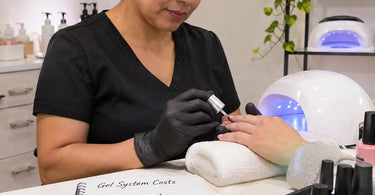
Pros trust this to deliver quality: a reliable gel system, a properly matched curing lamp, and equipment that works just as beautifully on appointment number 500 as it did on day one. But here's the sneaky little expense that can slip past even the savviest salon owner: replacement nail lamp costs. That fabulous gel system with the irresistible starter price might become considerably less fabulous when you discover what maintaining or replacing its curing equipment actually costs. Before committing to a new collection of gorgeous gel colors, professional nail technicians should evaluate the complete financial picture, including lamp compatibility, replacement components, expected equipment life, warranties, and the cost of keeping every manicure station operational.
Choosing a professional gel system is about more than finding beautiful shades and impressive shine. It is also about making equipment decisions that protect your service quality, your appointment schedule, and your bottom line. Whether you're expanding an established nail salon, outfitting a new manicure station, or reconsidering your current product line, understanding the true cost of curing equipment can help you avoid expensive surprises.
Why Replacement Nail Lamp Costs Matter More Than You Think
Professional gel services depend on a coordinated relationship between the gel formulation and its curing equipment. A lamp is not simply a convenient accessory that makes polish dry faster. It is part of the curing system responsible for initiating the chemical reaction that hardens the gel product.
That distinction becomes particularly important when evaluating the long-term costs of different professional gel polish systems.
A salon may initially focus on polish prices, starter kit discounts, color availability, and the cost per bottle. Those expenses certainly matter, but curing equipment introduces another category of costs that can affect profitability over several years.
Consider two hypothetical systems. System A requires a $150 lamp, while System B requires a $240 lamp. At first glance, System A appears to save $90 per workstation. However, if System A requires more frequent lamp replacements, expensive proprietary components, or additional equipment purchases when upgrading products, that initial savings may disappear.
The goal is not necessarily to buy the cheapest lamp. It is to select a dependable, compatible curing system with a predictable and reasonable cost of ownership.
Understand the Difference Between Traditional UV Bulbs and Integrated LED Lamps
One of the first questions to ask is whether the lamp uses replaceable bulbs or integrated LED light sources.
Traditional fluorescent UV curing lamps generally contain bulbs that require periodic replacement. Their usable life depends on the specific equipment, bulb specifications, operating conditions, and manufacturer recommendations.
Over time, a fluorescent bulb may continue illuminating while producing insufficient curing output. That means a lamp can appear operational without necessarily providing the performance required by the gel manufacturer.
Integrated LED curing lamps operate differently. Many modern professional units use built-in LED emitters designed for extended service life. These typically do not require the same routine bulb replacement schedule as older fluorescent UV lamps.
However, that does not automatically make an LED lamp maintenance-free or permanently functional.
Electronic controls, power supplies, wiring, individual emitters, sensors, and other components can still fail. Some manufacturers offer replaceable parts or repair services, while others require replacement of the entire unit when certain components stop working.
Before purchasing, determine whether your chosen lamp has user-replaceable bulbs, manufacturer-serviceable components, or a sealed design that effectively makes the lamp a complete replacement item.
That single question can make a substantial difference in your equipment budget.
Calculate the Real Cost of Ownership Instead of Comparing Sticker Prices
A useful comparison should include the expected expenses of operating each lamp over a consistent period, such as three years.
Start with the purchase price and add the projected costs of replacement bulbs or lamps, necessary accessories, shipping, repairs not covered by warranty, and any backup equipment your salon needs.
Here is a hypothetical example showing how two different lamp arrangements might compare over three years.
| Cost Category | System A | System B |
|---|---|---|
| Initial lamp purchase | $150 | $240 |
| Replacement components over three years | $90 | $0 |
| Additional service or replacement expense | $75 | $0 |
| Estimated three-year total | $315 | $240 |
These numbers are illustrations, not current prices or performance guarantees for any particular manufacturer. Actual costs depend on the specific products and operating conditions.
In this example, System B starts out $90 more expensive but costs $75 less over the full comparison period.
Now multiply that difference across several manicure stations. Suddenly, equipment planning becomes a lot more interesting than choosing between another nude pink and another slightly different nude pink. Although, naturally, both are essential.
For a more useful comparison, divide the estimated ownership cost by the number of gel services the equipment is expected to support during that period.
Estimated lamp cost per service = Total projected lamp ownership cost divided by projected gel services performed.
If a $240 lamp supports 3,000 salon services during the comparison period, the allocated lamp cost is approximately $0.08 per service. This assumes the lamp remains suitable and operational for that workload; it is not a manufacturer lifespan prediction.
Calculating equipment cost per service makes it easier to compare choices against actual salon revenue and utilization.
Never Sacrifice Gel and Lamp Compatibility to Save Money
Here is where smart purchasing becomes especially important: not every nail lamp is appropriate for every gel product.
Gel formulations contain photoinitiators that respond to particular wavelengths of light. The wavelength output, light intensity, exposure time, lamp design, and product application thickness all influence curing performance.
Professional nail lamps commonly use ultraviolet wavelengths around 365 and 405 nanometers, but those specifications alone do not establish compatibility with every gel formulation.
Likewise, wattage is not a reliable stand-alone measurement of curing effectiveness. Two lamps with similar advertised wattages can have different optical outputs and performance characteristics.
Before selecting a new gel system, ask the manufacturer which curing lamps are approved or validated for its products. Obtain the recommended curing instructions for base coats, colors, top coats, builder gels, and other products you intend to use.
Do not assume that a lamp is compatible simply because a product feels hard after curing. Surface hardness does not prove that the material has reached the intended degree of cure.
Insufficient curing can leave greater amounts of unreacted ingredients in the coating, potentially increasing sensitization risks and contributing to service problems.
Protecting clients and technicians is more important than saving a few dollars on a questionable lamp substitution.
If you are considering products from professional brands such as CND, OPI, or Gelish, evaluate the specific gel product line and its current lamp recommendations rather than assuming that every product from a brand uses identical curing requirements.
Ask Whether Replacement Bulbs and Parts Will Remain Available
A lamp is only a good long-term investment if you can reasonably maintain or replace it when necessary.
For equipment using replaceable bulbs, investigate the price and availability of the exact manufacturer-approved replacement components.
Questions worth asking include whether bulbs are sold individually or in sets, whether replacement parts are proprietary, and whether the manufacturer expects to continue supporting the model.
For integrated LED lamps, determine whether the manufacturer offers repairs, replacement power adapters, control components, or complete replacement units.
Be cautious about assuming that physically similar aftermarket bulbs or adapters are interchangeable. Electrical fit and appearance do not establish curing compatibility or manufacturer approval.
A replacement component that costs less but changes the lamp's light output is not necessarily a bargain.
Salon owners can explore equipment maintenance options through Bulbs & Replacement Parts for Spa and Salon Equipment while confirming the exact technical requirements of their particular curing equipment.
Factor in Warranty Coverage and Repair Policies
Warranty terms can significantly influence the true cost of a professional nail lamp.
Two lamps with identical purchase prices may offer very different levels of financial protection.
Read the manufacturer's warranty carefully and determine what it actually covers. Some warranties address manufacturing defects but exclude ordinary wear, accidental damage, certain accessories, or commercial-use conditions.
Ask whether the warranty applies to salon use, how long coverage lasts, what documentation is required, and whether repairs or replacements involve shipping charges.
Also investigate how a warranty claim affects day-to-day operations.
If a defective lamp must be shipped away for inspection, you may need a second approved unit to continue providing gel services.
That possibility belongs in the ownership calculation, even if the replacement itself is covered.
Keep purchase records, model information, serial numbers, and warranty documentation together. A simple equipment file can prevent unnecessary delays when something stops working.
Consider Downtime: The Expense That Rarely Appears on a Product Listing
A failed curing lamp can create costs that extend well beyond its replacement price.
Imagine a busy nail technician whose lamp stops working halfway through a fully booked afternoon. If there is no compatible backup available, appointments may need to be rescheduled or transferred to another station.
The financial consequences can include lost service revenue, disrupted technician schedules, replacement shipping charges, and additional administrative work.
For example, suppose a station normally performs four gel appointments per day at $55 each. If equipment failure prevents all four appointments, the affected scheduled revenue is $220.
That $220 is not necessarily the salon's actual financial loss, since appointments may be recovered and some operating costs may be avoided. Nevertheless, it demonstrates why downtime deserves a place in equipment planning.
A dependable lamp with accessible replacement options may offer greater operational value than a cheaper unit that is difficult to service.
For high-volume salons, maintaining an approved backup lamp may be a sensible investment. The backup should be appropriate for the gel products being used, not simply whichever lamp happens to be hiding in the supply closet.
Compare Equipment Costs Against Daily Appointment Volume
The same lamp may be an excellent investment for one salon and an inefficient choice for another.
A technician performing a handful of gel services each week has different equipment demands from a salon completing dozens of gel appointments daily.
Higher-volume operations may benefit from durable equipment, responsive manufacturer support, standardized lamp models, and readily available backup units.
Lower-volume operations should pay particular attention to initial capital expenses and whether premium features provide meaningful practical advantages.
Estimate the following for each workstation:
- Average number of gel services per week.
- Expected annual operating weeks.
- Manufacturer-recommended maintenance or replacement intervals.
- Potential expenses associated with unexpected equipment failure.
- Number of compatible lamps required for normal operations and backup coverage.
These figures help establish a realistic equipment budget without relying on exaggerated lifespan claims.
For salons outfitting multiple stations, examine the broader layout and daily workflow alongside your Nail Tables and Manicure Stations and other equipment purchases.
Think Carefully Before Switching to a Different Gel Brand
Changing gel systems can introduce equipment costs that are easy to overlook.
A new brand might offer attractive pricing on gel colors, base coats, and top coats. However, switching products may also require purchasing different curing lamps if your current equipment is not approved for the new formulations.
Before making the change, calculate the complete conversion cost.
Include the new gel inventory, compatible lamps for every affected station, technician education, product testing under manufacturer guidance, and the value of existing inventory that may no longer fit the new service menu.
Also evaluate whether the new system offers operational advantages that justify those expenses.
For example, if a manufacturer-approved process reduces total service time without compromising proper curing, the time savings may help offset higher equipment costs. However, compare complete service procedures rather than assuming that a shorter advertised curing timer automatically translates into a faster appointment.
Professional buyers comparing Professional Nail Care Collections should examine products as parts of complete service systems rather than isolated purchases.
Watch Out for Common Nail Lamp Purchasing Mistakes
Even experienced salon owners can underestimate equipment costs when concentrating on starter kit pricing.
Mistake 1: Assuming every LED lamp lasts forever. Long advertised LED service-life estimates do not guarantee that every electronic component will remain functional for the same period.
Mistake 2: Choosing by wattage alone. Electrical wattage does not fully describe the light reaching the nail or its suitability for a particular gel.
Mistake 3: Buying replacement bulbs without verifying specifications. An unapproved replacement component may alter curing performance.
Mistake 4: Ignoring warranty exclusions. Commercial-use limitations and shipping responsibilities can affect the actual value of warranty coverage.
Mistake 5: Forgetting backup equipment. A single failed lamp can disrupt an otherwise profitable day.
Mistake 6: Switching gel brands without checking curing requirements. A cheaper gel system may require additional lamps, changing the overall financial calculation.
Mistake 7: Treating visible hardness as proof of proper curing. Gel that feels solid may still be inadequately cured beneath the surface.
A little research before purchasing can prevent a surprisingly expensive collection of equipment regrets.
Build a Simple Nail Lamp Replacement Budget
Professional salon purchasing becomes easier when equipment expenses are planned instead of treated as emergencies.
Create a basic spreadsheet for each curing lamp in your salon. Record its manufacturer, model, purchase date, purchase price, supported gel systems, warranty expiration, maintenance requirements, and replacement cost.
Track service interruptions and any changes in equipment performance. Follow manufacturer instructions for cleaning, inspection, storage, and maintenance, and remove equipment from use when damage or performance concerns could affect safety or curing reliability.
For planning purposes, you can establish a monthly equipment reserve using your own estimated replacement budget.
For example, setting aside $10 per month for one workstation creates a $360 reserve over three years. That amount is only an illustrative budgeting method, not a recommended replacement schedule or guaranteed future purchase price.
Scale the reserve according to the actual equipment you use, your appointment volume, and the number of manicure stations.
It is also worth reviewing related consumables, including Manicure Essentials, Nail Files & Buffers, and Cuticle Oil, when calculating the overall cost of performing a gel manicure.
Keeping equipment and consumable costs in separate categories can help you identify which expenses are increasing and why.
Questions to Ask Before Buying Your Next Professional Gel Lamp
Before committing to a curing system, request clear answers to these practical questions:
- Which exact lamp models does the gel manufacturer recommend or validate?
- What curing instructions apply to each product in the system?
- Does the lamp use replaceable UV bulbs or integrated LED emitters?
- What replacement components are available, and what do they cost?
- Can the unit be repaired, or must it be replaced after certain failures?
- What warranty coverage applies to professional salon use?
- How are warranty claims handled, and who pays shipping?
- What is the current cost of purchasing an identical backup unit?
- What maintenance does the manufacturer require?
- How many lamps will the salon need if it expands its gel services?
Once these answers are available, compare each system using the same ownership period and estimated service volume.
That approach produces a more useful buying decision than ranking equipment solely by its advertised price.
Finding Professional Nail Equipment and Gel System Supplies
Choosing dependable salon equipment does not mean you have to give up exciting colors, creative nail services, or smart purchasing opportunities.
Pure Spa Direct is a professional beauty supply distributor serving salons, spas, nail technicians, and other beauty businesses. It offers access to a broad selection of professional supplies from multiple brands, making it a useful starting point for comparing equipment and related service essentials.
Explore professional nail lamps, browse gel polish options, and review Nail Brushes & Tools when preparing or updating your gel manicure stations.
Because Pure Spa Direct is a distributor rather than the manufacturer of these systems, confirm technical compatibility, curing instructions, replacement requirements, and warranty terms with the relevant product manufacturer before purchasing.
That extra verification can help you select equipment that supports consistent professional services and sensible long-term spending.
Frequently Asked Questions About Replacement Nail Lamp Costs
Are LED nail lamps cheaper to maintain than traditional UV lamps?
They can be, particularly when comparing integrated LED equipment with older fluorescent UV lamps requiring periodic bulb replacement. However, the complete cost depends on purchase price, component reliability, repair options, warranty coverage, and whether the entire LED lamp must eventually be replaced.
Can I use a less expensive generic lamp with any gel polish?
Not safely by default. Proper curing depends on the gel formulation and the lamp's actual light output. Use the manufacturer's approved or validated equipment and instructions. A universal compatibility claim should not replace product-specific verification.
How often should a professional nail lamp be replaced?
There is no universal replacement interval. Follow the manufacturer's recommendations and consider equipment condition, operating history, maintenance requirements, and verified curing performance. Replace or service equipment when the manufacturer identifies a problem or the lamp can no longer reliably meet its intended specifications.
Is it worth buying an extra curing lamp for a salon?
For many busy salons, an approved backup lamp can help protect appointments from unexpected equipment failures. The value depends on service volume, the ability to share equipment between stations, and the potential disruption caused by downtime.
Should lamp replacement costs affect gel manicure pricing?
Yes. Curing equipment is part of the cost of providing professional gel services. Allocating estimated equipment ownership costs across expected services helps establish realistic pricing alongside labor, product consumption, overhead, and desired profit margin.
The Bottom Line: Choose the Gel System That Makes Financial and Professional Sense
Evaluating replacement nail lamp costs is one of the smartest steps a salon owner can take before investing in a new gel system. A low starter price may be appealing, but the real value comes from dependable performance, manufacturer-validated compatibility, manageable maintenance expenses, and equipment that fits your business operations.
Compare the full cost of ownership, not just the price on the box. Review replacement parts, warranty protection, potential downtime, and the cost per service before making your decision.
Most importantly, keep proper curing and client safety at the center of the purchasing process. A bargain lamp that cannot reliably support your chosen gel system is no bargain at all.
With a little planning and the right professional supplies, your salon can invest in a gel system that supports beautiful services, confident technicians, and healthier profit margins. Because the only surprises you want during a gel manicure are how gorgeous the finished nails look.
