
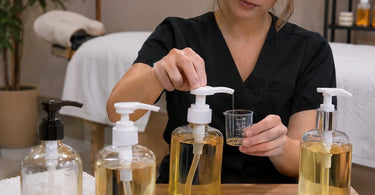
Solutions that professionals trust... often come down to the smallest details, including the humble pump sitting beside your massage table. A reliable massage oil pump might not be the most glamorous piece of equipment in your treatment room, but it can make a surprisingly big difference in your daily workflow. If one press produces a perfect portion of oil while the next delivers an unpredictable splash, you know exactly how frustrating inconsistent dispensing can be. Choosing the right pump helps massage therapists control product usage, maintain cleaner workstations, and deliver smooth, uninterrupted services. Whether you operate a boutique massage studio or manage a busy destination spa, understanding how to compare massage oil pumps can save time, reduce unnecessary product waste, and make your back-bar operations much more predictable.
Professional massage services depend on the right combination of technique, product quality, and efficient equipment. Your selection of Massage Oils, Lotions, and Creams for Therapists is important, but the dispensing system deserves attention too. Even an excellent massage oil can become frustrating to use when paired with a pump that drips, sticks, or requires several attempts to deliver a usable amount.
Why Consistent Massage Oil Dispensing Matters
Imagine preparing for a relaxing Swedish massage. The lighting is perfect, the music is soothing, and your client is settling comfortably onto the table. You reach for your massage oil, press the pump, and receive approximately three drops. You press again and suddenly have enough oil to lubricate a small bicycle. Not exactly the seamless spa experience you had planned!
Inconsistent dispensing creates several practical challenges for professional massage therapists. It can interrupt treatment flow, increase unnecessary product consumption, and leave oily residue around bottles and work surfaces.
A dependable dispensing system helps professionals:
- Deliver a more predictable amount of massage oil with each full pump stroke.
- Reduce accidental over-dispensing during treatments.
- Maintain a cleaner and more organized massage station.
- Minimize interruptions caused by clogged or poorly functioning pumps.
- Estimate product consumption more accurately across multiple therapists.
- Support consistent treatment-room procedures and inventory planning.
Consistency becomes especially valuable in spas with several therapists sharing inventory. When every team member uses a different dispensing method, calculating actual product costs can become unnecessarily complicated.
Start by Comparing Pump Output Per Stroke
One of the most useful specifications to investigate is the amount of product dispensed with each complete pump stroke. This measurement may be expressed in milliliters or cubic centimeters, which represent the same volume.
Different pumps deliver different amounts. Some are designed for small, controlled portions, while others are intended for dispensing larger quantities of oils, lotions, or creams.
For professional massage applications, the ideal output depends on the product and the treatment being performed. A therapist applying a lightweight massage oil may prefer a different dispensing volume than someone using a thicker massage lotion for extended bodywork.
If a pump manufacturer provides an output specification, use that information as a starting point rather than assuming every stroke will always be identical. Actual performance can vary with viscosity, temperature, pumping speed, and the condition of the dispenser.
For instance, a hypothetical pump delivering 2 milliliters per full stroke would dispense approximately 6 milliliters after three complete strokes. Another pump delivering 4 milliliters per stroke would dispense twice that amount with the same number of presses. Neither output is automatically better. The goal is to match the dispenser to the portions your treatments actually require.
Test Pumps with the Actual Massage Oil You Use
Not all massage oils behave the same way. Some are lightweight and flow quickly, while others contain richer ingredients or have a noticeably thicker consistency.
This difference is called viscosity, and it can have a direct effect on pump performance.
A pump that works beautifully with a thin oil may struggle to dispense a heavier massage cream or lotion. Thick products can move more slowly through the dip tube and pumping mechanism, especially when the pump is operated rapidly.
When comparing dispensers, test them using the same professional product you plan to use during treatments. Browse Professional Massage & Wellness Products when planning your complete treatment-room setup.
During testing, pay attention to how easily the pump primes, whether it returns smoothly after pressing, and whether the next stroke delivers a similar portion.
Also observe the dispenser after several consecutive presses. A pump that produces a generous first dose but progressively smaller amounts may not be filling its internal chamber quickly enough for your preferred workflow.
Compare Bottle Size and Neck Compatibility
Before purchasing a replacement pump, confirm that it fits the bottle you intend to use. This sounds obvious, but a pump that looks right in a photograph is not necessarily compatible with every container.
Bottle-neck dimensions, thread patterns, and closure designs vary. Even products with similar capacities may require different pump fittings.
Professional spas frequently purchase massage oils in larger containers because bulk packaging can simplify purchasing and inventory management. However, gallon containers require compatible dispensing accessories.
Pure Spa Direct carries a Pump Only for 1 Gallon Bottles designed for gallon-size lotion and oil containers. Another option is the Pump for 128 oz Gallon Oil and Lotion Bottles. These products provide useful starting points for professionals looking for convenient dispensing accessories for larger containers.
Always verify the individual product specifications and compatibility before ordering. A gallon-capacity description does not guarantee that every gallon bottle has the same neck finish.
For therapists transferring products into smaller working containers, explore Bottles & Jars and confirm that any replacement pump is compatible with both the bottle and its contents.
Check Dip Tube Length and Placement
The dip tube is the component extending from the pump mechanism into the product container. Its job is to draw oil upward so the pump can dispense it.
If the tube is too short, the pump may stop drawing product even though a noticeable amount of oil remains in the bottle. If the tube is too long or positioned incorrectly, it may bend against the bottom of the container and interfere with consistent dispensing.
A properly fitted dip tube should reach an appropriate depth without obstructing its own opening.
Check whether the manufacturer offers a tube length suitable for your container. Avoid cutting, modifying, or interchanging pump components unless the manufacturer specifically permits those adjustments.
This small detail can become particularly important when therapists are trying to use the remaining product near the bottom of a bulk container.
After all, purchasing a beautiful gallon of massage oil only to have the pump abandon its responsibilities halfway through the bottle is not anyone's idea of efficient inventory management.
Evaluate the Pump Head and Everyday Ergonomics
Massage therapists use their hands continuously throughout the workday. A dispenser that requires excessive pressure or awkward positioning adds unnecessary effort to a physically demanding profession.
Look for a pump head that is comfortable to press and easy to operate with controlled movements. A wider actuator may offer a more comfortable contact surface, although the design and internal mechanism ultimately determine the effort required.
Consider these practical questions:
- Can the therapist operate the pump smoothly without excessive force?
- Does the pump head return completely after each stroke?
- Is the bottle stable while dispensing?
- Can the pump be positioned within convenient reach of the treatment area?
- Does the nozzle deliver oil cleanly into a hand or approved dispensing container?
- Is the pump easy to distinguish from dispensers containing other products?
Convenient placement is just as important as pump design. Position dispensers where therapists can access them without awkward reaching or compromising client comfort.
Pairing an organized dispensing station with dependable Massage Tables and Chairs helps create a more practical treatment-room layout.
Look for Drip Resistance and Clean Dispensing
Massage oil is wonderful on skin. It is considerably less charming when it coats countertops, bottle labels, cabinet handles, and everything else within reach.
One common complaint with poorly matched dispensers is residual dripping after the pump head has been released.
When comparing pumps, examine the nozzle design and observe whether product continues to collect around the opening after dispensing.
Also check for oil accumulating around the pump collar or bottle threads. Persistent leakage may indicate a poor seal, an incompatible closure, a damaged component, or a problem with the dispenser itself.
A clean dispensing system supports efficient station maintenance, but no pump is automatically contamination-proof. Follow product and equipment instructions, maintain clean hands and work surfaces, and avoid returning dispensed oil to its original container.
For treatment-room upkeep, keep suitable Professional Cleaners & Disinfectants for Salons and Spas available and follow the product label for the surfaces being cleaned.
Consider Material Compatibility with Massage Oils
A dispenser intended for water-based lotion may not necessarily perform equally well with every oil-based formula.
Massage oils can contain various plant oils, esters, fragrances, and other ingredients. These ingredients may interact differently with the plastics, seals, and other materials used inside dispensing mechanisms.
Before committing to a pump for ongoing professional use, confirm that the manufacturer identifies it as suitable for oil-based products or specifically for the massage oil being dispensed.
Watch for signs of incompatibility during use, including swelling, softening, cracking, persistent leakage, or changes in dispensing performance. Replace components showing deterioration rather than attempting improvised repairs.
For businesses carrying several massage product lines, it may make sense to use different pumps for different formulations instead of expecting one dispenser to handle everything.
Explore professional massage brands such as Bon Vital, Biotone, and Soothing Touch when evaluating the oils, lotions, and creams used in your services. Select dispensing accessories based on the specific formula and container rather than the brand name alone.
How to Measure Dispensing Consistency in Your Spa
You do not need an elaborate laboratory to perform a useful comparison between two massage oil pumps. A simple, repeatable test can help identify the dispenser that best suits your operation.
Begin with two compatible pumps and the same massage oil, following the manufacturers' instructions. Use clean equipment and perform the test away from active treatment preparation to avoid contaminating service products.
Step 1: Prime both pumps. Operate each dispenser until it delivers a continuous flow according to its instructions. Do not count the initial priming strokes as part of the comparison.
Step 2: Use identical conditions. Test the pumps at the same room temperature with comparable container fill levels. Keep each bottle upright and use complete, consistent strokes.
Step 3: Collect ten strokes. Dispense ten full strokes into a separate clean container suitable for measurement. Use a scale or graduated measuring vessel appropriate for the product.
Step 4: Calculate the average. If measuring volume, divide the total milliliters by ten. If weighing the oil, record the mass in grams and compare the results using the same product. Do not assume grams and milliliters are interchangeable because oil density varies.
Step 5: Repeat the test. Perform several sets of ten strokes and compare the results. Also observe leakage, delayed actuator return, sputtering, and any changes during repeated dispensing.
Step 6: Compare real-world usability. Have therapists evaluate how comfortably each pump works during normal station preparation, without using test product on clients.
A pump that delivers an average amount close to your preferred dose, remains reasonably consistent between trials, and operates comfortably may be a better choice than one that simply produces the largest portion.
How Pump Consistency Affects Product Costs
For spa owners, even small differences in product usage can add up across a busy schedule.
Consider a hypothetical massage studio performing 20 services per day. Suppose inconsistent dispensing leads to an average of 3 additional milliliters of oil being used unnecessarily per service.
That represents 60 milliliters of extra product each day. Over 25 operating days, unnecessary consumption reaches 1,500 milliliters, or 1.5 liters.
If the studio's massage oil costs $0.025 per milliliter, that additional usage represents $37.50 per month and $450 over twelve months.
These figures are illustrative rather than guaranteed savings. Actual results depend on service volume, product prices, massage techniques, and whether excess dispensing truly results in waste.
Nevertheless, the calculation demonstrates why portion consistency deserves attention in a professional setting.
Reliable dispensing can support inventory planning by making consumption more predictable. It also helps spa managers identify unusual changes in usage before they become expensive habits.
Buying Bulk Massage Oil? Match the Pump to the Container
Purchasing massage oil in bulk can be convenient for high-volume spas, particularly when several therapists use the same formula.
For example, Bon Vital Naturale Massage Oil in a 1 Gallon Container provides a professional massage oil option for businesses purchasing larger quantities. The product is also offered in other container sizes, allowing buyers to consider how their purchasing and dispensing processes fit together.
However, larger packaging should not automatically dictate your treatment-room setup.
Some businesses prefer dispensing directly from a compatible gallon pump into a smaller working container. Others use designated refill stations and service bottles to reduce the need to move heavy bulk containers around the spa.
Whichever system you choose, follow the product manufacturer's instructions for transferring, storing, and handling massage oil. Use appropriately cleaned, compatible containers, preserve identification and required labeling, and avoid mixing old and new product in ways that compromise hygiene or traceability.
Keep bulk inventory properly stored and ensure therapists can identify each product without confusion.
When Should You Replace a Massage Oil Pump?
Even a dispenser that initially works well may eventually develop problems through regular use.
Warning signs include:
- Noticeably smaller or unpredictable portions after proper priming.
- Persistent dripping from the nozzle or around the pump collar.
- A pump head that sticks or fails to return smoothly.
- Cracks, damaged threads, or deterioration of plastic components.
- Frequent air sputtering despite an adequate product level.
- Difficulty dispensing a product that previously flowed normally.
- Visible residue that cannot be removed using the manufacturer's approved cleaning procedure.
Before replacing a pump, verify that the bottle contains enough product and that the dispenser is compatible with the formula. Check for visible damage and follow the manufacturer's troubleshooting instructions.
If performance remains unreliable, replacing the pump with a compatible component is generally preferable to struggling through another week of unpredictable dispensing.
Establishing a simple inspection routine can help spa managers identify problems before they disrupt services.
Create a Standard Pump Setup for Your Massage Team
Consistency becomes easier when every therapist understands the treatment room's dispensing system.
Start by selecting approved massage products and compatible pumps for each formula. Then establish basic procedures for filling, positioning, inspecting, and replacing dispensers.
Teach staff to use complete pump strokes when consistent portions are needed. Partial presses can deliver different amounts and make product usage more difficult to compare.
Also remind therapists that a recommended starting portion is not an inflexible rule. Different massage techniques, treatment lengths, and client needs may require different quantities of product.
Standardization should improve workflow without interfering with professional judgment.
Consider keeping a simple inventory record documenting the massage oil used, container size, pump type, and approximate consumption. Over time, these records can help determine which dispensing arrangements are the most practical for your business.
Supporting your team with organized Spa Essentials for Professionals can make these procedures easier to maintain across treatment rooms.
Massage Oil Pump Buying Checklist
Before choosing your next dispenser, review these essential buying considerations:
- Product compatibility: Is the pump designed for the type of massage oil, lotion, or cream you use?
- Dispensing volume: Does each full stroke deliver an amount suited to your services?
- Repeatability: Does the output remain reasonably consistent during repeated use?
- Bottle fit: Are the closure dimensions and threads compatible with your container?
- Dip tube: Is the tube correctly sized for the bottle?
- Ergonomics: Is the actuator comfortable for regular professional use?
- Leak resistance: Does the pump dispense cleanly without excessive dripping?
- Maintenance: Can the dispenser be maintained according to manufacturer instructions?
- Replacement availability: Can you obtain compatible replacements when needed?
- Total operating value: Does the dispenser help support efficient product usage and reliable service preparation?
The best massage oil pump is not necessarily the largest, most expensive, or fanciest-looking option. It is the one that fits your container, works with your formula, and consistently supports your treatment-room routine.
Keep Your Massage Room Running Smoothly with Pure Spa Direct
Great massage experiences are built on professional skill, thoughtful service, and dependable supplies. A massage oil pump may be a small piece of that equation, but choosing the right one can help prevent messy workstations, frustrating interruptions, and unpredictable product portions.
Pure Spa Direct is a professional spa and salon wholesale distributor, offering equipment, products, and supplies from a wide range of brands to help businesses maintain efficient operations. From massage oils and dispensing accessories to Massage Bolsters, Massage Table Warmers and Toppers, and everyday treatment-room essentials, there are plenty of ways to build a more organized service environment.
Compare your pump options carefully, test them with your actual massage products, and select a dispensing arrangement that makes sense for your staff and your service volume.
Because the only thing that should be unpredictable during a relaxing massage is how quickly your client falls asleep. Your massage oil pump should have everything under control!
