
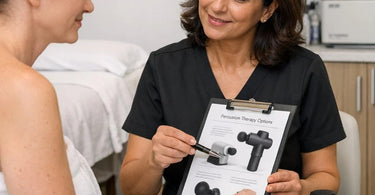
Tools built for professionals are evolving faster than a new lash extension trend, and right now, everyone is talking about percussion. You have likely seen those buzzing massage guns everywhere from the gym to the locker room. But here is the secret your clients are dying for you to know: these powerful little gadgets are not just for sore athletes. When integrated into a standard Swedish massage flow, percussion tools take the classic "relax and soothe" routine to a whole new level of "OMG, my knots are gone." As the beauty and wellness industry embraces technology, blending traditional hands-on techniques with high-tech aids helps you stand out, saves your body from burnout, and gives your clients results they can literally feel buzzing with delight. At Pure Spa Direct, we believe in working smarter, not harder, so let us dive into how to electrify your Swedish massage without scaring anyone off the table.
Let us be real for a second. We love Massage Oils, Lotions, and Creams for Therapists, but performing five deep tissue sessions back-to-back can leave your thumbs feeling like they have gone ten rounds with a heavyweight champion. That is where percussion comes in. The official term for percussion in the massage world is Tapotement . In a traditional Swedish sequence, Tapotement involves rhythmic chopping, cupping, or beating with the hands to stimulate the nervous system and wake up sluggish muscles . It feels great, but it can be exhausting to maintain for more than a few seconds. Enter the percussion massager. These devices mimic the rapid, percussive movements of Tapotement but with the endurance of a marathon runner. They deliver consistent, rapid pulses deep into the muscle tissue, allowing you to offer a stimulating, invigorating experience without the flailing elbows.
Swedish massage is built on five basic strokes: Effleurage (gliding), Petrissage (kneading), Friction (rubbing), Tapotement (percussion), and Vibration . Since we are focusing on percussion tools, we are going to hijack the last two categories and give them a serious upgrade. By subbing in a Spa Masters percussion device for your hands, you can precisely control the speed, depth, and frequency of the stroke, ensuring your client gets maximum relief while you preserve your precious joint health. It is a win-win, and honestly, it looks way cooler than just slapping someone's back (though we respect the classics).
Why Swap Your Hands for a High-Speed Hammer (In a Good Way)
Before we get into the nitty-gritty of the routine, let us address the elephant in the room: are we replacing the therapist? Absolutely not! A machine cannot replicate the intuition, warmth, and flow of a human Professional Massage & Wellness Products expert. What a percussive tool does is augment your skills. Think of it like the difference between using a manual nail file and an electric Nail Files & Buffers; both work, but one gets the job done faster and with less elbow grease. Percussion tools offer rapid, concentrated pulses that penetrate up to two inches deep, targeting specific muscle groups with a speed no human hand can match . This makes them incredibly effective for breaking down stubborn adhesions and flushing out metabolic waste, which is fancy science talk for "making sore muscles feel better really fast."
Plus, there is the "wow" factor. Clients love novel experiences. When they see you reaching for a sleek, professional-grade tool instead of just your knuckles, they feel like they are getting a premium, high-tech service. This is a fantastic upsell opportunity. You can offer a "Signature Percussion Enhancement" to your standard Top Quality Massage Tables Chairs for Relaxation & Wellness service, justifying a higher price point because, well, you are using expensive, cool equipment. Your shoulders will thank you, your bank account will thank you, and frankly, your clients will be too relaxed to argue.
Integrating Percussion into the Classic Swedish Flow
Okay, let us get down to business. You have your table set, your Massage Table Warmers & Toppers for Client Comfort are toasty, and the Aromatherapy Supplies are diffusing calming lavender. Here is exactly how to weave percussion tools into your standard routine without breaking the relaxing vibe.
Phase 1: The Warm-Up (Effleurage to Open the Door)
Start as you always do. Use slow, gliding strokes with your hands to distribute massage oil or lotion. We love using Bon Vital products for this because they offer just the right amount of glide. This is the "hello" phase, calming the nervous system. Do not pick up the gun yet! Let your hands do the talking for the first five to ten minutes. Once the superficial muscles are relaxed, it is time to call in the cavalry.
Phase 2: The Shoulder Slayer (Replacing Tapotement)
The trapezius muscles are usually a hot mess of stress and tension. Instead of hacking at them with the side of your hand (which can feel jarring), switch to your percussion tool fitted with a flat, ball-shaped head. With the client prone, gently place the tool on the upper traps at the lowest speed setting. Do not press hard. The weight of the tool is usually enough. Move it slowly from the neck out to the shoulder joint. The rapid pulses will feel like a thousand tiny fingers doing a happy dance on their knots. It is stimulating yet incredibly relieving, perfect for replacing the traditional Tapotement strokes of Swedish massage. It wakes up the muscle without the sting of slapping.
Phase 3: The Back (Petrissage with a Punch)
When you get to the erector spinae muscles (those thick bands on either side of the spine), you would normally use kneading. Here, you can blend the two. Use your opposite hand to perform a slow, deep kneading motion (Petrissage) on one side of the spine while your other hand holds the percussion tool on the other side. The combination of deep compression and high-speed vibration confuses the pain receptors in the best way possible. It allows you to get deep release without causing the client to guard or tense up. According to recent studies, percussion therapy can significantly alter muscle viscoelastic properties, essentially meaning it makes the tight, rubbery muscle feel soft and pliable again, which is exactly what we want .
Navigating the Legs and Glutes (Go Big or Go Home)
Let us be honest: glutes are large, dense muscles. Trying to dig an elbow into a client's glute for ten minutes is a recipe for therapist tendonitis. This is where the percussive tool really shines. Use a larger, softer attachment head (often called a "dampener") to work the gluteal muscles. The broad surface area prevents that painful "pokey" feeling. Move the tool in slow, overlapping circles, following the natural fiber of the muscle. For the hamstrings and calves, follow the same principle. Using a percussion tool on the legs is also incredibly beneficial for improving circulation, which is a primary goal of Swedish massage . It helps flush out lactic acid and leaves the legs feeling light, not just rubbed.
Phase 4: The Low Back (Friction Without the Fury)
Deep friction is great for breaking down scar tissue, but it can be uncomfortable for the client and tough on your fingers. For the low back (Quadratus Lumborum area), use a fork-shaped attachment. This attachment straddles the spine, allowing you to vibrate the paraspinal muscles without banging on the bone. Hold the tool at a 45-degree angle and let the vibration penetrate the deep layers. This mimics the benefit of friction strokes (loosening tight fibers) without the abrasive back-and-forth motion that can irritate the skin. It is a game-changer for clients with chronic low back tightness who still want a "relaxing" massage rather than a painful deep tissue session.
Phase 5: The Wind-Down (Return to Effleurage)
A Swedish massage should never end on a high-intensity note. Put the percussion tool down. Seriously, put it down. You have woken up the nervous system and released the tension; now you need to tell the body to go back to sleep. Return to slow, rhythmic Effleurage strokes using your hands. Use long, sweeping motions from the feet up to the heart. This is the "cool down" of the massage world. It integrates the deep work you just did and reassures the nervous system that everything is okay. Your clients will often drift off to sleep during this phase because their muscles are physically relaxed and their brains have been lulled into a peaceful state by the contrast of the high-speed percussion followed by the slow, warm strokes.
Must-Have Products for the Percussive Therapist
You cannot just grab any old percussion massager off the shelf. Professional-grade tools are quieter, more durable, and have a longer battery life. At Pure Spa Direct, we recommend looking for devices that offer variable speeds (low for sensitive areas, high for glutes/hams) and interchangeable heads. The Prosana line, for example, is whisper-quiet, which is essential because nothing ruins a zen moment like a tool that sounds like a jackhammer.
While you are upgrading your setup, ensure your massage table is sturdy enough to handle the vibration. A wobbly table is a disaster waiting to happen. We also highly recommend keeping a bottle of high-quality lubricant handy. Since the percussion tool moves so fast, you do not want any friction burns. A little lotion goes a long way to ensure the tool glides smoothly over the skin without grabbing or tugging.
Safety, Sanitation, and Sales (The Business End of the Stick)
Before you go wild, let us talk safety. Never use percussion tools directly on the spine, head, throat, or over any protruding bones. It feels awful, and it is dangerous. Keep it on the meaty parts: traps, lats, glutes, hamstrings, calves, and quads. Also, avoid using it on clients with blood thinners, deep vein thrombosis, or osteoporosis without a doctor's note. When in doubt, stick to your hands.
Sanitation is key, especially in a professional spa environment. The attachment heads are usually washable. Have a few sets on hand. Clean them with a hospital-grade disinfectant between clients. You can store them in a cute little UV sterilizer box on your shelf. When your client sees you pulling a fresh, sterile head out of a glowing box, they will know you mean business. This is also a great time to point them to your retail shelf. If they love the sensation, sell them a smaller, consumer-friendly version for home use. We carry several brands that work well for both professional and at-home care, turning your service into an ongoing revenue stream.
Blending percussion tools into your Swedish massage flow is not about replacing the human touch; it is about enhancing it. It saves your body from repetitive strain, gives your clients something new and exciting, and allows you to charge premium prices for a high-tech service. So, charge up those batteries, warm up those tables, and get ready to give your clients the buzz they have been waiting for.
)