
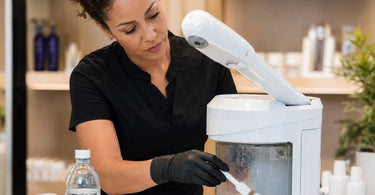
Elevate your results today by treating your professional steamer like the VIP (Very Important Piece of equipment) it is! Let’s be real for a second, honey. That magnificent machine that billows out warm, pore-opening, skin-glowifying mist is the unsung hero of your treatment room. It works harder than a one-legged man in a butt-kicking contest, blasting away impurities and prepping those beautiful faces for serums and extractions. But here’s the tea: if you ignore its cries for help, specifically the heating element, that magical mist turns into a sad, sputtering trickle faster than you can say “mineral buildup.” We have all been there, right in the middle of a perfect facial, and suddenly the steamer sounds like it’s trying to hack up a hairball. Mortifying. But don't you worry your pretty little head, because today we are diving deep into the steamy world of professional equipment care, ensuring that your steamer lives a long, healthy, and productive life. Think of this as your spa equipment survival guide, wrapped in a warm, fuzzy towel of professional wisdom.
Let’s face it, the heating element is the heart of your Facial Steamer. Without it, you’ve just got a fancy plastic vase that blows cold air. And a cold facial steamer is about as useful as a chocolate teapot. When we talk about maintenance, we aren't just wiping down the outside so it looks pretty for the 'gram (though we love a good aesthetic). We are talking about preserving the internal integrity of the machine. Hard water minerals, product residue, and general neglect are public enemy number one, two, and three for your equipment. Over time, these villains coat the heating element like a bad layer of cake frosting, insulate the heat, and eventually cause the element to burn out or, even worse, crack. A cracked heating element means water where there shouldn’t be water and electricity where there definitely shouldn’t be electricity. That is a recipe for a bad day, and a potential call to your insurance agent. So, grab your distilled water, put on your favorite scrub, and let’s get down to business saving that heating element!
The Hard Truth About Hard Water and Your Steamer
If your steamer could talk, it would be screaming at you to stop using tap water. I know, I know. It’s right there. It’s free. It seems harmless. But darling, tap water is the silent killer of spa equipment. It is packed with calcium, magnesium, and other minerals that look innocent going in, but when heated, they cling to your heating element like a stage-five clinger. This buildup, known as scale, acts as an insulator. Think of it as putting a heavy winter coat on your heating element while asking it to boil water. It has to work exponentially harder to produce the same amount of steam, which shortens its lifespan and jacks up your electric bill. Not cute. Using distilled water isn't just a suggestion; it's the law of the land for professional steamers . Distilled water has had all those nasty minerals boiled away, leaving you with pure, clean H2O that turns into steam without leaving any residue behind. Switching to distilled water is the single most impactful thing you can do to extend the life of your heating element. Your steamer will thank you with consistent, glorious, Instagram-worthy clouds of mist.
The Daily TLC Your Steamer Craves
You wouldn't go to bed without taking off your makeup, right? (Please say right). The same principle applies to your steamer. A daily maintenance routine takes maybe five minutes and saves you from a catastrophic meltdown later. First things first: empty that water tank! Do not let water sit in the steamer overnight . Stagnant water is a breeding ground for bacteria (ew), and as it evaporates, it leaves behind any trace minerals or dust that settled in there, creating a film on the element. After you dump the water, give the tank a quick rinse with fresh distilled water. Wipe down the rubber seal around the rim to prevent any sticky residue from breaking the seal . Don't forget the exterior! Wipe down the body, the arm, and especially the control panel. We use a lot of products in the treatment room, and a stray spritz of toner or serum can gunk up the buttons. A clean machine is a happy machine, and a happy machine doesn't break down during the lunch rush. This daily ritual not only protects the heating element by reducing residue but also ensures you are providing a hygienic, professional service. Because nobody wants a rusty, dusty steamer hovering over their freshly cleansed face. Respectfully.
Deep Clean: The Weekly (or Monthly) Spa Day for Your Machine
Even with daily care and distilled water, some microscopic mineral buildup is inevitable over time. This is where the deep clean comes in, and your secret weapon is sitting in your kitchen cabinet: white vinegar. That’s right, we are going full science fair on this steamer. Once a week (or at least once a month if you’re low volume), you need to descale that baby . Mix a solution of two tablespoons of white vinegar with enough distilled water to fill the tank. Important safety tip: Turn off any ozone settings or fancy extras. We just want heat and steam . Turn the steamer on and let it run for about 3 to 5 minutes. Then, turn it off and let it sit for 30 minutes. You want the warm vinegar solution to work its magic, dissolving the hard water scale clinging to the element. After the 30 minutes are up, dump the solution. Now, look inside. See those white, crusty chunks floating around? That’s the scale. Victory! Wipe down the heating element and exposed metal surfaces with a soft cloth to remove any lingering deposits . Rinse the tank thoroughly with distilled water, fill it with fresh distilled water, and run the steamer again for 3 to 5 minutes to rinse out the vinegar smell. You might need to repeat the rinse cycle once or twice. Just a heads up: your treatment room might smell like a fish and chip shop for a bit. Try to do this deep clean at the end of the day or in a back utility room so your clients don’t think you’re serving lunch instead of a facial .
What NOT to Do: The Don’ts of Steamer Care
We’ve covered the “dos,” but let’s get into the juicy “don’ts” because I know some of you are rebels. First and foremost: Do not put essential oils or herbs in the water. I know you want to create a custom aromatherapy experience. I get it. It sounds lovely. But steamer manufacturers are shaking their heads at you right now. Oils can damage the plastic components, clog the internal tubing, and cause the steamer to “spit” hot droplets of oil-water onto your client’s face, which is a lawsuit waiting to happen . If you want scent, use a diffuser in the room or a drop of oil on a cotton ball placed near (not in!) the steam spout. Secondly, do not leave the vinegar solution in the tank for longer than an hour. Vinegar is acidic, and while it’s great for dissolving scale, prolonged exposure can corrode the metal of the heating element . We are trying to save the element, not melt it. Third, never immerse the base of the steamer in water or spray water directly at the control panel. Electricity and water are not friends. Use a damp cloth and be gentle around those switches . Treating your Advanced Spa Equipment with respect is the hallmark of a true professional.
Troubleshooting: When Your Steamer Starts Acting Up
So, you’ve been following all the rules, but one day your steamer starts making a noise like a dying lawnmower. Or worse, it’s sputtering water instead of steam. Deep breaths. Don't panic. Usually, this is just a cry for a descaling session . If you run the vinegar cycle (as described above) and it’s still sputtering, you might have a blockage somewhere else. Check the water intake filter if your model has one. Sometimes a little piece of debris gets stuck. However, if the unit turns on, the light comes on, but absolutely no heat is generated? You might be looking at a dead heating element. Before you throw the whole unit out the window, check the replacement parts section on our website. Often, the heating element can be replaced without buying a whole new unit, saving you hundreds of dollars. But let's be proactive instead of reactive, shall we? Consistent maintenance is the key to avoiding that frantic mid-service breakdown where you have to explain to a client why their pore-opening experience just turned into a lukewarm misting.
Beyond the Steamer: Caring for Your Whole Spa Arsenal
While we have our magnifying glass on the steamer, this ethos of care applies to all your beloved tools. That Professional Wax Warmer you use for ItalWax? It also has a heating element that hates old, crusty wax residue. Your Towel Steamers? Same deal—mineral buildup is the enemy. And if you offer Advanced Facial Treatments using Ultrasonic Facial Machines or Hydrodermabrasion, you know that clean equipment is non-negotiable. The point is, you invest a lot of money into your Equipment & Furniture. Protecting that investment isn’t just about saving money; it’s about ensuring you can always provide the five-star experience your clients expect. A broken steamer loses you money in cancelled appointments and rushed services.
Wrapping It Up With a Warm, Steamy Bow
Look, nobody got into this industry because they loved scrubbing mineral deposits out of tiny water tanks. They got into it because they love making people feel beautiful and relaxed. But the truth is, the boring stuff—the cleaning, the maintenance, the using of the distilled water—is what allows the magic to happen. A well-maintained Facial Steamer is a workhorse. It is reliable. It is consistent. And frankly, it’s a silent partner in your business success. So, set a reminder on your phone. Buy a gallon of distilled water and a jug of white vinegar today. Give your steamer a hug (metaphorically, please, it’s hot) and show it some love. Your future self, the one who isn’t having a panic attack in the middle of a 3 PM facial, will thank you profusely. Now, go forth and steam with confidence, knowing that your heating element is clean, functional, and ready to rock.
