
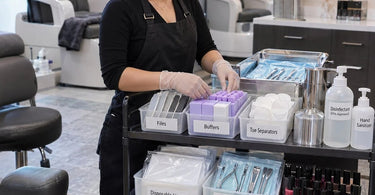
Let's make great results happen... starting with a pedicure station that doesn't turn into a scavenger hunt every time a different technician sits down! Sharing treatment stations is a smart way for busy nail salons and spas to maximize their space, accommodate flexible schedules, and keep expensive equipment earning its keep. But without an organized system for professional pedicure supplies, those shared stations can quickly become a chaotic collection of mystery bottles, missing cuticle pushers, and half-empty scrub containers. The good news? A few practical organization strategies can transform your shared pedicure stations into efficient, professional workspaces that make every technician's day easier.
Whether your salon has two nail technicians sharing one pedicure chair or a rotating team working across multiple treatment stations, thoughtful supply organization affects more than appearances. It influences service timing, sanitation procedures, inventory costs, employee satisfaction, and the consistency of the client experience. Here's how to create a system that works even when everyone has their own favorite way of doing things.
Why Shared Pedicure Stations Need a Different Organization Strategy
A dedicated pedicure station typically reflects one technician's preferences. They know exactly where their favorite nail file lives, which drawer contains the cuticle oil, and where they hid that extra bottle of lotion.
A shared station is different. Multiple professionals need to locate the same essential supplies quickly, follow consistent sanitation procedures, and leave the workspace ready for the next person.
Without a standardized setup, common problems include duplicate purchases, missing implements, inconsistent product availability, cluttered countertops, unnecessary walking between stations, and confusion about who should restock supplies.
The solution is not simply buying more storage containers. It is creating a predictable system that separates shared equipment, individual tools, clean supplies, used items, and backup inventory.
Start With a Standardized Pedicure Station Layout
The first rule of shared workstation organization is wonderfully simple: every station should have the same basic layout.
Imagine a technician moving from Station 2 to Station 5 and finding the essential supplies in completely different locations. One station keeps cotton beneath the chair, another stores it in a cabinet, and a third apparently believes nail buffers belong in another dimension.
Standardizing the layout eliminates that confusion.
Divide each workstation into four functional areas:
- Daily essentials: Frequently used supplies such as cotton, disposable applicators, clean towels, and commonly used nail products.
- Clean implement storage: Covered, designated storage for properly cleaned and disinfected reusable tools.
- Service products: Pedicure scrubs, lotions, masks, cuticle treatments, and other products needed during appointments.
- Used-item collection: Clearly designated containers for soiled reusable implements, used linens, and waste, kept separate from clean supplies.
Position items according to how frequently technicians need them. Supplies used during nearly every pedicure should be easy to reach without awkward stretching or repeated trips across the salon.
Keep the actual working surface relatively clear. A beautifully organized pedicure station should have enough open space for safe, comfortable service, not resemble a miniature beauty supply warehouse.
Separate Shared Supplies From Personal Technician Tools
One of the biggest challenges in shared salons is deciding which items belong to the business and which belong to individual technicians.
A straightforward ownership policy prevents confusion and unnecessary disagreements.
Shared salon supplies might include disinfectants, disposable applicators, bulk treatment products, towels, station-specific equipment, and commonly used nail files and buffers.
Personal technician supplies might include individually owned implements, specialty brushes, or preferred professional accessories, depending on your salon's business model.
Personal tools should travel in clearly labeled cases or designated storage compartments. Reusable implements must still undergo the required cleaning and disinfection procedures between clients, regardless of ownership.
Never assume that an implement is ready for client use simply because it came from someone's personal kit.
For salons with booth renters or independent technicians, establish written expectations covering shared consumables, personal storage, cleaning responsibilities, and equipment access. Clear policies help protect professional relationships while keeping workstations consistent.
Create a Clean, Used, and Ready-to-Use System
Organization and sanitation should work together. In a shared pedicure environment, technicians must be able to identify which implements are ready for use and which require cleaning and disinfection.
Use clearly identified containers or designated areas for each stage of the process:
- Used: Implements awaiting cleaning and disinfection.
- Processing: Implements currently undergoing the required cleaning and disinfection procedures.
- Clean and ready: Properly processed, dry implements stored in protected, clean containers.
The physical separation matters. Used tools should never be returned to clean storage, and clean tools should not be placed on contaminated surfaces.
Reusable nonporous implements must be cleaned and disinfected according to applicable state cosmetology regulations and product instructions. Use an appropriate EPA-registered disinfectant, follow its required dilution and contact time, and ensure tools are compatible with the selected product.
Porous or designated single-use items must be discarded after use when required by regulation or manufacturer instructions. A disposable buffer does not become reusable because someone gives it a particularly enthusiastic spray.
Stock appropriate professional cleaners and disinfectants in a designated processing area. Keep sanitation products properly labeled and separate from products intended for direct client application.
UV storage cabinets should not be treated as replacements for required cleaning and disinfection procedures.
Organize Pedicure Products by Service Sequence
One of the easiest ways to improve shared-station efficiency is to arrange products in the order technicians use them.
Instead of grouping everything exclusively by bottle size or brand, organize daily supplies around the treatment workflow.
Stage 1: Preparation. Keep fresh towels, disposable liners where appropriate, cleansing products, and initial service supplies accessible.
Stage 2: Nail care. Store properly processed metal implements separately from clean disposable files, buffers, cotton, and appropriate nail brushes and tools.
Stage 3: Exfoliation. Position sugar scrubs, salt scrubs, and compatible applicators together.
Stage 4: Moisturizing and finishing. Arrange lotions, masks, massage products, and cuticle oil in a consistent location.
Stage 5: Polish application. Keep base coats, top coats, commonly requested colors, and appropriate finishing supplies organized within the polish area.
This sequence reduces unnecessary searching and helps technicians move smoothly between treatment steps.
If your salon offers several pedicure packages, create a standard setup for the basic service and separate kits for upgrades. Specialty products should not crowd the everyday workstation when they are only used occasionally.
Use Rolling Carts Without Creating Mobile Clutter
Rolling carts can be especially useful when several technicians rotate between shared pedicure chairs.
A compact cart with multiple shelves or drawers allows technicians to organize supplies vertically while keeping frequently used items accessible.
Consider this arrangement:
- Top level: Current-service supplies and a clean, easily disinfected working surface.
- Middle level: Covered storage for clean consumables and frequently needed treatment products.
- Bottom level: Additional unopened supplies or appropriately secured backup products.
Keep used implements in a separate, designated collection container rather than placing them among clean supplies.
Choose carts with smooth, cleanable surfaces, stable wheels, and enough storage capacity for actual service needs. Avoid oversized carts that block walkways or interfere with foot spa access.
When shopping for salon rolling carts, think about how technicians move around the treatment chair. The goal is to reduce unnecessary reaching and walking while preserving a comfortable workspace for both the professional and the client.
Standardize Pedicure Chair and Foot Spa Maintenance
Shared workstations require more than organized bottles. The pedicure chair and foot spa must also be ready for every client.
Establish clear procedures for cleaning and disinfecting pedicure chairs and spas after each service, as well as completing required end-of-day maintenance.
Foot spa cleaning procedures depend on the equipment design, manufacturer instructions, applicable state regulations, and disinfectant labeling. Circulating systems may require specific flushing and disinfection procedures that differ from those for simple soaking bowls.
Assign responsibility for completing each procedure and document it where required.
A practical station turnover checklist might include:
- Remove used towels, disposable supplies, and other waste.
- Transfer used reusable implements to the designated processing area.
- Clean and disinfect the foot basin and equipment as required.
- Observe the full labeled disinfectant contact time.
- Clean and disinfect applicable chair surfaces and contact points.
- Replace supplies with fresh, properly stored items.
- Confirm that the station is ready before seating another client.
Never shorten required disinfection time simply to accommodate an appointment schedule. Cleaning and disinfection procedures must determine when a station is ready, not the other way around.
When several technicians share equipment, having documented responsibilities also prevents the dreaded assumption that somebody else already handled it.
Create Individual Pedicure Kits for Specialty Services
Specialized pedicure services can create organizational challenges when their products are mixed with everyday supplies.
Consider separate, clearly labeled kits for services such as spa exfoliation upgrades, premium moisturizing treatments, nail art, or specialty finishing services.
A spa upgrade kit might contain sealed or appropriately dispensed treatment products, clean applicators, and supplies specific to that service.
A finishing kit could include selected nail art supplies, decorative accessories, and compatible professional finishing products.
Some salons may also offer additional hand or foot treatments using appropriate paraffin supplies. These services should have dedicated setup and sanitation procedures that follow equipment instructions and avoid contaminating shared product reservoirs.
The benefit of separate kits is simple: technicians retrieve only what they need for the booked service.
It also becomes easier to identify missing supplies, replenish popular upgrades, and keep premium treatment products from being used unintentionally during standard services.
Control Bulk Inventory With a Two-Bin Restocking System
Shared stations often encourage accidental overstocking. One technician cannot find the cotton, orders another case, and suddenly the supply closet contains enough cotton to outfit a small cloud factory.
A two-bin inventory system can help prevent this problem.
For frequently used consumables, designate one container for active stock and another for reserve stock.
When the active container runs out, technicians switch to the reserve container and flag the item for replenishment.
For example, you might use this method for disposable toe separators, cotton, approved single-use files, gloves, and other frequently consumed items.
Determine reorder points using actual consumption and supplier lead times. A useful starting calculation is average daily usage multiplied by the number of days needed to receive new inventory, plus an appropriate safety buffer.
For instance, if your salon uses 20 disposable items daily and replenishment usually takes five days, you would need approximately 100 items to cover expected demand during that period, before adding safety stock.
Keep the bulk inventory in a designated supply area instead of stuffing every drawer with extra inventory.
For purchasing, establish a recurring review of essentials from professional nail care collections and related treatment categories. Consistent ordering helps reduce emergency purchases and unexpected interruptions.
Use Labels That Make Sense to Every Technician
Labels are inexpensive, practical, and surprisingly effective at preventing workstation confusion.
Use straightforward categories such as CLEAN IMPLEMENTS, SINGLE-USE SUPPLIES, PEDICURE SCRUBS, LOTIONS, and BACKUP STOCK.
For chemical products, proper labeling is more important than visual organization. Secondary containers must meet applicable workplace hazard communication and product labeling requirements. Never transfer chemicals into unlabeled bottles or containers that might be mistaken for another product.
For ordinary storage bins and drawers, choose clear labels that can withstand regular cleaning.
Color coding can provide additional visual guidance, but it should reinforce rather than replace written identification.
A simple station map or photograph showing the correct setup can also help new employees learn the system quickly.
Consistency is more important than having the fanciest labels. A beautifully designed label is not especially helpful when the drawer underneath contains five completely unrelated products.
Make Towel Storage Part of the Organization Plan
Fresh towels are essential to pedicure services, but they can consume considerable storage space.
Separate clean linens from used linens at every stage of the workflow.
Keep clean professional salon towels in protected storage and provide designated, appropriate containers for used towels.
Do not allow used towels to accumulate on treatment carts, inside product drawers, or alongside clean implements.
For salons offering warm towels, position towel steamers where they can be used safely without interfering with treatment areas. Follow equipment instructions for operation, cleaning, and maintenance.
Consider tracking towel usage per pedicure service to determine appropriate inventory levels. Too few towels create unnecessary laundry emergencies, while excessive quantities take up valuable storage space.
Assign Responsibility for Station Restocking
An organized station stays organized only when everyone understands who maintains it.
Establish clear responsibilities for technicians working at shared stations.
A practical approach is to require each technician to complete a station turnover checklist after every appointment, while assigning a specific person or shift to perform a more thorough inventory check.
The daily checklist should cover sanitation, disposable supplies, product quantities, towel availability, and obvious equipment concerns.
A weekly check can address low-use supplies, product expiration dates, damaged containers, and inventory discrepancies.
Some salons assign the opening technician to verify station readiness and the closing technician to confirm cleaning, organization, and stock levels. Others use a rotating assignment schedule.
Either approach can work if responsibilities are documented and employees receive consistent training.
A shared station should never depend on one incredibly organized technician secretly keeping everyone else afloat.
Reduce Product Waste With Controlled Dispensing
When multiple technicians share the same scrub, lotion, or treatment mask, product waste can be difficult to identify.
Introduce consistent dispensing procedures that help maintain product quality and support reasonable usage.
Where compatible with manufacturer instructions and sanitation requirements, use properly labeled dispensing containers or pumps designed for professional treatment products.
Professional bottles and jars may help streamline appropriate product storage and dispensing, provided the materials are compatible and labeling requirements are met.
For products packaged in bulk containers, dispense the amount needed for each service into a clean, suitable container without contaminating the original supply. Never return unused dispensed product to the main container.
Use clean, appropriate applicators and spatulas to prevent direct contact with shared product reservoirs.
A simple standardized treatment protocol also helps technicians use consistent quantities across comparable services.
That consistency makes product purchasing more predictable and can improve control over service costs without compromising treatment quality.
Protect Technician Comfort and Workstation Ergonomics
Organization is not just about looking tidy. It should make professional services more comfortable to perform.
Technicians often spend long periods leaning, reaching, and working in repetitive positions. Poorly placed supplies can add unnecessary physical strain.
Store frequently used items within a comfortable reach zone and avoid placing heavy containers in awkward overhead locations.
Keep walkways clear, secure rolling carts before use, and position equipment so technicians can work without twisting repeatedly.
Evaluate the height and accessibility of chairs, stools, product carts, and footrests.
When choosing new nail salon furniture and station accessories, prioritize cleanable surfaces, stable construction, accessible storage, and layouts that support comfortable working positions.
A station that looks gorgeous but requires repeated uncomfortable reaching is not an efficient professional setup.
Train Every Technician to Follow the Same System
Even the most thoughtful organization plan will struggle if technicians receive different instructions.
Develop a short shared-station operating procedure covering product locations, sanitation requirements, personal tool storage, restocking responsibilities, and closing tasks.
Include photographs of the intended station setup and demonstrate the correct workflow during onboarding.
Ask technicians for feedback after the system has been used through several busy shifts. They may identify inconvenient placements or missing supplies that were not obvious during the initial setup.
Make adjustments deliberately rather than allowing everyone to rearrange the station independently.
For larger teams, periodic refresher training helps maintain consistency, particularly when products, services, equipment, or sanitation requirements change.
Measure Whether Your New Organization System Is Working
A successful organization system should produce noticeable operational improvements.
Track a few practical measures before and after introducing the new setup.
- Station preparation time: How long does it take to prepare supplies before an appointment?
- Supply interruptions: How often must technicians leave the station to find missing items?
- Inventory waste: Are products expiring, being duplicated, or disappearing unexpectedly?
- Restocking reliability: Are essentials consistently available when appointments begin?
- Technician feedback: Do employees find the layout intuitive and comfortable?
- Turnover compliance: Are required cleaning and disinfection steps completed and documented consistently?
Do not evaluate efficiency by reducing sanitation time below required procedures. Instead, look for improvements that eliminate unnecessary searching, duplicated movement, and avoidable supply shortages while preserving safe service practices.
Review results periodically and update the workstation layout as service menus and staffing patterns evolve.
Build a Shared Pedicure Station That Works for Everyone
Organizing pedicure supplies when technicians share treatment stations is about creating a reliable system that supports the entire team. Standardized layouts, properly separated implements, clearly labeled storage, service-specific kits, predictable restocking, and documented sanitation responsibilities all contribute to smoother daily operations.
Start with one station, identify the supplies technicians use most often, and create a layout that makes sense from the first step of the pedicure through final cleanup. Test the system, gather feedback, and apply the successful setup across additional stations.
Most importantly, choose professional supplies and equipment that support the way your salon actually operates. Explore pedicure supplies, manicure essentials, and salon and spa business essentials from Pure Spa Direct to help equip your team with practical options for everyday professional services.
Because a shared pedicure station should bring your team together, not spark a salon-wide investigation into who borrowed the last clean cuticle pusher. A little organization goes a long way toward cleaner workspaces, happier technicians, consistent services, and a more efficient salon.
