
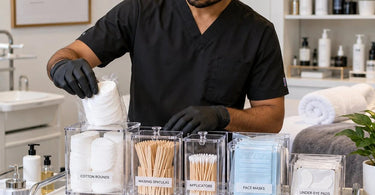
Pros choose this for consistent wins... especially when single-use spa supplies are part of nearly every appointment on the schedule. Cotton rounds, gauze, disposable applicators, sponges, gloves, table paper, wax sticks, wipes, and other one-and-done essentials may look wonderfully organized when they arrive, but the real challenge begins after the package is opened. A smart storage system helps protect unused supplies from dust, moisture, splashes, dirty hands, treatment debris, and that mysterious salon phenomenon where twelve perfectly organized drawers somehow become one giant junk drawer by Friday afternoon.
For busy spas, salons, waxing studios, nail salons, massage practices, brow bars, and esthetic treatment rooms, organization is not just about making the backbar look pretty. It is about helping the team move efficiently while keeping clean supplies clean until they are actually needed. The best system is simple enough that everyone can follow it during a packed schedule and practical enough that nobody has to perform an archaeological excavation every time they need a cotton round.
Start With One Simple Rule: Protected Until Needed
Single-use items should remain protected from unnecessary handling and environmental contamination until they are needed for a service. Whenever possible, keep unopened inventory in its original packaging until it is time to replenish the working supply. Once a bulk package is opened, transfer only a reasonable quantity into a clean, covered storage container or protected dispenser rather than leaving an enormous open bag sitting on a shelf.
This approach is especially helpful for high-volume essentials such as Professional Cotton, Sponges, and Wipes for Salons & Spas, Applicators & Spatulas, and Protective Gloves & Masks for Salon and Spa Professionals. Keeping the bulk supply protected while placing a smaller working quantity close to the service area can create a nice balance between convenience and cleanliness.
Divide Storage Into Bulk, Working, and Service Zones
A surprisingly effective organization trick is separating disposable inventory into three zones. The bulk zone holds unopened or protected backup stock. The working zone holds the smaller amount currently being used to restock rooms and stations. The service zone contains only the supplies needed within easy reach during appointments.
Think of it like backstage, dressing room, and center stage. Not every cotton pad in the building needs front-row seating.
Bulk inventory can live in a clean supply closet, closed cabinet, or designated stockroom shelving. Working inventory can be stored in covered bins or drawers that are easy for staff to access. Service quantities can be placed in clean dispensers, covered containers, or drawers at the treatment station. The exact setup depends on the service, product packaging, manufacturer instructions, and applicable state or local requirements.
Use Closed Storage Wherever Practical
Open baskets look adorable in photos. Unfortunately, dust also thinks they are adorable.
For items that will directly contact a client or be handled during a treatment, covered storage usually makes more sense than open decorative containers. Drawers, lidded containers, cabinets, and appropriate dispensers help provide a physical barrier from everyday treatment-room activity. They can be especially useful around facial beds, wax stations, manicure tables, sinks, and other areas where products, water, hair, dust, or treatment residue may be present.
If you use reusable organizers, include those organizers in the room cleaning routine. Empty them periodically according to your facility protocol, clean and disinfect applicable nonporous surfaces using appropriate products and directions, allow them to dry, and then refill them with clean supplies. A beautiful acrylic organizer is still an organizer, not an invisible force field.
Keep Clean Supplies Away From Used Items
One of the easiest ways to improve a treatment room is to create obvious separation between clean supplies and anything that has already been used. Do not make employees reach across a waste container to grab fresh applicators. Do not place unused cotton next to a tray holding used implements. Do not let the clean-supply drawer slowly become the home of random half-used service products.
Create designated clean and used zones so staff do not have to think about where something belongs during a busy appointment. Your clean supply area should be boringly predictable. That is a compliment.
For waxing services, for example, keep fresh Professional Wax Spatulas and Applicators for Salons & Spas protected and separate from anything used during the service. For facial rooms, organize cotton, gauze, disposable sponges, and other service supplies away from used materials and splash zones. For nail services, follow your state board rules and product instructions regarding items intended for single use and the storage of properly cleaned and disinfected reusable implements.
Do Not Overfill Your Containers
Stuffing 300 cotton rounds into a dispenser designed for 100 does not create efficiency. It creates a cotton-round avalanche.
Overfilled containers can make items difficult to remove without touching several others. Instead, keep service containers comfortably stocked and refill them as needed from protected backup inventory. This can also make it easier to notice changing supply levels before someone announces, five minutes before a fully booked Saturday, that the spa has exactly three disposable applicators left.
Determine a sensible par level for each treatment room based on average daily usage. A facial room may need a different quantity of cotton and sponges than a waxing room. A busy brow station may consume applicators much faster than a massage room. Organizing around actual consumption is more efficient than giving every room identical quantities simply because the bins match.
Label Categories Clearly
A great storage system should make sense to a new employee without requiring a guided tour narrated like a museum exhibit. Label drawers, bins, and shelves by category so everyone knows exactly where supplies belong.
Useful categories might include cotton and gauze, disposable applicators, facial disposables, waxing disposables, gloves, table protection, brow and lash disposables, nail disposables, and cleaning supplies. Depending on your business, broader collections such as Spa Essentials for Professionals, Lash & Brow Service Supplies, Waxing Supplies for Professionals, or Manicure Essentials can also help when planning inventory categories.
Labels are particularly valuable when multiple staff members restock the same areas. The goal is to eliminate the famous workplace storage category known as: I did not know where this went, so I put it here.
Protect Supplies From Moisture and Splash Zones
Placement matters. Disposable supplies should not be stored where they can be repeatedly exposed to sink splashes, wet towels, steam, product spills, or other moisture. A shelf that technically has enough space is not necessarily the right shelf.
Look at your rooms during an actual service. Where does water splash? Where are products mixed? Where are used materials temporarily placed? Where do staff wash their hands? Where does treatment debris accumulate? Then move protected supply storage away from those areas when possible.
This is particularly useful for items such as Compressed Sponges, cotton products, disposable table protection, and applicators. Dry, protected storage helps keep supplies ready for their intended use.
Use First-In, First-Out Restocking
Organization should also prevent older packages from becoming permanent residents of the back shelf. When replenishing inventory, rotate stock so older appropriate inventory is used before newer deliveries, while always observing expiration dates, package condition, and manufacturer instructions where applicable.
New boxes should generally go behind existing usable inventory rather than directly in front of it. This simple habit is especially valuable in businesses purchasing disposables by the case because nobody wants to discover an ancient carton hiding behind twelve newer ones.
If you carry a broad assortment of everyday supplies, it can help to centralize overflow inventory using clearly marked shelves for categories such as Hygienic Table Paper for Waxing, Spa & Massage Tables, gloves, cotton products, applicators, and other frequently replenished treatment-room essentials.
Only Restock With Clean Hands
Even the best storage containers cannot compensate for careless restocking. Team procedures should include appropriate hand hygiene before handling clean supplies. Staff should avoid digging through clean inventory immediately after handling used materials, waste, dirty laundry, phones, or other potentially contaminated surfaces.
Consider assigning restocking to specific moments in the room turnover routine instead of having staff randomly top off containers throughout the day. A predictable process makes it easier to maintain consistent standards and identify when something needs attention.
Never Return a Removed Item to Clean Stock
Once an item has been removed from protected storage for a service, do not casually toss it back into the clean supply container because it happened not to be used. The safest operational habit is to dispense deliberately and take only what you reasonably expect to need.
This is another reason smaller service quantities work well. Staff can prepare an appropriate service setup without placing huge amounts of clean inventory on an active workstation. It also reduces the temptation to play the dangerous little game of: This cotton round was only sitting there for twenty minutes, so it is probably fine.
Keep Disposable and Reusable Items Clearly Separated
Single-use does not mean the same thing as reusable and disinfected. Build storage that makes the distinction visually obvious. Disposable items should have their own protected locations, while properly cleaned and disinfected reusable tools should be stored according to applicable rules, manufacturer directions, and facility procedures.
For professionals using reusable implements, appropriate cleaning, disinfection, drying, and protected storage procedures are essential. Products intended for one-time use should be discarded after use rather than cleaned and placed back into circulation. Always follow the item labeling and applicable licensing or regulatory requirements for your location.
Create Mini Kits for Repeat Services
If your business performs the same service repeatedly, consider preparing protected service kits containing the disposable items typically required for one appointment. This can work beautifully for brow services, waxing, facials, nail services, and other repeatable protocols.
A facial kit might contain the appropriate disposable applicators, cotton products, gauze, and sponges. A waxing setup might include fresh applicators and other required disposables alongside the professional products used during the treatment. For high-volume wax rooms, organizing supplies near your Professional Wax Warmers for Salons & Spas can improve workflow, provided clean inventory remains protected and properly separated from the active service area.
Kitting also makes inventory consumption easier to understand. If twenty brow services are booked tomorrow, you have a much clearer picture of what needs to be ready.
Do a Five-Minute Protection Check at Closing
Before everyone races out the door at the end of the day, add a quick supply check to the closing routine. Are lids closed? Are drawers shut? Are disposable supplies protected? Did anything get splashed? Are service containers running low? Does a bin need cleaning before it is refilled? Is bulk inventory still organized?
Five minutes of prevention can save twenty minutes of frantic reorganizing tomorrow morning. It can also prevent your pristine supply cabinet from slowly evolving into the salon equivalent of a kitchen junk drawer.
Build a System Your Team Can Actually Maintain
The best organization system is not necessarily the one with the fanciest containers, the most labels, or the prettiest social media photo. It is the one your staff can consistently maintain while performing real services for real clients on a real schedule.
Keep bulk inventory protected. Put smaller quantities into clean, appropriate covered storage. Separate clean items from used materials. Avoid overfilling containers. Restock with clean hands. Rotate inventory. Follow manufacturer directions and your state or local professional requirements. Then make the process easy enough that doing the right thing becomes the automatic thing.
Pure Spa Direct distributes a huge range of professional supplies for spas, salons, waxing studios, nail professionals, massage practices, estheticians, and other beauty businesses, including everyday Must-Have Supplies for Salon & Spa Business Success. With a little planning, those small single-use essentials can stay protected, organized, accessible, and ready for the next service instead of wandering around the treatment room like tiny disposable nomads.
