
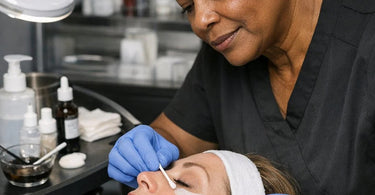
Your next big win is literally a tiny dot of color behind someone's ear. We know, we know. It sounds about as exciting as watching eyebrow tint dry (which, coincidentally, is also part of the process). But in the wild, wonderful, and sometimes slightly unpredictable world of professional beauty, that little patch test is the cape-wearing superhero your business never knew it needed. Let’s be real for a second. You are an artist. You frame faces, sculpt brows, and turn lashes into feathery masterpieces that could make a Disney princess jealous. But nothing kills the vibe of a perfect lash tint appointment quite like a client whose skin decides to throw an absolute rager just because you introduced it to a little bit of pigment. We've all seen the memes. The horror stories of the 'clown brow' or the 'puffy panda eye' are passed around industry Facebook groups like ghost stories around a campfire. And while those tales are funny when they happen to someone else’s cousin’s roommate, when they happen in your chair, it’s pure panic.
The good news is that preventing this disaster is incredibly easy. It doesn't require a degree in chemistry or a magic wand. It just requires you to be the responsible, fabulous professional we know you are. At Pure Spa Direct, we supply the tools for the transformation, but you supply the brains and the safety protocols. Today, we are diving deep into the 'how' and 'why' of the lash tint patch test, specifically for those clients who walk in saying, 'Oh, by the way, my skin is super sensitive to everything.' We are talking about the ladies who break out if they look at a fragrant lotion sideways. The gents whose skin gets angry if they use the wrong shaving cream. The sensitive souls. This guide is your roadmap to keeping them safe, happy, and most importantly, reaction-free. So, grab a towel steamer, put your feet up (you've earned it), and let's make patch testing fun. Or at least, we'll make it fast and funny.
Why We Bother With The 'Boring' Stuff (Spoiler: It Saves Your Bacon)
Look, we get it. You have a client in the chair. They are pre-paying for a full set of extensions and a tint. They are in a rush. They swear on their mother's grave they've never been allergic to anything except maybe their brother-in-law. The temptation to skip the patch test is real. It feels like lost revenue. It feels like a buzzkill. But let us paint you a different picture. It’s 48 hours later. Your client sends you a selfie. Her eyelids look like they lost a fight with a beehive. She isn't mad; she is devastated. She missed a job interview because she couldn't open her eyes. Now, instead of posting a gorgeous 'after' photo on Instagram, she is posting a cautionary tale—and tagging your business. According to industry guidelines, sensitivities can appear even in clients who have had tints for years, as allergies can build over time . That means the client you tinted last month could suddenly react this month.
A patch test is your insurance policy. It is a tiny time investment (seriously, it takes like five minutes) that protects you from a massive liability headache. It shows you are a pro. It builds trust. And it follows the golden rule of beauty: First, do no harm. Brands like Refectocil Original and Intensive Tint rely on you using their products safely. So, before you whip out that Professional Lash and Brow Tint for Spas & Salons, let's get that pesky patch test out of the way.
The 'Where' And 'How' Of The Tiny Test Spot
Alright, you've convinced the client. They are willing to wait. Now, where do we put this magical little dot of potential reaction? You have two prime real estate options. The first is the classic: Behind the ear. It’s discreet, it’s close to the treatment area, and if it does get a little red, nobody has to see it except their hairdresser. The second option, which is often better for the truly sensitive client, is the inner crease of the elbow. The skin there is delicate and usually gets less sun damage, making it a prime candidate for a true reading. Clean the area thoroughly with a gentle, oil-free cleanser. If you use alcohol, make sure it’s dry so you don't trap it under the dye. You want a clean slate.
Now, for the magic mix. You need to apply the product exactly as you would during the actual service. For example, if you are using a color that requires a developer, mix a tiny amount of Lash Tint according to the manufacturer's instructions. Using a clean Applicator & Spatula, apply a small amount—about the size of a grain of rice—to the chosen area. Do not cover it with a bandage. Let it breathe. Set a timer. Usually, you leave it on for the same amount of time you would for a regular tint, often around 10 minutes . Once the time is up, gently remove the product with a damp Professional Cotton Product and water. Do not scrub. Pat dry.
The Waiting Game: 24 to 48 Hours of Patience
This is the hardest part for everyone involved. You want to book the appointment. The client wants gorgeous lashes NOW. But chemistry takes time. Just because the skin isn't red immediately upon removal doesn't mean you are in the clear. Delayed hypersensitivity is a real thing. You need to tell your client, 'Look, gorgeous, I need you to go home and ignore that spot. If it starts to itch, burn, swell, or get angry red, you text me a picture. No appointment.' We usually recommend a 24-hour wait, but if you really want to be safe (especially for new clients or those with auto-immune issues), stretch it to 48 hours . Most insurance policies covering lash and brow treatments require a 48-hour window to cover delayed reactions .
During this wait, do not let the client apply lotion, perfume, or harsh soaps to the patch site. They need to keep it clean and dry. You are essentially running a science experiment. If the area looks exactly like the surrounding skin—no bumps, no redness, no itching—congratulations! You are clear for takeoff. If there is any reaction at all, you must cancel the tinting service. It’s not a 'maybe.' It’s a hard 'no.' Your client might be disappointed, but they will be infinitely more disappointed if their entire eye area swells shut for a week. You can always offer an alternative service, like a Lash Lift & Perm (different chemicals, still need a patch test though!) or a killer brow wax using ItalWax, which is known for its low irritation formulas.
Special Circumstances: The Truly Sensitive Snowflake
We all have that one client. She uses organic soap made from unicorn tears. She avoids gluten, dairy, and negativity. She breaks out in hives if you look at her wrong. For this client, the standard patch test might not be enough. First, consider the brand. You want a Premium Lash Extension and tint brand known for being hypoallergenic or 'sensitive.' Brands like Berrywell Cream Dye (Augenblick) are formulated to be gentler while still delivering that intense pop of color . You might also look into ViBROWLASH or Combinal Cream Dye for their conditioning, gentler lifting properties .
Secondly, extend your observation time. Make them come in for the patch test a full 5 days before the appointment. Sometimes reactions take 72 hours to manifest fully. Also, document everything. You should have a consent form that states they disclosed their sensitivity and that they agreed to the patch test. Keep a record of the date, the brand used, the batch number (yes, really, batch numbers matter for liability), and the result. If they refuse the patch test? Do not do the service. I am not joking. You can hand them a mirror and let them do it themselves at home, but in your professional chair, safety is the law. As we always say at Pure Spa Direct, we sell the dreams, but you protect the dreamers.
Gear Up: What You Need In Your Patch Test Kit
Being prepared makes patch tests feel less like a chore and more like a clinical ritual that justifies your higher prices. You need a dedicated 'Patch Test Kit.' This isn't just your regular tinting tray. This is a clean, organized box. Inside, you should have sealed, single-use Applicators & Spatulas. Do not double dip! Cross-contamination is a major no-no. You need a small mixing palette or disposable paper cups. You need cotton rounds. You need a sharpie to mark the date and time on the client's record card. And you need gloves. Always wear Protective Gloves & Masks when mixing tints. You don't want to develop a sensitivity to the dye yourself from handling it every day. It happens to the best of us—one day you're fine, the next day your fingers are itchy. Prevention is key.
You should also have a 'reaction kit' on hand. This isn't medical advice (always call a doctor), but having a cool compress and a gentle, fragrance-free hydrocortisone cream (that you do NOT apply to the eye area) can help if a client has a mild skin reaction on their arm or behind the ear. It shows you are prepared. It shows you care. And it makes you look like the absolute professional you are.
Turning Patience Into Profit: Selling The Wait
Here is where we turn a boring safety protocol into a business builder. When a client comes in for a patch test, they are in your space. Use this time. While that tiny dot of color is developing for 10 minutes, you are not just sitting there awkwardly. You are consulting. You are showing them the High-Quality Towels you use. You are demonstrating your Towel Steamers for a post-tint hot towel treatment. You are upselling them on a Hygienic Table Paper routine to keep everything sterile. You are building the value of the experience.
Charge a nominal fee for the patch test, or roll it into a 'New Client Consultation' package. If they book the full tint service for the following week, waive the fee. If they don't, you still got paid for your time. It weeds out the looky-loos and ensures you are only working with serious clients who respect your safety protocols. You can also use this time to recommend retail products. 'While we are waiting for your skin to do its thing, let me show you this Must-Have Spa Retail Product that will make that new tint pop even more.' Boom. Retail sale while you wait for a patch test. That's big brain energy right there.
Final Thoughts: You've Got This (And So Does Your Client)
Performing a lash tint patch test isn't just about avoiding a lawsuit (though that is a nice bonus). It is about respect. It is respect for the chemistry of the Professional Lash and Brow Tint we supply. It is respect for the delicate skin of your client. And it is respect for your own sanity. You do not need the 2 AM phone call. You need the 5-star review that says, 'Harper was so thorough and professional. I felt completely safe.' That is the review that pays the bills.
So, stock up your kit. Clear your schedule for those five-minute patch test appointments. And remember, a little patience (and a tiny dot of dye) goes a long way toward a long, profitable, and drama-free career. Now, go forth and tint safely, you beautiful, responsible genius, you. And don't forget to check out our full selection of Lash & Brow Enhancement Services to keep your toolkit fresh!
)