
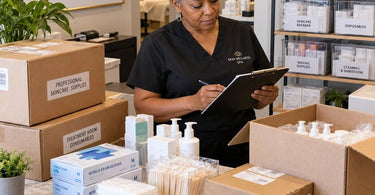
Elevate every service with a little behind-the-scenes organization that your clients may never see but your entire team will appreciate! A dedicated receiving area for professional beauty deliveries can transform the way your salon, spa, nail studio, or waxing business handles incoming supplies. Instead of finding three mysterious cardboard boxes in the hallway, a case of wax balancing beside the laundry basket, and a shipment of skincare products hiding behind the reception desk, imagine having one organized destination where every delivery gets checked, documented, and directed to its proper home. Beautiful treatments begin with dependable supplies, and dependable supplies deserve a better welcome than being abandoned next to the staff refrigerator.
Whether you operate a busy multiroom day spa, a boutique esthetics studio, or a growing salon with several service categories, your receiving process directly affects inventory accuracy, staff productivity, product condition, and purchasing decisions. Creating a designated receiving area does not necessarily require major renovations or an enormous stockroom. It requires thoughtful planning, appropriate storage equipment, clear responsibilities, and a consistent system that prevents incoming products from disappearing into the wonderful black hole known as the back room.
Why Your Beauty Business Needs a Dedicated Receiving Area
Professional beauty businesses receive an impressive variety of products. One delivery might contain Waxing Supplies for Professionals, while another includes Premium Skincare Products for Spas and Salons, disposable applicators, clean linens, or replacement equipment components. Each category may have different handling, storage, inspection, and inventory requirements.
Without a designated receiving location, deliveries often end up wherever someone happens to find space. This creates several avoidable problems. Products can be misplaced before being entered into inventory. Damaged containers may go unnoticed. Team members may open different portions of the same shipment without documenting what they removed. New inventory may be placed in front of older stock, creating unnecessary waste.
A dedicated receiving area creates a checkpoint between delivery and storage. It gives employees one predictable place to accept shipments, compare contents against purchase orders, inspect packaging, and prepare products for distribution throughout the business.
The goal is not to build a miniature warehouse. It is to establish a professional process that makes receiving supplies almost boring. And in inventory management, boring is wonderful.
Choose a Location That Makes Deliveries Easy
The best receiving area is convenient for deliveries but separated from client services, clean treatment supplies, and high-traffic public spaces. A location near a service entrance, stockroom, or existing storage area usually provides a practical starting point.
Consider how packages move from the delivery entrance to the receiving station. Employees should not need to carry heavy cartons through treatment rooms or weave around clients enjoying their relaxing spa day. Nobody books a facial hoping to encounter a rolling cart full of cardboard boxes.
Evaluate the following factors before choosing your location:
- Accessibility: Deliveries should reach the area without complicated routes or unnecessary lifting.
- Clearance: Doors, walkways, emergency exits, and access to safety equipment must remain unobstructed.
- Lighting: Employees need adequate visibility to read labels and inspect products.
- Climate: Avoid excessive heat, humidity, direct sunlight, and temperature fluctuations.
- Security: Expensive equipment, professional formulations, and retail inventory should not sit in publicly accessible locations.
- Cleanliness: The area should be separated from used linens, trash accumulation, and activities that could contaminate incoming supplies.
If your salon has limited square footage, consider using a compact receiving station along one designated stockroom wall. A small counter with organized shelving can work beautifully when paired with a consistent workflow.
Divide Your Receiving Area Into Functional Zones
One of the most effective ways to organize professional beauty deliveries is to establish separate zones for different stages of receiving. These zones do not need permanent walls. Clearly labeled shelves, counter sections, or designated cart spaces may be sufficient.
Zone One: Incoming Deliveries. This is where unopened shipments are initially placed. The space should accommodate a normal delivery volume without blocking walkways or creating unstable stacks.
Zone Two: Inspection and Verification. A clean, stable work surface allows staff members to open cartons, inspect contents, and compare received quantities against purchase orders.
Zone Three: Approved Inventory. Products that have passed inspection can move to a designated staging shelf before being transferred into their permanent storage locations.
Zone Four: Hold and Problem Resolution. Damaged, leaking, incorrect, or questionable products should remain clearly separated from usable inventory until a manager determines the appropriate next step.
Zone Five: Packaging and Recycling. Flattened cardboard and packing materials need an organized disposal destination away from clean products and active work surfaces.
This arrangement creates a simple flow: receive, inspect, document, approve, and put away. Each shipment moves forward through the process instead of becoming a permanent resident of the receiving counter.
Select Practical Shelving, Counters, and Equipment
Your receiving area should prioritize durability, cleanability, and comfortable working conditions. Choose a sturdy counter or table that can accommodate cartons while providing room to check individual items. A smooth, cleanable surface makes routine maintenance easier.
Adjustable shelving provides flexibility as inventory changes. Smaller consumables can be organized in labeled bins, while larger cartons and heavier items should be stored on appropriately rated lower or middle shelves. Follow shelving manufacturer load limits and secure storage equipment as needed.
Useful receiving-area accessories include a package-opening tool, clipboard or tablet, label printer, inventory scanner if your system supports one, washable sorting bins, a recycling container, and a cart designed for transporting supplies.
Businesses that regularly receive Top-Quality Equipment & Furniture for Spas & Salons may also need additional floor space for inspecting large items before installation or final placement. Keep these deliveries separate from ordinary consumable shipments, and follow the equipment manufacturer's unpacking and handling instructions.
Remember that receiving equipment should serve the workflow rather than complicate it. A well-positioned shelf and reliable checklist can be more valuable than an expensive organizational system nobody understands.
Create a Standard Delivery Inspection Checklist
A receiving area becomes truly effective when every employee follows the same inspection process. Establish a written checklist that can be completed consistently, even during busy appointment schedules.
Start by identifying the shipment. Record the delivery date, supplier, purchase order number, carrier information when relevant, and employee responsible for checking the order.
Next, inspect the outer packaging before opening the cartons. Look for crushed corners, wet boxes, broken seals, unusual odors, or visible leakage. Photograph significant damage when appropriate and preserve packaging materials until the issue is resolved.
Compare the contents with the purchase order and packing slip. Confirm product names, sizes, shades, quantities, and other relevant specifications. A shipment containing twelve bottles of the wrong product is not a complete order simply because the number twelve looks correct.
Check the condition of individual containers, closures, and labels. Document lot or batch numbers and expiration dates when available and relevant to your inventory procedures. Follow product-specific instructions for any formulation requiring special storage.
Finally, classify the shipment as accepted, partially accepted, or on hold. Notify the appropriate employee about discrepancies promptly and follow the supplier's established procedures for shortages, damages, or returns.
Organize Products by Their Storage Requirements
Professional beauty inventory includes products with significantly different storage needs. A successful receiving process recognizes those differences before products are distributed throughout the business.
For example, Professional Gel Polish should be handled according to the manufacturer's storage recommendations, including protection from inappropriate light or temperature exposure. Certain skincare formulations may require specific temperature conditions, while unopened disposable items need protection from moisture, dust, and damaged packaging.
Consider establishing receiving categories for skincare, nail products, waxing products, hair color, massage supplies, linens, disposables, retail merchandise, and equipment.
Products from the Professional Hair Color collection, for example, should be checked for accurate shades and developer specifications before reaching the color station. Inventory from the Premium Lash Extensions & Supplies for Pros collection may require additional attention to adhesive storage instructions and packaging integrity.
Products with special hazards should be handled and stored according to their labels, safety data sheets, and applicable workplace requirements. Do not assume that every beauty product belongs on the same general-purpose shelf.
When an item requires prompt placement into controlled storage conditions, prioritize that step rather than leaving it in an ordinary receiving queue.
Keep Incoming Inventory Separate From Clean Treatment Supplies
Cardboard shipping cartons travel through warehouses, transportation vehicles, delivery routes, and loading areas before arriving at your salon. Their exterior surfaces should not be treated as clean treatment-room materials.
A dedicated receiving area creates an important separation between the shipping environment and spaces where professionals prepare client services.
Instead of opening cartons directly on a facial treatment counter, unpack products in the receiving area and inspect their protective packaging. Transfer accepted supplies into appropriate clean storage areas using your business's handling procedures.
This is especially relevant for items such as Professional Cotton, Sponges, and Wipes for Salons & Spas, Protective Gloves & Masks, and Applicators & Spatulas.
Do not remove manufacturer packaging unnecessarily, and never transfer supplies into unlabeled containers merely to make shelves look prettier. A beautifully organized shelf becomes considerably less impressive when nobody knows what is inside the bottles.
Maintain the receiving station with appropriate cleaning procedures and use suitable Professional Cleaners & Disinfectants for Salons and Spas according to their labels and intended surfaces.
Build Inventory Accuracy Into Every Delivery
Receiving supplies is one of the most important opportunities to maintain accurate inventory records. If the products arriving at your business are not documented correctly, every later inventory calculation starts with unreliable information.
Whether you use professional inventory software, a point-of-sale system, or a carefully maintained spreadsheet, update records when quantities have been verified. Avoid automatically marking an entire purchase order as received before physically checking its contents.
Record essential details such as product identifier, quantity received, unit size, receiving date, storage location, and any relevant batch information. When shipments arrive in multiple boxes or on different dates, record partial receipts rather than assuming the remaining products are already on-site.
For businesses carrying multiple variations of the same product, accuracy matters even more. Twenty bottles of nail polish may look like a complete delivery until a technician discovers that ten are the same shade and none are the color needed for tomorrow's appointments.
Set up a simple method for identifying products that are already allocated to appointments, treatment rooms, or retail displays. This prevents employees from transferring newly delivered items without recording their movement.
For frequently used categories such as Manicure Essentials, receiving records can also help managers recognize consumption patterns and adjust future ordering quantities.
Use Inventory Rotation to Reduce Unnecessary Waste
A dedicated receiving station should support inventory rotation rather than simply adding new products to the front of every shelf.
For products with applicable expiration or use-by dates, a first-expiring, first-out approach can help prioritize suitable stock. For products without expiration dates, a first-in, first-out system may be appropriate, provided that product condition and manufacturer instructions are considered.
When receiving new inventory, check whether older usable stock is already in storage. Arrange accepted products so employees can access the correct items without accidentally overlooking inventory purchased earlier.
Pay particular attention to specialty skincare, treatment solutions, adhesives, and other formulations whose usability depends on storage conditions and product-specific guidance.
For example, receiving a fresh shipment of Advanced Facial Treatment Products for Salons & Spas is an excellent opportunity to review what is already available in the treatment room.
Inventory rotation also creates useful purchasing feedback. If certain products repeatedly reach their use-by dates before being consumed, the issue may be purchasing volume rather than insufficient shelf space.
Plan for Larger Deliveries and Seasonal Demand
Your receiving area should accommodate more than the quietest delivery day of the month. Consider your busiest ordering periods, promotional purchasing cycles, equipment upgrades, and seasonal service demand.
A salon preparing for holiday appointments may increase purchases of nail supplies, retail merchandise, hair products, and disposable items. A waxing studio preparing for its busiest season might receive larger quantities from Bulk Wax Deals.
Before placing especially large orders, review available storage capacity and the delivery schedule. Coordinate with your supplier when possible to understand whether products will arrive together or in separate shipments.
Reserve temporary staging capacity for unusually large deliveries without allowing boxes to obstruct exits, corridors, or treatment areas.
For major equipment purchases, confirm delivery dimensions, door clearance, unloading requirements, and any necessary installation arrangements in advance. A new treatment chair may be exactly what your salon needs, but discovering that its packaging does not fit through the service entrance is not the grand opening moment anyone envisioned.
For items such as Pedicure Chairs/Spas, plan receiving logistics around the manufacturer's shipping and installation requirements rather than treating the delivery like an ordinary carton of supplies.
Assign Clear Receiving Responsibilities to Your Team
Even an excellent receiving area can become chaotic when nobody knows who is responsible for processing deliveries.
Assign a primary receiving employee or role, along with a backup person for vacations, busy periods, and unexpected deliveries. In smaller businesses, the salon owner or manager may perform this function. In larger operations, an inventory coordinator or designated team member may handle it.
Document who can accept packages, inspect shipments, update inventory, authorize product transfers, and contact suppliers about discrepancies.
Train employees to recognize common receiving problems, including incorrect quantities, broken seals, leaking containers, missing items, and products requiring special handling.
Establish a simple rule: products should not be removed from the receiving area for use until the required receiving checks have been completed, except when an authorized employee follows a documented procedure for urgent or specially stored items.
This prevents the classic mystery of a shipment that arrived on Tuesday, was opened by three different people on Wednesday, and somehow contains two fewer bottles by Thursday.
Set a Routine That Prevents Delivery Backlogs
The most beautifully arranged receiving station will eventually become a cardboard mountain if products are never processed and put away.
Build receiving activities into your daily operating routine. During normal business hours, designate reasonable times for inspecting incoming shipments and distributing accepted supplies.
Businesses receiving frequent deliveries may benefit from checking the receiving area at the beginning and end of each day. Smaller studios may only need a short receiving routine whenever packages arrive.
At the end of each receiving session, confirm that approved products have been assigned to storage locations, discrepancies have been documented, and packaging materials have been removed appropriately.
Keep unresolved deliveries visible in a clearly designated hold area rather than allowing them to become mixed with accepted inventory.
For particularly busy businesses, track a few useful measures, such as average time from delivery to put-away, number of unresolved shipment discrepancies, and frequency of inventory corrections.
These measurements can reveal whether additional shelving, staffing adjustments, or improved ordering schedules would make the process more efficient.
Adapt the Receiving Area to Your Type of Beauty Business
Although the basic receiving workflow remains consistent, different professional beauty businesses may need different organizational priorities.
Nail salons: Create clear sorting locations for polish shades, enhancement products, disposable files, and nail art materials. Small products can easily become mixed together, making careful quantity and shade verification especially useful. Explore Professional Nail Care Collections when organizing purchasing categories.
Waxing studios: Organize receiving records around wax types, package sizes, applicators, strips, and pre- and post-treatment products. Keep bulk shipments separate from daily treatment-room stock until quantities are verified.
Day spas and esthetics practices: Prioritize skincare packaging condition, product identification, storage instructions, and controlled movement into treatment rooms.
Hair salons and barber shops: Make shade verification, developer matching, tool inspection, and product-size confirmation routine steps. Review categories such as Professional Hair Salon & Barber Shop Supplies when structuring inventory groups.
Massage and wellness businesses: Reserve suitable space for bulk linens, massage products, disposable table coverings, and replacement accessories. Larger purchases from Professional Massage & Wellness Products may require dedicated staging capacity.
Multi-service businesses: Consider color-coded shelves or labeled bins corresponding to different departments. This helps the receiving employee identify where products belong without opening every treatment-room cabinet.
A Simple Receiving Area Setup You Can Start This Week
If you are ready to improve your delivery process without redesigning the entire business, begin with a practical implementation plan.
- Review recent deliveries. Identify typical package sizes, delivery frequency, recurring problems, and product categories.
- Choose a suitable location. Find a clean, secure area with an accessible route and enough room for safe handling.
- Establish your zones. Mark spaces for incoming deliveries, inspection, accepted inventory, and problem shipments.
- Add the essentials. Install appropriate shelving, provide a stable work surface, and supply the tools necessary for documentation and package handling.
- Create a receiving checklist. Include purchase order verification, quantity checks, packaging inspection, and discrepancy reporting.
- Assign responsibilities. Make sure employees understand who can receive, approve, and distribute inventory.
- Test the workflow. Process several real deliveries and identify bottlenecks before making additional purchases.
- Review the system regularly. Adjust labels, shelving, and procedures as your business changes.
Start with the most common sources of confusion. If employees regularly misplace small items, improve bin labeling. If boxes accumulate because nobody has time to inspect them, adjust the receiving schedule. If large deliveries overwhelm the space, reconsider order quantities or delivery coordination.
The best receiving area is not necessarily the largest or most elaborate. It is the one your team can use correctly and consistently.
Make Professional Beauty Deliveries Part of a Smoother Business
Creating a dedicated receiving area is a practical investment in the everyday operation of your salon or spa. Better organization helps reduce misplaced products, improves inventory visibility, supports appropriate product handling, and gives employees a more reliable system for preparing supplies for client services.
It also makes purchasing decisions easier. When your team knows what has arrived, what remains on order, and where accepted products are stored, you can replenish supplies with greater confidence and avoid unnecessary duplicate purchases.
At Pure Spa Direct, we understand that professional beauty businesses need access to dependable supplies across a wide range of services. As a distributor serving salon, spa, massage, waxing, nail, and wellness professionals, we offer an extensive selection of products and equipment designed for business use.
Explore our Must-Have Supplies for Salon & Spa Business Success and discover professional products that support your team's day-to-day operations.
Because a successful beauty business is not only about what happens during the appointment. It is also about the thoughtful systems behind every service, every stocked treatment room, and every perfectly timed delivery. Give those incoming boxes a proper place to land, and your staff might finally stop asking who moved the nail supplies.
