
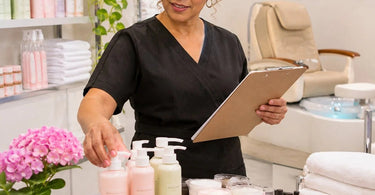
Take your work to the next level... and make sure your pedicure shelves are ready for the spring and summer rush before the first sandal makes its grand entrance! For nail salons and spas, warmer weather often brings more pedicure appointments, brighter color requests, vacation-ready toes, and clients who suddenly remember their feet have been hiding in boots for months. That seasonal excitement is wonderful for business, but it can create a serious inventory headache if your favorite polish shades disappear, disposable supplies run low, or your exfoliating products cannot keep up with demand. Learning how to plan seasonal pedicure inventory for spring and summer demand helps you prepare for busy appointment books without turning your supply closet into a very expensive museum of unused products.
Successful seasonal inventory planning is about more than ordering extra pink polish and hoping for the best. It involves forecasting service volume, calculating product consumption, organizing essential supplies, anticipating color preferences, and establishing realistic reorder schedules. With a little preparation and the right professional pedicure supplies, your salon can keep technicians productive, clients delighted, and purchasing decisions under control.
Why Spring and Summer Pedicure Inventory Needs Its Own Plan
Pedicure demand can change significantly throughout the year, especially in markets where clients wear open-toe shoes more frequently during warmer months. Spring vacations, weddings, graduations, beach trips, summer celebrations, and everyday sandal season can all influence appointment patterns.
However, seasonal demand is not identical for every business. A resort spa in Florida may maintain relatively steady pedicure traffic throughout the year, while a neighborhood nail salon in a colder climate might experience a noticeable spring increase. Your purchasing strategy should reflect your actual booking history rather than assumptions about what every salon supposedly experiences.
Seasonal planning offers several practical benefits:
- Fewer service interruptions: Technicians have the products and disposable supplies needed for scheduled treatments.
- Better cash flow: Purchasing decisions are connected to expected consumption instead of enthusiastic guesswork.
- Stronger retail opportunities: Seasonal take-home products are available when clients are interested in maintaining their results.
- Less overstock: Trend-driven colors and specialty treatments are purchased in quantities that reflect realistic demand.
- More consistent service quality: Every pedicure receives the appropriate products, tools, and finishing treatments.
The goal is simple: have enough inventory to serve your clients without needing to rent a second building for your collection of coral nail polish.
Start With Last Year's Pedicure Numbers
Before adding products to your shopping cart, review your salon's appointment and purchasing records. Historical service volume is usually more useful than predicting demand based solely on seasonal beauty trends.
Compare monthly pedicure appointments from January through August, paying particular attention to changes during March, April, May, June, July, and August. If possible, separate basic pedicures, deluxe pedicures, gel pedicures, spa treatments, and specialty services.
Look for patterns in:
- Total pedicure appointments per week and month.
- Average product consumption for each service type.
- Most frequently selected polish colors and finishes.
- Popular treatment upgrades, including scrubs and masks.
- Retail purchases associated with pedicure appointments.
- Products that ran out during previous busy periods.
- Seasonal items that remained unsold after summer.
If your records show that deluxe pedicures increased faster than standard services, your purchasing plan should account for additional exfoliating products, treatment masks, moisturizers, and related supplies rather than simply increasing every product category by the same percentage.
Forecast How Many Pedicures You Expect to Perform
Once you understand previous demand, create a realistic forecast for the upcoming season. Start with expected appointment volume, then translate that number into product requirements.
For example, imagine your salon typically performs 100 pedicures per week during slower months. If historical patterns and current bookings support a projected 30% seasonal increase, your planning estimate would be 130 pedicures per week.
Over a four-week planning period, that means approximately 520 pedicure appointments.
Next, estimate the quantity of each product used per service. If a particular foot scrub averages 20 grams per appointment and is included in 60% of those services, your expected scrub consumption would be:
520 appointments x 60% treatment usage x 20 grams = 6,240 grams of scrub.
That equals approximately 6.24 kilograms before adding any appropriate safety stock or accounting for packaging sizes, dispensing waste, and actual supplier quantities.
This type of calculation is especially helpful for frequently replenished sugar scrubs, salt scrubs, lotions, and other treatment products.
Use measured consumption whenever possible. Manufacturer instructions and treatment protocols may establish the appropriate amount of certain products, so do not reduce recommended application quantities simply to stretch inventory.
Build Your Spring and Summer Pedicure Inventory Around Essential Categories
A strong seasonal inventory plan separates dependable everyday products from optional seasonal additions. This keeps basic services running smoothly even when a trendy new shade becomes the unofficial celebrity of your polish wall.
1. Nail preparation and finishing supplies
Start with the products used during nearly every pedicure. These may include nail files and buffers, appropriate cuticle tools, base coats, top coats, polish removers, cotton products, and disposable applicators.
Check whether your technicians are consistently using the same supplies or whether certain service types require additional items. Maintain a dependable reserve of high-consumption products rather than spreading your budget equally across everything on the shelf.
2. Foot soaking and exfoliation products
Spring and summer menus often highlight smooth, refreshed feet. Review your inventory of foot soaks, exfoliating treatments, callus-care products, and moisturizing formulas.
Choose products appropriate for professional use and each client's skin condition. Follow manufacturer directions, avoid overly aggressive exfoliation, and ensure that any specialty treatment fits the technician's training and permitted scope of practice.
For salons offering upgraded treatments, browse spa body treatments to explore products that may complement the pedicure menu.
3. Moisturizers and conditioning treatments
Foot creams, massage lotions, and nail-conditioning products support a polished finishing experience. Cuticle oil is particularly useful for the finishing stage and may also create an opportunity for appropriate home-care recommendations.
4. Professional polish and color systems
Keep reliable everyday colors available alongside seasonal additions. Depending on your service menu, that could include traditional nail polish, professional gel polish, base and top coats, and compatible application or removal products.
5. Disposable supplies and sanitation products
Include suitable single-use files, buffers, toe separators, towels or wipes, protective supplies, basin liners where applicable, and professional cleaners and disinfectants.
These items are essential operating inventory, not optional upgrades. Purchase quantities based on expected service volume and required cleaning protocols.
Plan Your Seasonal Polish Colors Without Overbuying
Spring and summer bring opportunities to refresh your color display. Clients may gravitate toward soft pastels, playful pinks, corals, bright reds, sunny oranges, tropical blues, or classic milky neutrals.
Those are useful seasonal merchandising directions, not guarantees that every color will sell equally well.
Build your assortment around three groups:
- Core colors: Reliable neutrals, reds, pinks, and other shades that consistently perform well in your salon.
- Seasonal colors: Spring pastels, summer brights, beach-inspired shades, and other timely additions supported by client interest.
- Specialty colors and finishes: Shimmer, chrome-inspired effects, glitter accents, and decorative options for clients requesting something extra.
A reasonable starting approach for an established salon might be to devote approximately 60% to 70% of its color purchasing budget to proven sellers, 20% to 30% to seasonal additions, and the remaining amount to experimental finishes. These are illustrative planning proportions, not industry benchmarks. Adjust them according to your sales and service records.
Explore professional brands such as OPI, CND, Essie, and Gelish when building a color selection appropriate for your salon's service systems.
Remember to verify compatibility among base coats, colors, top coats, curing equipment, and removal products. A fabulous shade is less fabulous when it does not work with the rest of your service system.
Use a Simple Reorder Point Formula
One of the easiest ways to prevent seasonal stockouts is to establish a reorder point for essential products. Instead of waiting until the last bottle is nearly empty, place replenishment orders when available inventory reaches a predetermined level.
The basic formula is:
Reorder Point = Average Daily Usage x Supplier Lead Time + Safety Stock.
Suppose your salon uses 12 disposable pedicure files each operating day, your supplier typically requires five operating days for delivery, and you want to maintain 36 additional files as safety stock.
12 files x 5 days + 36 files = 96 files.
In this example, the salon should plan to reorder when its usable inventory position approaches 96 files. For more accurate purchasing, account for inventory already on order, backorders, minimum order quantities, and pack sizes.
Review the calculation regularly during busy periods. If daily appointment volume rises or supplier lead times change, the reorder point should change too.
For products with unpredictable seasonal demand, use a larger buffer when justified by variability and the financial consequences of running out. For slow-moving novelty colors, smaller purchases and more frequent reviews may be the smarter choice.
Stock Disposable Pedicure Supplies Before the Rush
It is easy to get distracted by beautiful new colors and forget the less glamorous supplies that make every appointment possible. Unfortunately, glitter polish cannot replace a clean disposable file, no matter how enthusiastic the application.
Estimate consumption of appropriate single-use items based on your anticipated appointments and service protocols.
Depending on your salon's treatment procedures, this may include disposable files, buffers, toe separators, towels, cotton pads, gloves, applicators, and liners.
Review professional cotton, sponges, and wipes and protective gloves and masks when assembling your replenishment list.
Reusable implements must be properly cleaned and disinfected according to applicable requirements, while items designated for single use must not be reused. Maintain the required cleaning and disinfection procedures for foot spas and basins between clients, even when disposable liners are used. Follow the equipment manufacturer's instructions, disinfectant label directions, and applicable state regulations.
Never reduce required sanitation supplies or shorten disinfectant contact times to accommodate higher appointment volume.
Prepare Your Pedicure Stations for Higher Appointment Volume
Inventory planning should include equipment readiness, not just consumable products.
Before your seasonal rush begins, inspect the condition of your pedicure chairs and spas. Review maintenance schedules, manufacturer-recommended cleaning procedures, electrical components, plumbing connections, and any service issues requiring professional attention.
Check your station organization, tool storage, and towel availability. Well-organized treatment areas make it easier for technicians to locate supplies and maintain consistent service procedures.
Consider whether you need additional professional towels, suitable storage containers, or replacement parts for existing equipment.
Schedule equipment repairs before your busiest weeks whenever possible. A pedicure chair deciding to take an unscheduled summer vacation is not the kind of seasonal surprise anyone appreciates.
Create Spring and Summer Pedicure Packages That Use Inventory Efficiently
Seasonal services can make your menu feel fresh while helping you plan supply consumption more accurately.
Consider offering a limited selection of treatments that use products already incorporated into your purchasing strategy.
Spring Refresh Pedicure: A traditional pedicure featuring a suitable exfoliating treatment, moisturizer, and a choice of seasonal colors.
Summer Sandal Pedicure: A pedicure focused on professional nail grooming, skin conditioning, and a polished finish for open-toe footwear.
Deluxe Vacation-Ready Pedicure: An upgraded service incorporating a foot soak, appropriate exfoliation, a conditioning treatment, and a longer relaxation-focused massage where permitted.
Special Occasion Nail Upgrade: An optional decorative finish using compatible products from your nail art supplies, with pricing that reflects materials and technician time.
For each package, write a standardized treatment protocol and calculate the expected product cost per appointment. This makes the menu easier to train, price, and replenish.
Keep the number of seasonal packages manageable. A salon does not need 17 tropical-themed pedicures to celebrate summer successfully.
Calculate Your Cost Per Pedicure Before Setting Seasonal Prices
Busy appointment books do not automatically guarantee healthy profit margins. Each seasonal service should have a realistic material-cost estimate.
To calculate direct product cost, divide the usable purchase quantity of each product by the amount used per service, then multiply by its acquisition cost as appropriate.
For example, if a 1,000-gram professional scrub costs $40 and your protocol uses 20 grams per treatment, the estimated scrub cost is:
$40 divided by 1,000 grams x 20 grams = $0.80 per service.
Repeat this calculation for soaking products, masks, lotions, polish, disposable supplies, and other consumables. Add the amounts together to estimate direct material cost.
Then consider technician labor, payroll burden, cleaning and turnaround time, equipment expenses, overhead, and your desired profit margin when establishing service prices.
Do not confuse a low product cost with a highly profitable service. A deluxe pedicure that requires substantially more technician time must be priced accordingly.
Build a Practical Spring and Summer Purchasing Timeline
A seasonal inventory calendar gives your team specific purchasing checkpoints instead of relying on last-minute ordering.
Eight to ten weeks before your anticipated busy season: Review historical appointments, examine current stock, inspect equipment, and establish a purchasing budget. Identify products with longer supplier lead times.
Four to six weeks before the rush: Order important core supplies, evaluate seasonal color selections, and confirm that your treatment menu matches available products and staff capabilities.
Two to three weeks before the rush: Reconcile deliveries against purchase orders, organize inventory, train technicians on any new treatment protocols, and check that promotional materials accurately describe the available services.
During the busy season: Review fast-moving inventory at least weekly and more frequently for products at risk of running out. Adjust purchasing based on actual appointments rather than holding rigidly to an outdated forecast.
Near the end of summer: Begin reducing purchases of slow-moving seasonal products while maintaining the essential supplies required for ongoing appointments.
These timeframes are planning suggestions. If your business operates in a tourism market with an earlier seasonal surge, shift the entire schedule accordingly.
Organize Inventory So Technicians Can Find Everything
Even a well-stocked salon can experience supply problems when products are scattered across multiple cabinets, drawers, and storage rooms.
Establish designated locations for frequently used pedicure products, reserve supplies, disposable items, and retail merchandise.
Use clear labels and organize stock by product category, manufacturer instructions, expiration or use-by dates where applicable, and intended service.
For suitable products, a first-expiring, first-out rotation approach can help reduce waste. Always follow storage requirements, especially for products affected by temperature, light, moisture, or chemical compatibility.
Maintain a simple inventory record containing the product name, supplier, unit size, current quantity, reorder point, average consumption, and expected delivery date.
Whether your team uses specialized software or a carefully maintained spreadsheet matters less than making sure the information is accurate and updated consistently.
Make Retail Products Part of Your Seasonal Inventory Strategy
Spring and summer pedicure appointments can create opportunities to recommend suitable home-care products that help clients maintain the appearance and feel of their feet between professional visits.
Depending on your retail program, potential categories include cuticle oils, foot moisturizers, appropriate exfoliating products, and nail-care essentials.
Explore spa retail products when building a carefully selected take-home assortment.
Train technicians to recommend products based on client needs rather than attaching a sales pitch to every appointment. A thoughtful recommendation is more effective than making someone feel they need twelve bottles of foot cream to survive July.
Keep retail inventory separate from backbar inventory in your tracking system. Otherwise, products sold to clients can distort your service-consumption calculations and lead to inaccurate forecasts.
Know When Wholesale Purchasing Makes Sense
Wholesale purchasing can be valuable for salons that consistently use significant quantities of professional products. However, larger orders are not automatically better orders.
Before purchasing a case or larger package, compare the actual unit cost, expected consumption, storage capacity, delivery charges, shelf life, and cash-flow impact.
High-turnover items such as selected disposable supplies and frequently used treatment products may be good candidates for larger purchases when the economics support them.
Seasonal specialty colors and experimental treatment products often deserve smaller initial orders until actual client demand becomes clear.
Pure Spa Direct is a professional beauty and wellness supply distributor, offering salons and spas access to products from multiple brands rather than manufacturing the products itself. This makes it useful to explore different professional categories and compare options when developing a purchasing plan.
Browse professional nail care collections and spa essentials to build a supply list that fits your treatment menu and budget.
Watch for These Common Seasonal Inventory Mistakes
Even experienced salon owners can make purchasing decisions that create unnecessary expenses during the warmer months.
Ordering too many trendy colors: A shade that looks amazing on social media may not become a bestseller at your location. Test new options before committing to large quantities.
Ignoring everyday essentials: Popular neutral shades, files, buffers, disinfectants, and standard treatment products still need dependable inventory levels.
Using outdated forecasts: Last year's demand is a starting point, not a promise. Update purchasing decisions as current bookings develop.
Failing to account for delivery times: A reorder placed after the last bottle is opened may arrive too late. Include realistic supplier lead times in your planning.
Overcomplicating the service menu: Too many seasonal packages may increase inventory complexity without generating enough additional revenue.
Forgetting about storage and product condition: Overstocking products that cannot be stored appropriately can create avoidable waste.
Neglecting end-of-season planning: Reducing slow-moving seasonal purchases before demand falls helps protect cash flow.
Remember that the most impressive supply closet is not necessarily the fullest one. It is the one that supports profitable appointments without unnecessary waste.
Track a Few Key Numbers Throughout the Season
After your seasonal inventory plan is running, monitor a small group of useful performance indicators.
- Pedicure appointment volume: Compare actual weekly services with your forecast.
- Product usage per appointment: Identify unexpected changes in treatment-product consumption.
- Stockout frequency: Record how often essential products are unavailable when needed.
- Inventory turnover: Measure how efficiently products are being consumed or sold relative to the stock held.
- Seasonal treatment profitability: Review service revenue against product, labor, and other relevant costs.
- Remaining seasonal inventory: Identify colors or specialty products that may require lower future purchase quantities.
These numbers help convert seasonal purchasing from a recurring guessing game into a process that becomes more accurate each year.
Your Spring and Summer Pedicure Inventory Checklist
Before your seasonal appointment calendar fills up, confirm that you have completed these important steps:
- Reviewed prior spring and summer pedicure appointments.
- Forecasted expected service volume by treatment type.
- Calculated estimated consumption of core products.
- Established reorder points and appropriate safety stock.
- Selected seasonal colors based on client preferences.
- Ordered essential disposable and sanitation supplies.
- Inspected pedicure equipment and scheduled maintenance.
- Calculated material costs for seasonal service packages.
- Organized backbar, reserve, and retail inventory separately.
- Created a weekly inventory review and replenishment routine.
- Planned how to reduce seasonal overstock as summer ends.
A few minutes spent reviewing this checklist can prevent considerably more time spent searching for missing supplies during a fully booked Saturday.
Get Ready for a Busy, Beautiful, and Better-Organized Pedicure Season
Spring and summer pedicure demand can create excellent opportunities for nail salons and spas, but successful seasonal purchasing requires more than filling shelves with bright colors and tropical fragrances. The strongest inventory plans connect anticipated appointments with actual product usage, appropriate safety stock, reliable supplier lead times, and thoughtful service design.
Keep your essentials dependable, introduce seasonal products strategically, monitor costs, and make replenishment part of your regular operating routine. That combination helps technicians focus on delivering excellent pedicures instead of wondering whether the last clean buffer has mysteriously vanished.
When you are ready to prepare your salon, explore Pure Spa Direct's selection of professional pedicure supplies, gel polish, cuticle oils, and other salon and spa business essentials. With a smart inventory plan and the right professional products on hand, your team can welcome sandal season feeling organized, prepared, and ready for every perfectly polished toe that comes through the door.
