
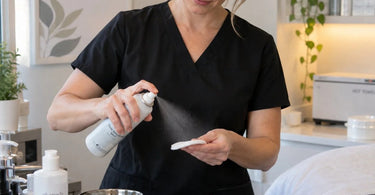
Clients notice quality first. They notice the crispness of a blowout, the shine on freshly waxed skin, the calm of a clutter-free treatment room. What they do not notice, bless their hearts, is the fine mist of hairspray slowly building a sticky film on your mirrors, your shelves, and that one wall behind the station that you have been avoiding eye contact with for months. Aerosol overspray is the silent saboteur of salon and spa environments, coating nearby surfaces with an invisible layer of product that accumulates faster than you can say I will clean that later. Whether you are a hair stylist, a lash artist, a waxing professional, or a spa owner, learning to control overspray is not just about aesthetics. It is about protecting your investment, your clients' experience, and your sanity.
Let us talk about how to keep that aerosol cloud from turning your beautiful space into a sticky, dusty, vaguely flammable nightmare. No judgment. We have all been there.
What Exactly Is Aerosol Overspray and Why Should You Care?
Overspray is that portion of an aerosol product that does not land where you intended. You aim for the hair, the skin, or the treatment area, and a fine mist floats into the air, travels on the tiniest breeze, and settles on everything within a surprising radius . Because the particles are so fine, they can drift several feet before touching down, landing on mirrors, chairs, walls, floors, soft furnishings, and even you.
For hair professionals, this is a daily reality with hairspray, dry shampoo, and texture sprays. For estheticians and lash artists, setting sprays and aerosol skincare products create similar issues. Waxing specialists using spray-on pre and post products face the same challenge. The result is a gradual buildup that can make surfaces feel tacky, attract dust and hair clippings, and create a dull film that is genuinely difficult to remove once it has cured.
There is also a safety angle. Many aerosol products contain solvents and propellants that are not exactly friendly to inhale in enclosed spaces. A salon with poor ventilation and heavy aerosol use can develop air quality issues that affect both staff and clients . So preventing overspray is not just about keeping things pretty. It is about creating a healthier environment for everyone who walks through your door.
Why Standard Cleaning Does Not Always Cut It
Here is the frustrating truth about aerosol residue. It is not the same as dust or everyday grime. Many hairsprays and finishing products are based on polymers and resins that dry to a hard or semi-hard film . That film bonds to surfaces. A quick wipe with a general-purpose cleaner often just smears it around or leaves streaks.
If you have ever tried to clean a mirror that has been on the receiving end of years of hairspray, you know the struggle. The glass looks cloudy no matter how much you scrub. Walls develop a sticky sheen. Equipment feels perpetually slightly gritty. And if you have gas appliances in the salon, well, aerosol propellants can actually corrode metal components over time . That is not a cleaning problem. That is a maintenance and safety problem.
The solution is two-pronged. First, you prevent as much overspray from landing on surfaces as possible. Second, you use the right cleaning approach for the residue that does get through. Let us tackle prevention first, because an ounce of protection is worth a pound of scrubbing.
Practical Strategies to Prevent Aerosol Overspray From Coating Surfaces
You do not need a laboratory or a hazmat suit to control overspray. You need a few smart habits and the right tools. Here are the strategies that actually work in real salon and spa environments.
1. Create a Spray Zone (and Actually Use It)
One of the simplest ways to contain overspray is to designate a specific area for aerosol application. If you do a lot of finishing work, consider a dedicated spray station away from your main styling chair or treatment bed. This could be a separate mirror station, a corner of the room, or a spot near your ventilation source.
The key is to make it easy to use. If your spray zone is inconvenient, you will spray wherever you happen to be standing, and the overspray will follow you like a loyal but messy puppy. Stock your spray zone with a Professional Hair Spray Shield to protect clients faces and eyes during application, and keep the area clear of unnecessary items that would need cleaning later .
If you offer multiple services, think about where aerosol products are used most. Hair salons have the heaviest overspray loads, followed by nail and waxing stations. A well-placed spray zone with hard, easy-to-clean surfaces makes a massive difference.
2. Master the Distance and Angle
The distance between the aerosol nozzle and the target surface matters more than most people realize. Spray too close, and you get uneven application and heavy bounce-back. Spray from an appropriate distance, and the product atomizes properly and lands where you want it .
For most hairsprays and finishing products, holding the can six to ten inches from the hair gives the best balance of control and coverage. Angling the can slightly downward helps direct the mist toward the target and away from your mirrors, walls, and shelves. If you are spraying near a client's face, always use a Hair Spray Shield to catch stray mist and protect their eyes and skin .
For spray tanning professionals, adjusting the pressure on your spray gun can dramatically reduce overspray. Lower pressure means less bounce-back and a finer mist that lands on the client rather than floating into the room . HVLP (high volume, low pressure) machines are a worthwhile investment for anyone doing regular spray treatments.
3. Invest in Ventilation and Air Filtration
This is the big one. If you are serious about controlling overspray and maintaining good air quality, you need proper ventilation. A well-designed HVAC system with high-efficiency filters will capture a significant amount of airborne particles before they settle on surfaces .
For salons with heavy aerosol use, look for filters rated MERV 13 or higher. These can trap the fine particles that standard filters miss . Filters should be inspected monthly and replaced at least quarterly, or more often if your salon is particularly busy.
If you cannot upgrade your entire HVAC system, a stand-alone HEPA room air cleaner designed for salon use is a solid second line of defense . Place it near your spray zone to capture overspray at the source. For the best results, combine your HVAC system with a source-capture ventilation unit positioned close to where aerosols are actually applied .
Do not forget your daily ventilation habits. Running your HVAC fan during operating hours, even when heating or cooling is not needed, keeps air moving and reduces the concentration of airborne particles .
4. Use Physical Barriers and Covers
Sometimes the simplest solutions are the best. Physical barriers can block overspray from reaching surfaces that are difficult to clean.
For hair spray specifically, a hand-held shield is a game changer. It protects the client's face and catches a significant amount of overspray before it drifts into the room . This is not just about cleanliness. It is about client comfort and professionalism.
For larger surfaces, consider removable covers or protective films. Counters, shelves, and even mirrors in spray zones can be covered with disposable plastic sheets or reusable wipe-clean covers that go in the laundry at the end of the day. This is especially useful in busy salons where daily deep cleaning is not realistic.
If you do waxing or esthetic treatments, Hygienic Table Paper for Waxing, Spa & Massage Tables provides a fresh, clean surface for every client and protects your furniture from product residue. For surfaces that need protection during treatments, keep a supply of Professional Cleaners & Disinfectants for Salons and Spas on hand for quick cleanup.
5. Educate Your Team and Set Standards
Overspray prevention works best when everyone is on the same page. If one stylist sprays freely while another is meticulous, the whole salon suffers. Make overspray control part of your salon culture from day one.
This means training new hires on proper spray technique, providing the right tools like shields and protective covers, and setting clear expectations for daily and weekly cleaning routines. It also means leading by example. If the owner or manager is careful about overspray, the team will follow.
Consider adding a quick overspray check to your end-of-day routine. A two-minute wipe-down of high-touch surfaces with the right cleaner prevents the sticky buildup from ever getting out of control. Consistency beats intensity every time.
6. Choose Products That Produce Less Overspray
Not all aerosols are created equal. Some formulations and nozzle designs produce finer, more controlled mists than others. While you cannot eliminate overspray entirely with product selection alone, choosing high-quality products with good atomization can reduce the amount of stray mist.
For hair professionals, look for finishing products with adjustable nozzles or pump alternatives where appropriate. For estheticians and waxing specialists, consider whether spray products are truly necessary or if creams, gels, or other delivery methods could achieve the same result with less airborne residue.
That said, there is a time and place for aerosols. When you do use them, pair them with the prevention strategies above. A great product used with great technique produces great results with minimal mess.
The Cleaning Side: Dealing With Residue That Gets Through
Even with perfect prevention, some residue will land on surfaces. Here is how to handle it without damaging your equipment or spending hours scrubbing.
For glass and mirrors, use a dedicated glass cleaner and a microfiber cloth. Avoid paper towels, which can leave lint and streaks. If you have existing buildup, a warm water and vinegar solution can help break down sticky film, but test it on a small area first.
For hard surfaces like counters and equipment, a gentle all-purpose cleaner usually does the trick if you clean regularly. For stubborn residue, a small amount of denatured alcohol on a cloth can dissolve hairspray film . Be careful with alcohol on painted or delicate surfaces, and always spot test first.
For walls, a magic eraser or a cloth dampened with warm soapy water can remove light overspray. Heavy buildup may require repainting, which is why prevention is so much easier than cure. If you have gas appliances in the salon, check them regularly for signs of corrosion and consult a professional if you notice any degradation .
For floors, regular sweeping and mopping with a degreaser appropriate for your flooring type prevents sticky buildup. This is particularly important in hair salons where clippings and spray residue combine to create a truly unpleasant walking experience.
Creating a Cleaner, More Professional Environment
Aerosol overspray might not be the most glamorous topic in the beauty industry, but it is one of the most practical. A clean salon is a professional salon. Clients may not articulate why one space feels nicer than another, but they feel the difference. The absence of sticky surfaces, the lack of a chemical haze in the air, the gleam of a properly cleaned mirror. These details add up to a space that feels cared for, and clients respond to that.
For salon and spa owners, controlling overspray also protects your investment. Furniture, equipment, and fixtures last longer when they are not constantly coated in product residue. Your Professional Salon Equipment for Top Stylists and Barbers is an investment in your business. Treat it like one.
And for the professionals behind the chair or the treatment bed, a clean environment is easier to work in. You spend less time cleaning up messes and more time focusing on your craft. Your clients get better results, and you get to go home at the end of the day without feeling like you have been breathing hairspray fumes for eight hours.
Final Thoughts: Small Habits, Big Impact
Preventing aerosol products from coating nearby surfaces is not about perfection. It is about progress. A spray shield here, a ventilation upgrade there, a few minutes of daily cleanup. These small habits compound over time to create a salon or spa environment that is cleaner, healthier, and more enjoyable for everyone.
Start with one change this week. Maybe it is buying a spray shield for each station. Maybe it is finally replacing those HVAC filters that have been overdue for months. Maybe it is simply training your team on better spray technique. Whatever it is, take that first step. Your mirrors, your walls, and your future self will thank you.
And if you need the tools to make it happen, you know where to find us. Pure Spa Direct has everything from Professional Cleaners & Disinfectants for Salons and Spas to Hygienic Table Paper for Waxing, Spa & Massage Tables to help you keep your space spotless and professional. Because a clean salon is a happy salon, and a happy salon is a busy salon.
)