
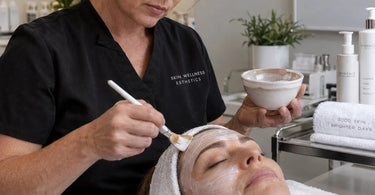
Be the professional clients rely on to protect every last strand of their carefully styled hair while you work your facial magic. There is nothing quite like the look of horror on a client's face when they realize their fresh blowout now has a stripe of facial massage oil right at the part line. You know the look. It is the same energy as spilling red wine on a white couch, except this couch has feelings and a Yelp account. The good news is that preventing facial products from dripping into a client's hairline is not rocket science. It is just good technique, the right tools, and a tiny bit of strategic foresight.
Whether you are performing a relaxing Advanced Facial Treatment or a deep-cleansing service that involves Facial Steamers, keeping product where it belongs is the difference between a repeat client and a less-than-stellar review. Let us dive into the practical, professional-grade strategies that keep hairlines clean, clients happy, and your treatment room running smooth.
Why Product Migration Matters More Than You Think
Let us be real for a second. A little dribble of cleanser near the ear might not seem like a big deal. But to a client who spent forty-five minutes and a small fortune on a silk press or blowout, it is a catastrophe. Product migrating into the hairline is not just about aesthetics. It is about the client experience. It signals a lack of attention to detail, and in a service industry built on trust and relaxation, that tiny slip can undo an hour of excellent work.
Beyond the client's hair, there is also the matter of the skin itself. Products pooling at the hairline can clog pores, cause breakouts along the forehead, and create irritation where the skin is often more delicate. Professional-grade Cotton Products and strategic barrier methods help you avoid both problems at once. The goal is simple: product stays on the skin, off the hair, and your client leaves with a glowing face and an intact hairstyle.
The Power of Barrier Creams: Your First Line of Defense
If you have not already made barrier cream a permanent resident on your backbar, now is the time. Think of barrier cream as a bodyguard for your client's skin and hairline. It creates a breathable, protective film that keeps product from penetrating where it does not belong [citation:1]. For facial services specifically, a thin layer of barrier cream around the perimeter of the face, along the hairline, and behind the ears creates a waterproof shield.
This is especially crucial when you are working with products that have slip, like Massage Oils, Lotions, and Creams or hydrating serums. Products with a thin, fluid texture have a mind of their own. They want to travel. Barrier cream tells them no. Apply it with intention before you begin your service, focusing on the temple area, the forehead, and the nape of the neck if your protocol extends that far. It is a small step that pays off in a big way.
Headbands: The Unsung Heroes of the Treatment Room
If barrier cream is the bodyguard, a quality headband is the security detail. The right headband does more than just look cute and keep hair out of the way. It creates a physical dam that stops product in its tracks. For facial services, you want a headband that is absorbent, gentle on the hair, and wide enough to actually cover the hairline.
Terry cloth headbands are a classic for a reason. They grip the hair, absorb any accidental drips, and are easy to sanitize between clients. When you are setting up for a service, make sure the headband sits snugly along the hairline without pulling or creating gaps. A loose headband is basically an invitation for product to sneak underneath. If you are working with clients who have delicate or color-treated hair, look for headbands with soft, non-abrasive edges that will not cause friction or breakage.
Technique Matters: How You Apply Product Changes Everything
You can have all the right tools, but if your application technique is messy, product will find its way to the hairline. Here are the professional habits that make a difference.
First, control your dosage. It is tempting to grab a generous pump of Facial Massage Oil or cream, but more product means more migration. Start with a small amount and add more as needed. You can always layer, but you cannot easily un-drip.
Second, work from the center outward. When applying cleansers, massage mediums, or masks, start at the nose, cheeks, and chin, and work your way toward the temples and hairline last. This gives you control over the product's edges and prevents you from accidentally pushing a puddle of cream into the hairline when you are focused on the cheeks.
Third, use tools to your advantage. Applicators & Spatulas are not just for hygiene. They give you precision. When applying a mask or a thick treatment product, a spatula lets you place the product exactly where you want it without your fingers creating a pushing motion toward the hair. For thinner products, a cotton pad or sponge can help you control the edges of your application.
The Role of Your Equipment and Setup
Your treatment room setup can either help you or work against you. If your client is positioned in a way that encourages gravity to work against you, product will slide. When using a Facial Steamer, condensation can form and drip down the face. Position the steamer at the correct distance and angle, and keep a clean towel or Compressed Sponge nearby to catch any stray moisture before it reaches the hairline.
If your service includes a massage component, consider using a Massage Bolster to position the head and neck comfortably. A well-supported head is less likely to shift, which means your product application stays controlled. And always, always keep High-Quality Towels within reach. A quick blot at the hairline mid-service is far better than trying to fix a drip after the fact.
What to Do When a Drip Happens Anyway
It happens to the best of us. Despite your best efforts, a tiny bit of product makes a break for the hairline. Do not panic. The key is to address it immediately and gently. Grab a corner of a clean towel or a damp cotton pad and blot, do not wipe. Wiping can spread the product further into the hair and create a bigger mess. Blotting lifts the product away without pushing it deeper.
If the product has already dried or left a residue, a slightly damp Compressed Sponge can help lift it without soaking the hair. For clients with textured or delicate hair, be extra gentle. The goal is to remove the product without disrupting their style more than necessary.
Final Thoughts: Precision Is a Professional Superpower
Preventing facial products from dripping into a client's hairline is not about being perfect. It is about being intentional. It is about choosing the right tools, using them with skill, and respecting the investment your client has made in their hair and their skin. When you master this small detail, you elevate your entire service. Clients notice. They may not say it out loud, but they feel the difference between a service where they leave feeling polished and one where they leave feeling like they need to go home and re-wash their hair.
So, stock your backbar with barrier cream, invest in quality headbands, refine your application technique, and keep a stack of clean towels handy. Your clients' hairlines will thank you. And so will their next appointment booking.
)