
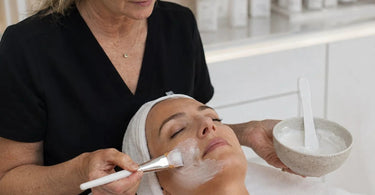
Your path to success is clear, but the path to a perfectly applied mask without a single drip on your client's gown or your pristine treatment room floor? That can feel like navigating a minefield in heels! We've all been there: you've mixed the perfect concoction, the client is relaxed, and just as you lean in for that final, flawless stroke, a rogue drop of product makes a break for it, heading straight for the client's hairline or that brand new uniform you just put on. It's the tiny, sticky nemesis of every aesthetician, massage therapist, and spa professional. But fear not, because mastering the art of the drip-free mask application is not only possible, it's a total game-changer for your confidence and your client's experience. Let's dive into the professional secrets that will keep your masks exactly where they belong—on the face!
Let's be real for a second. In the world of luxurious spa treatments, a facial mask is supposed to be the epitome of relaxation. The last thing we want is for our client to be tensely gripping the armrests, worried about a cold, goopy surprise sliding down their neck and into their freshly styled hair. The struggle is real, and it often comes down to a few key factors: product viscosity, application technique, and your workstation setup. But don't worry, I've got the insider scoop to turn you into a drip-prevention ninja, ensuring every service you provide is as clean as it is effective.
Why Do Masks Drip, Anyway? The Science of the Slip
Before we can conquer the drip, we need to understand why it happens. Think of your mask like a tiny, ambitious mountaineer. Its goal is to cling to the surface of the skin, but gravity is always pulling it downward. This is especially true for thinner, more fluid masks like serums or certain clay-based formulas. According to industry experts, the challenge is amplified with sheet masks, where the essence can pool at the bottom due to gravity, leading to a dry upper face and a drippy chin . For professional treatments, the culprit is often simply too much product applied too quickly. A study on packaging even highlights that using a higher viscosity product is key to preventing drips during use . So, the first step in our journey is acknowledging that we're in a constant battle with physics—and we're going to win!
Prep Work is Your Secret Weapon
The most effective drip prevention happens before you even open the jar or squeeze the tube. A well-prepared treatment room and a primed client are your best defense.
1. The Proper Drape Job
This is non-negotiable. A simple high-quality towel draped across the client's chest and neck is your first line of defense. For an extra layer of protection, consider using a disposable bib or a soft spa headband to keep hair completely out of the way. A recent guide for professionals emphasizes that proper draping is 'mess containment infrastructure' and can absorb virtually all incidental product contact outside the treatment zone . Trust me, a few extra seconds spent on draping will save you minutes of cleanup and save your client from that unpleasant 'drip on the collarbone' moment.
2. The Right Tools for the Job
Your application tool can make or break the experience. While some therapists swear by a standard flat spatula, I'm a huge fan of silicone applicators or dense-bristled foundation brushes. These tools are less porous than traditional wooden spatulas and allow for a much more controlled, even distribution of the product . They glide smoothly over the skin, helping to spread the mask in a thin, even layer that's less likely to pool and drip. And remember, always use a clean tool for each client to maintain the highest hygiene standards.
3. The Consistency Check
If you're mixing a powder mask, the consistency is everything. A runny mix is a guaranteed recipe for disaster. A pro tip from the world of professional jelly masks: 'Correct mixing ratio is the single most impactful variable — a firm, cohesive gel holds its shape on the spatula and stays where it is placed' . Your goal should be a smooth, spreadable paste that clings to your spatula without dripping off. If it's too thin, add a little more powder. If it's too thick, a tiny bit more liquid. Getting the ratio just right is the foundation of a successful application.
The Art of the Drip-Free Application
Now that we're prepped, let's get to the main event. This is where technique transforms you from a good therapist to a great one.
The Golden Rule: Less is More
One of the most common mistakes is applying too much product in one go. Not only does this lead to drips, but it also takes longer to dry and can feel heavy and uncomfortable for the client. Instead, think in layers. Start with a thin, even base coat and then go back to add a second, slightly thicker layer if the mask requires it. This controlled approach prevents overload and ensures a smooth, even set.
Strategic Application Sequence
Where you start matters. Instead of jumping around the face, follow a logical sequence that works with gravity. A professional guide recommends starting with the chin and jawline first, then moving to the cheeks and mid-face, followed by the forehead, and finishing with the nose and perioral zone . By starting at the lowest point, you establish a clean border and any overflow will drip onto your chest drape rather than running down the client's neck or into their hair. It's a simple change that makes a world of difference.
The Correct Spatula Technique
How you hold and move your spatula is crucial. The most effective method is the 'flat pressing stroke.' Instead of scooping and dragging the product up, hold your spatula or brush at a slight angle and gently press the product into the skin using smooth, outward motions. 'A flat, forward-pressing spatula stroke rather than a lifting or scooping motion' is key, as lifting the spatula tip can fling product off the edge . Work from the center of the face outward, following the natural contours of the skin.
Advanced Tips for Specific Mask Types
Different masks have different personalities, and they require a tailored approach.
- Clay Masks: These are usually thicker, but they dry quickly. Work in sections to ensure even coverage before the clay starts to set. Applying a slightly thicker layer on the T-zone can help control oil, but be careful to keep it away from the delicate eye and lip areas.
- Gel or Serum Masks: These are the runniest of the bunch. For these, a brush is often your best friend. It allows for a very thin, precise application that minimizes the risk of drips. Apply a generous but controlled amount, and consider using a fan brush for areas like the nose where pooling is common.
- Peel-Off Masks: The key here is to apply an even, thick enough layer to be peeled off in one piece. A thin or uneven layer will be a nightmare to remove and will inevitably cause a mess. Use a wide, flat spatula and apply with firm, even pressure.
Cleanup and Professionalism
Even with the best technique, a tiny drip can happen. The key is how you handle it. Keep a stack of applicators and a small bowl of water or cotton pads nearby for quick, discrete corrections. If a drip occurs on the skin, gently wipe it away with a damp cotton pad before it dries. And always, always check the hairline and neckline before the mask begins to set. A little bit of prevention goes a long way.
Equip Yourself for Success
At Pure Spa Direct, we understand the unique challenges of delivering a flawless spa experience. That's why we've curated a massive selection of professional-grade products and tools designed to help you work smarter, not harder. From the perfect spa essentials to high-quality professional cleaners and disinfectants, you can find everything you need to keep your services clean, efficient, and luxurious. Visit our website today and see why we're the one-stop wholesale source for beauty professionals!
