
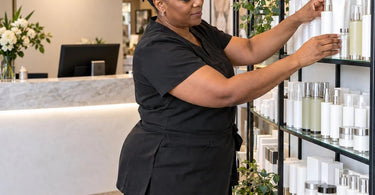
The choice of experts is rarely about doing more. It is about doing the right things with intention, consistency, and just enough sparkle to make clients stop, look, and actually buy. If you have ever walked into your own spa or salon after a busy Saturday and felt a little stab of panic at the sight of your retail shelves looking like a raccoon got loose in the back room, you are not alone. We have all been there, staring at that sad, gap-toothed display of product, wondering where the day went and why your beautiful retail wall suddenly resembles the cereal aisle after a snowstorm warning. The good news? A picked-over shelf is not a sign that you are bad at business. It is a sign that you are selling. The real trick is making sure your shelves look abundant and inviting even when they have been loved a little too hard. Let us dive into how to keep that retail display looking fresh, full, and impossible to ignore, because nobody wants to buy the last lonely bottle of anything.
Retail merchandising in a professional beauty setting is a different beast than retail anywhere else. Your clients are not wandering in off the street with time to browse. They are floating out of a treatment room, still smelling like eucalyptus and feeling like a new human. That is prime purchasing real estate, my friend. But a shelf that looks like it survived a Black Friday stampede kills that vibe instantly. The goal is to create a display that feels curated, intentional, and yes, a little bit abundant, even after a full day of services.
Why Picked-Over Shelves Kill Your Retail Sales (And Your Vibe)
Let us get real about the psychology here. A shelf with three products scattered like they are playing hide and seek does not scream luxury. It screams chaos. It whispers, quite rudely, that maybe nobody actually wants this stuff. Clients pick up on that energy, even if they cannot articulate why. They hesitate, they second-guess, and they walk out empty-handed while you are left wondering what went wrong.
When shelves look full, clients feel like they are choosing from a treasure trove of possibilities. When shelves look empty, they feel like they are scraping the bottom of the barrel. That is a terrible feeling to associate with your brand, especially when the products themselves are genuinely amazing. The solution is not to horde every single unit in the back room. The solution is to merchandise smarter, not harder.
The Art of the Illusion: Making Less Look Like More
Here is a little retail secret that big brands have known for ages: you do not need a massive inventory on the floor to create a sense of abundance. You need smart presentation. Facing labels forward is step one, but it is the bare minimum. The real magic happens when you use depth, risers, and strategic spacing to make your shelves feel lush even when your actual stock is running a little lean.
Pull products to the front of the shelf, always. A product sitting four inches back from the edge is invisible. A product sitting right at the lip of the shelf, label front and center, is practically begging to be picked up. If you have multiple units of the same item, resist the urge to line them up like little soldiers in a single row. Instead, stack them vertically or create a small pyramid. This draws the eye upward and creates a sense of volume without needing twenty units on display.
Use shelf risers, small trays, or even inverted boxes covered in fabric to create tiered displays. Elevation is your friend. A product that sits slightly higher than its neighbor gets noticed. This is especially effective for impulse-buy items like Cuticle Oil or small tubs of Sugar Scrubs that look adorable when they are clustered together on a little pedestal.
Rotate, Refresh, and Restock Like a Boss
The single most effective way to prevent the picked-over look is to treat restocking as a daily ritual, not a weekly chore. If you wait until the end of the week to face your shelves, you are fighting a losing battle. By day three, everything looks like a clearance rack at a discount shoe store.
Make it a habit to do a quick five-minute shelf reset at the end of every day or the beginning of every shift. Bring products forward. Straighten the stacks. Pull the last unit of something from the back and give it a place of honor in the front. If something is completely sold out, do not leave a gaping hole where it used to live. That hole is a visual vacuum that makes the entire shelf feel emptier than it actually is.
Instead, redistribute what is left to fill the space. Shift products over, create a new grouping, and make the shelf look intentional again. A shelf with five different products artfully arranged looks fuller than a shelf with eight products spaced out like they are in quarantine.
Rotate your featured items, too. If a particular Premium Skincare product is flying off the shelf, bring its backup unit out and make it the star of a small vignette. Pair it with a related item, like a Facial Steamer or a jar of Spa Body Treatments, so the display tells a story even when individual units are low.
The Power of Cross-Merchandising (Or, How to Make One Product Look Like Ten)
Cross-merchandising is not just a fancy phrase for putting things next to each other. It is the art of making a client realize they need three things when they only came in for one. And it is a brilliant strategy for keeping shelves looking full because you are always refreshing the combinations.
Think about the service journey. If a client just had a brow service, what do they need at home? A tint, a brow gel, maybe a little Brow Lamination Supplies for maintenance. Cluster those items together on a small tray with a cute sign that says something like, "Keep those brows on fleek." The tray itself becomes a display unit. Even if you only have two of the three items in stock, the grouping still looks complete and curated.
For waxing clients, create a post-wax oasis. Group Ingrown Hair Products with a gentle exfoliant like a Sugar Scrub and a soothing ItalWax - Pre/Post product. This not only educates the client on the full routine, but it also means that when one item sells out, the others can be rearranged to cover the gap.
For nail clients, a little display of Cuticle Oil, a Nail File, and a fun shade of Professional Gel Polish creates a "take the salon home" moment. When the gel polish is running low, the cuticle oil and file still make the display look intentional and full.
Smart Inventory Management: The Backroom Is Your Best Friend
You cannot prevent picked-over shelves if you do not have a system for knowing what you have and where it lives. This is where your backroom or storage closet becomes the unsung hero of your retail strategy.
Organize your backstock by category and by shelf location. When a front-facing shelf has only one unit left, you know exactly where to go to grab a backup without rummaging through a bin of mystery products. Label everything. Use bins or baskets to keep categories together. A well-organized backroom means that restocking the floor is a thirty-second job, not a thirty-minute treasure hunt.
Keep a "low stock" list posted somewhere visible. When you notice that your Professional Stripless Hard Wax is down to its last two boxes, write it down. When you are placing your order for Waxing Supplies for Professionals or any other essentials, that list is your guide. This prevents the panicked "oh no, we are completely out of everything" moments that lead to sad, empty shelves.
Consider a par-level system. Decide on the minimum number of each product you want on the floor at all times. When it dips below that number, it gets restocked from the back. This simple rule keeps your shelves looking consistently full without requiring you to check every single item every single day.
Presentation Tools That Do the Heavy Lifting
Sometimes, the difference between a shelf that looks picked over and a shelf that looks polished comes down to the props and presentation tools you are using. You do not need to spend a fortune, but a few strategic investments can transform your retail area.
Bamboo Nami Tray/Holder is a beautiful example of a simple tool that elevates everything it touches. Putting a few products on a bamboo tray immediately makes them look like a curated collection rather than random inventory. The tray creates a visual boundary, so even if the tray is only half full, it reads as an intentional display rather than a depleted shelf.
Small risers are another game-changer. You can use simple acrylic risers, wooden blocks, or even pretty boxes wrapped in fabric. The goal is to create levels so that products in the back are still visible. A tiered display looks fuller because your eye is drawn to multiple planes of product at once.
Baskets and bins are your secret weapon for those awkward gaps. Instead of leaving a bare shelf where a product used to be, place a small basket filled with sample packets, travel sizes, or complementary items. A basket of Compressed Sponges or a bowl of individually wrapped Cotton Products looks intentional and inviting. It fills the space visually while also offering an easy add-on purchase.
Signage is another underrated tool. A small, elegant sign that says "Our Favorites" or "Client Obsessions" placed near a group of products makes that section feel curated and special. If a product is running low, having a sign that highlights the category rather than the specific item keeps the focus on the experience rather than the inventory count.
Train Your Team to Be Shelf Stewards
You cannot be everywhere at once. If you are a solo esthetician, you are the only one managing your shelves, and that is a full-time job in itself. But if you have a team, everyone needs to understand that retail presentation is part of the job, not just the front desk person's responsibility.
Make shelf resets a quick part of the closing checklist. It takes five minutes. Five minutes of facing labels, pulling products forward, and redistributing items can be the difference between a client who browses and a client who walks right past. When everyone on the team knows the expectation, it becomes a habit rather than a chore.
Empower your team to make decisions about display. If a stylist notices that a particular Lash Extension product is almost gone, they should feel comfortable grabbing a backup from the back and resetting the display. This is not micromanagement territory. This is teamwork.
The End-of-Day Reset: A Ritual Worth Keeping
Let us talk about the end-of-day reset. It is the single most powerful habit you can build to prevent the picked-over look. Before you lock the door and go home to put your feet up, spend five to ten minutes giving your retail area a little love.
Start by walking the space like a client would. What catches your eye? What looks sad? What looks empty? Fix those things. Bring products forward. Fluff the baskets. Straighten the stacks. If something is completely sold out, rearrange the remaining products to fill the space.
This ritual does more than keep your shelves looking pretty. It gives you a daily snapshot of what is selling and what is not. You will start to notice patterns. You will know which products need to be reordered and which ones need a little more love in the form of a better placement or a mention during services.
And here is the bonus: when you start your day with a shelf that looks beautiful and full, you feel better about your space. Your clients feel it, too. A well-merchandised retail area communicates that you care about the details, that you are proud of the products you carry, and that you are running a professional, thoughtful business. That energy translates into sales.
Embrace the Ebb and Flow
Here is the truth that no retail guru will tell you: your shelves will never look perfect all the time. You will have busy weeks where everything sells out and you are waiting on a shipment. You will have slow weeks where the same products sit there looking at you. That is the nature of retail in a service-based business.
The goal is not perfection. The goal is intention. When your shelves look picked over, do not panic. Do not assume you are failing. Just do a quick reset, pull from your backstock, and use your presentation tools to make the most of what you have. A little creativity goes a long way.
Remember that every empty space on your shelf represents a client who trusted your recommendation and took home a product they love. That is not a problem. That is a victory. The trick is making sure the next client who walks in sees a display that makes them want to be part of that story, too.
So go forth, face those labels forward, stack those products like the retail rockstar you are, and let your shelves do some of the selling for you. Your clients will thank you. Your bottom line will thank you. And your shelves will never look picked over again, or at least not for long.
