
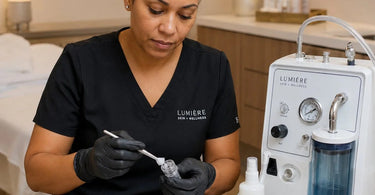
Because every detail matters...especially the gross little one you can't see. Let’s be real for a second. You spent good money on that professional microdermabrasion machine. It’s the workhorse of your facial room, the secret weapon against dull skin, and frankly, a major investment for your spa business. But here is the dirty little secret (pun very much intended): That machine is silently screaming for help every time you turn it on with a clogged filter. We aren’t just talking about a little loss of suction. We are talking about burning out your motor, creating a bacteria party inside your handpiece, and delivering a facial that has the exfoliating power of a gentle breeze. Today, we are going to save your machine’s life, save you thousands in repair costs, and keep your clients glowing—not just because of the treatment, but because they aren't breathing in last week's dead skin cells.
Let’s dive into the nitty-gritty of the microdermabrasion filter. If the words “rinse it under the tap and throw it back in” have ever left your lips, grab a cup of coffee. We need to talk.
Why Your Microdermabrasion Filter Deserves More Respect
Imagine asking a vacuum suction machine to suck up a pile of sand while you've taped a sock over the hose. That is your microdermabrasion machine running on a dirty filter. The filter is designed to catch dead skin cells, debris, and the fine dust created by diamond tips or crystals. When it gets clogged, the motor has to work twice as hard to pull suction. Eventually, the motor overheats, burns out, and you are left with a very expensive paperweight while you wait for a replacement part.
But wait, there is more! A damp, dirty filter is a breeding ground for bacteria. Even if you wipe down your handpiece with professional disinfectants, if that filter is dirty, you are blowing contaminants back towards the client’s skin. Gross, right? Proper cleaning ensures sanitary conditions and extends the life of your equipment. It’s a win-win.
Step 1: The Immediate Aftercare (Don't Let It Sit!)
You just finished an amazing advanced facial treatment. The client is glowing. You want to clean up and go chart your notes. STOP. The number one mistake technicians make is letting the debris dry inside the filter. Once that gunk hardens, it is ten times harder to remove. Immediately after turning off the machine, remove the microdermabrasion handpiece and take out the filter.
Step 2: The Gentle Disassembly
Check your manufacturer's guidelines (yes, even Spa Masters and Prosana have specific rules), but generally, you will be looking at a small foam or mesh cylinder. Some are disposable, but many high-end professional machines have reusable filters meant for regular cleaning. If it is disposable and looks like a dirty hamster cage, replace it! If it is reusable, handle it gently. These parts are delicate.
Step 3: The Rinse (But Not How You Think)
Do not just blast it with high-pressure water. That can tear the mesh. Instead, hold the filter under cool to lukewarm running water from the inside out. Yes, reverse direction! If you have a removable aerator on your sink faucet, take it off to get a strong, clean stream. Run the water from the hollow center of the filter outward. This pushes the dead skin cells and spa product residue out the way they came, rather than jamming them deeper into the fibers.
Step 4: The Enzyme Soak (The Pro Move)
Here is where we separate the rookies from the rockstars. For a deep clean, prepare a small bowl of warm water with a drop of enzyme-based cleanser or even a gentle disinfectant solution. Let the filter soak for 10–15 minutes. Enzymes are amazing because they literally eat the protein-based dead skin cells that are clinging to the filter. Do not use bleach or harsh chemicals unless specified, as they can degrade the foam or plastic.
Step 5: The Final Flush and Dry
After the soak, rinse the filter again with lukewarm water. Squeeze it gently (do not wring it like a dishrag, or you will warp it) to remove excess water. Then, place it on a clean, dry, lint-free towel. Here is the most important step: Let it air dry completely. I know you are in a rush. I know you have back-to-back waxing appointments. But putting a wet filter back into an electrical machine is a recipe for mold, mildew, and electrical shorts. If you are in a hurry, have a spare dry filter ready to go. Rotate them out.
Step 6: Don’t Forget the Handpiece and Tips
While the filter is drying, show some love to the rest of the advanced spa equipment. The diamond tips need to be scrubbed with a soft brush (like a soft toothbrush) and warm, soapy water to remove lodged debris . Rinse thoroughly and disinfect according to your state board standards. Remember to wipe down the handpiece body with an approved disinfectant wipe.
When to Throw in the Towel (Replacement Schedule)
Even with impeccable care, filters do not last forever. You should replace your microdermabrasion filters every 3 to 6 months depending on how many facial treatments you are pushing out . If the foam feels crunchy, looks discolored after cleaning, or has visible tears, toss it. We carry a massive inventory of replacement parts and filters for all the top brands, so you never have to run a dirty filter again.
What About Crystal Microdermabrasion?
If you are using a crystal microdermabrasion system, the maintenance is similar, but you have the added fun of checking the tubing for clogs. The crystal dust can cake up in the tubes. Make sure to run cleaning solution through the system as per the manufacturer's manual to avoid a crystal explosion in your treatment room.
The Products You Actually Need
To make this whole process painless (and maybe even a little fun), you need the right arsenal. Stock up on Lucas Products and Dukal cleaning supplies. A set of tiny detail brushes works wonders for getting into the grooves of your Equipro handpieces. And never underestimate the power of a good lint-free towel to finish the drying process without leaving fuzzies behind.
The Bottom Line
Cleaning your professional microdermabrasion filter isn't the glamorous part of being an esthetician. It is not as fun as unboxing a new ItalWax warmer or picking out nail art rhinestones. But it is the discipline that separates a true professional from a hobbyist. A clean machine runs better, sounds better, and delivers results that keep your booking calendar full.
So, set a reminder on your phone. Label your “dirty” and “clean” bins. Buy those spare filters today. Your future self (and your bank account) will thank you when that motor purrs like a kitten for the next five years.
Ready to stock up on Microdermabrasion supplies or grab some backup disinfectants? Shop Pure Spa Direct. We have thousands of spa essentials to keep your business running smoothly, even the boring stuff. Now go clean that filter!
)