
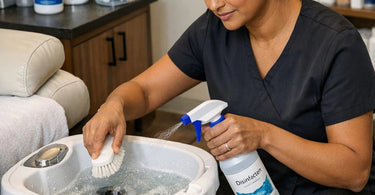
Pros rave about this innovation, and honestly, the only thing more terrifying than a client with ticklish feet is a portable foot bath that hasn't been properly cleaned. You know the drill: you finish a glorious, stress-melting foot soak, the client floats out on a cloud of relaxation, and you're left with a basin full of murky water, a few rogue pieces of sea salt, and the haunting suspicion that something might be growing in there. But fear not, my fellow spa warriors! We at Pure Spa Direct are here to turn your sanitation sorrows into sparkling success.
Let's be real: portable foot baths are the unsung heroes of the pedicure world. They are lightweight, easy to store, and perfect for mobile services or salons with limited space. However, that cozy, warm, wet environment is also a five-star resort for bacteria, fungus, and things that should probably have their own zip code. Skipping proper cleaning isn't just gross; it's a one-way ticket to a state board inspector’s bad side and a surefire way to lose those precious five-star reviews. So, grab your gloves and your favorite disinfectant, because we’re about to get down and dirty—so you don't have to stay that way.
Why You Can't Just "Rinse and Forget"
Okay, confession time. Have you ever finished a service, drained the water, given it a quick slosh under the tap, and called it a day? I see you. We’ve all been tempted. But here is the icky truth. That seemingly clean pedicure chair or portable basin is a biofilm factory. Biofilm is that slimy, invisible layer of microorganisms that clings to your pipes, jets, and basin surfaces. Rinsing alone doesn't remove it; it just says, "Hey bacteria, nice home you have here!" Proper sanitation is the only way to evict these microscopic squatters for good. Not only does it protect your clients from nasty infections like Mycobacterium fortuitum, but it also protects your business. One lawsuit from a pedicure-related infection can close your doors faster than you can say "whirlpool jet."
Step 1: The Great Drain (Don't Just Dump, Darling!)
First things first. The actual draining. It sounds simple, but there is an art to it. After the service, do not immediately carry that heavy, sloshing bath across the room like a cocktail waitress in a hurricane. That is a recipe for a soaked uniform and a very slippery floor. Most portable units have a drain hose or spout. Pull that sucker out and direct it toward a floor drain, a bucket, or a utility sink. Let gravity do the heavy lifting. While it's draining, use a protective glove to fish out any large debris—dead skin, petals, or that one loose rhinestone that escaped. Toss that in the trash, not down the drain. Plumbers are expensive, and they don't find your "organic potpourri" as charming as you do.
Step 2: The Pre-Clean (Scrub-a-Dub-Dub)
Once drained, you need to break up that biofilm. Fill the foot bath with cool or lukewarm water (hot water can actually set proteins, making them harder to remove) and a dedicated professional cleaning agent. Do not use dish soap. Dawn is for greasy ducks, not medical-grade sanitation. Use a proper brush—designated only for foot baths—to scrub every inch. Get into the jets if it has them, the grooves, the drain hole, and the bottom. Imagine a tiny germ is holding a protest sign; you want to scrub that sign right out of its hands. Rinse this soapy, gross water away completely.
Step 3: The Sanitizing Soak (The Spa for Your Spa)
This is the non-negotiable step. You must use an EPA-registered hospital-grade disinfectant or a tub and jet disinfectant specifically designed for salons. Follow the label instructions to the letter. If it says 10 minutes, do not set a timer for 9 minutes and 59 seconds. Those chemicals need "contact time" to actually kill the pathogens. Fill the basin with the correct dilution of warm water, add the solution, and run the pump or jets (if applicable) to circulate it through the internal plumbing. Then, let it sit. Go fold some towels. Sneak a sugar scrub sample. Whatever you do, do not rush the science.
Step 4: The Final Rinse & Air Dry (Patience, Grasshopper)
After the contact time is complete, drain the disinfectant solution. Rinse the entire unit thoroughly with fresh, clean water to remove any chemical residue. No one wants a "disinfectant-scented" pedicure. Dry the exterior with a clean, disposable towel, but allow the interior to air dry completely. Storing a wet foot bath is like tucking a slice of pizza into your toolbox and forgetting about it. It will get moldy. It will smell. It will be awful. Store it upside down on a clean, dry surface to allow air circulation. If it has a lid, leave the lid off until the next use.
What About Those Fancy Jets and Whirlpool Features?
Oh, you have the Continuum Pedicure system or a high-end portable with jets? Congratulations! You also have the most annoying places to clean. For jet systems, the sanitization step is crucial because water sits in those lines. Many professionals use a line purge system or run a specialized cleaning tablet through the jets monthly. Some newer pedicure spas have "self-cleaning" cycles, but do not trust them blindly. Always follow up with a manual scrub. Those jets are like the vents in your car—dusty, forgotten, and disgusting if ignored.
The Weekly Deep Clean (For When You're Feeling Ambitious)
Once a week (or more if you're a high-volume nail salon), do a deep clean. This means disassembling any removable parts like jet covers, screens, or filters. Soak those pieces in your disinfectant solution. Use a small brush, like an old nail brush, to get into the tiny crevices. Check your manufacturer's manual for specific instructions. Some brands like Whale Spa or Belava have very specific care requirements. Follow them, or risk voiding your warranty and having a very sad, non-bubbly foot bath.
Products That Make Draining Suck Less
Let's be honest, bending over to drain a foot bath is no one's favorite yoga pose. That is why investing in the right equipment changes the game. While we are talking about nail salon furniture and portables, consider ergonomics. A massage table is for backs, but a foot bath at the wrong height is for chiropractors. Look for units with easy-grip handles and long drain hoses. If you are mobile, collapsible silicone foot baths are a dream because they don't hold onto germs in scratches like hard plastic does. And please, for the love of all that is holy, replace your portable foot baths every 1-2 years if they are heavily used. Plastic degrades, scratches form, and bacteria build homes in those scratches.
Building a Better Sanitation Station
You wouldn't use a dirty facial steamer on a client's face (we hope!), so don't use a dirty foot bath. Set up a dedicated cleaning station. You need: a measuring cup for disinfectant, a timer (use your phone, we know you're addicted to it anyway), dedicated brushes (color-coded so you don't accidentally scrub the toilet with the foot bath brush—please tell me I don't have to specify that), and a drying rack. Treat your tools with respect. Your towels are bleached, your compressed sponges are fresh, and your nail files are single-use. Why would the vessel that holds your client's feet be any less hygienic?
Client Communication: The Secret Sauce
Here is a pro tip from Zoey to you: tell your clients you clean this way. While they are soaking, casually mention, "We just deep-sanitized our foot baths with a hospital-grade disinfectant. Safety first, right?" Clients eat that up. It builds trust. In a world where people are increasingly aware of sanitation (thanks, global events), showing off your professional cleaning habits is a massive flex. It justifies your prices and makes you look like the responsible goddess you are.
Mistakes That Make Me Want to Whirlpool Away
Let's do a rapid-fire "Don't You Dare" list. Don't use bleach. It corrodes the plastic and the internal parts, and it's actually not a great disinfectant in the presence of organic matter (like that skin you missed). Don't use vinegar. It smells like salad dressing and doesn't kill the hard stuff. Don't ever, ever use a UV sterilizer as a primary cleaning method for a foot bath. UV light needs direct line of sight, and we all know those jets have shadowy corners. Don't fill the foot bath while a client is waiting unless you plan to dump it immediately after. Pre-filling is pre-growing bacteria. And finally, don't store your cleaning chemicals next to your hair color. Accidents happen, and "ginger ale" colored disinfectant looks a lot like a refreshing beverage to a tired stylist. Put a label on it!
Your Portable Foot Bath is a Business Asset
When you buy a pedicure system from Pure Spa Direct, you aren't just buying plastic. You are buying the vessel for relaxation. Whether you prefer the luxurious feel of ItalWax for your services or the reliability of our high frequency machines for facials, every tool needs love. The humble foot bath is the throne upon which your client's tired feet rest. Keep it sparkling. Keep it dry. And for goodness' sake, label that drain hose before someone mistakes it for a straw. You've got this, salon superstar. Now go forth and sanitize!
)