
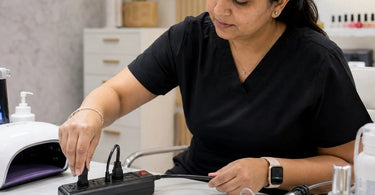
Elevate services with this game-changer now... and by 'game-changer', we're talking about the humble, often-overlooked, but potentially electrifying extension cord. Let's be real, darling: in the glamorous, fast-paced world of spa, salon, barber, and waxing studios, we're obsessed with the latest facial steamers, the most potent professional wax warmers, and the chicest pedicure chairs. But what's powering all this fabulousness? Often, it's a tangled mess of cords snaking across the floor, begging for a disaster. We get it—outlets are never where you need them, and your massage table or nail table seems to be on a permanent vacation from the nearest plug. But before you daisy-chain another power strip, let's talk about why every professional sanctuary needs a crystal-clear, written safety policy for extension cords, because nothing ruins a relaxing aromatherapy session quite like a spark and a puff of smoke.
This isn't just about being a stickler for rules; it's about protecting your clients, your staff, your investment, and your business from a 'shocking' incident that could literally shut you down. A 2026 electrical safety update from WorkSafe Queensland highlights a crucial point: equipment like extension cords in service environments (think hairdressing salons with blow dryers or cleaning staff with vacuums) aren't just 'nice to have'—they fall under strict regulations. They must be regularly inspected, tested, and tagged by a competent person. Ignoring this isn't just a safety faux pas; in many places, it's a legal liability.
The Not-So-Shocking Reality: Why Your Cords Are a Liability
Imagine this: you're in the flow, your ultrasonic facial machine is humming, your gel polish lamp is curing, and your client is in a state of bliss. Suddenly, a stylist trips over a cord stretched across the aisle, yanking a hot hair styling tool off the counter. Or worse, a frayed cord you've been meaning to replace causes a short circuit, flickering the lights and terrifying everyone. These aren't hypotheticals. In busy treatment rooms, extension leads are frequently moved, exposed to foot traffic, and—let's be honest—subject to abuse. Water from pedicure supplies or cleaning solutions is a constant hazard. The risk of electric shock, burns, equipment failure, and even fires is incredibly real.
The core of the problem is often misuse. We've all seen it: a single extension cord powering a towel steamer, a waxing supplies warmer, and a ring light simultaneously, far exceeding its capacity. Or using an indoor-rated cord for a sunless tanning equipment setup near an open window. A clear safety policy isn't a buzzkill; it's a sanity saver and the backbone of a professional, safe, and efficient workspace.
Building Your Bulletproof Extension Cord Safety Policy
Creating a policy doesn't require an engineering degree. It's about common sense, clear rules, and a little bit of professional commitment. Here's how to build yours, blending practicality with a touch of that Pure Spa Direct savvy:
1. The Golden Rule: Inspect, Test, and Tag
Before any cord gets plugged in, it should be inspected. Is the sheathing intact? Are the prongs straight? Does it look like it's been through a war? If the answer to any of those is questionable, it's out. More formally, as regulations like the Electrical Safety Regulation 2013 suggest, your equipment used for 'service work' (that's you and your team) must be inspected and tested by a 'competent person' at least once every year. This isn't a DIY job with a multimeter from the hardware store—it's a job for a professional who will then attach a durable tag. That tag is your proof of safety. Think of it as a hall pass for your extension cords. For office equipment like computers, the interval might be every five years, but in a busy treatment room, annual testing is the standard.
2. The 'One-and-Done' Rule: No Daisy-Chaining
This is the number one culprit for overloaded circuits. Daisy-chaining—plugging one power strip or extension cord into another—is a fire waiting to happen. A clear policy states: 'One cord from the wall, one plug per outlet.' If you need more outlets, invest in a high-quality power strip with built-in surge protection from a reputable brand. Better yet, have a professional electrician install additional outlets where you need them most—like under your nail tables or behind your pedicure chair/spa unit.
3. The Perfect Match: Right Cord for the Right Job
Not all cords are created equal. A cheap, thin-gauge cord from the discount store is not for professional use. Your policy should specify that only heavy-duty, grounded extension cords with a sufficient gauge (thickness) for the equipment's power draw are allowed. For instance, a power-hungry high frequency machine needs a cord that can handle the load. Also, reserve outdoor-rated cords for any equipment near entrances or in potentially damp areas, as they offer more protection. Don't forget the hidden heroes: ensure the cords for your massage table warmers or body wrap heating blankets are rated for their specific use.
4. Keep it Clean, Keep it Dry
Water and electricity are a deadly mix, a fact underscored by safety standards for spas and baths. Your policy must mandate that cords are kept clear of water, spills, and any liquids. This means no cords trailing across wet floors after a pedicure service or near a facial steamer. Cords should also be kept clean—wipe them down regularly to prevent a buildup of dust, hair, or product residue which can be a fire hazard. When not in use, they should be stored off the floor and neatly coiled, ensuring they are fully unwound before use to prevent overheating.
5. The Daily Walk-Through
Make cord safety a part of your daily opening and closing rituals. Just like you check your hygienic table paper or your professional cleaners and disinfectants, do a quick visual sweep of all cords and outlets. Is anything frayed? Is any cord pinched under a portable massage table leg? Is a power strip overstuffed? A quick check can prevent a major incident.
Making Safety Your Brand's Best Accessory
Ultimately, a safety policy is only as good as its enforcement and the culture you build around it. When every member of your team—from the new assistant to the master lash and brow tint specialist—understands that safety is non-negotiable, you've created a sanctuary of trust. Clients notice a well-organized, professional space. It tells them you care about every detail, not just the obvious ones. And hey, in an industry where first impressions are everything, knowing you've mastered the art of the safe extension cord is just another way to shine.
So, let's leave the tangled mess and the 'it'll be fine' attitude where it belongs: in the past. Your commitment to safety is a commitment to your business's longevity and your clients' peace of mind. Now, that's a policy everyone can feel good about.
