
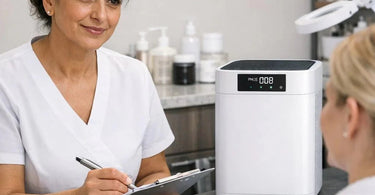
The future is here, and frankly, it smells a whole lot better than the past. Do you remember the days when walking into a salon meant getting hit in the face with a cocktail of acrylic fumes, hairspray fog, and that mysterious 'eau de old towel'? Yeah, we don't miss those days either. Today, a professional air purifier is as essential to your salon as your Facial Steamer is to your esthetician. But here is the dirty little secret (literally): that shiny metal box sucking in the bad guys needs a little TLC too. You wouldn't let your professional salon equipment run into the ground, right? So, let's talk about how to keep that air purifier humming like a happy bee instead of wheezing like a grumpy old man. Because let's be real, nobody wants to breathe recycled nail dust.
Maintaining your air purifier isn't exactly rocket science, but it does require a bit of a routine. If you ignore it, that machine you paid good money for starts working against you. Clogged filters mean the motor has to work harder, which sucks up more electricity (ouch, your bill), and eventually, it just stops catching the bad stuff. Soon enough, your Waxing Supplies station will be smelling like a chemical plant again. We want your clients to smell your lovely Aromatherapy Supplies, not the monomer liquid from the back room.
Think of your air purifier like your favorite pair of shears. If you drop them on the floor and never sharpen them, they get dull and useless. A dirty air purifier is just a very expensive, very ugly fan. So, grab a coffee (or a strong energy drink, we don't judge), and let's dive into the nitty-gritty of keeping your air crisp, clean, and ready for business.
Why Bother? The 'Duh' Reasons To Clean Your Machine
Before we get into the 'how', let's talk about the 'why' for a second. You might be thinking, 'Abigail, I am swamped. I have back-to-back Brow Lamination appointments and a client who wants hot pink foils. I don't have time to baby an appliance.' We hear you, sister. But consider this: an unmaintained unit becomes a breeding ground for bacteria and mold. Yes, you read that right. That thing that is supposed to clean the air can actually start blowing out spores if the filters are wet and gunky . Gross, right?
Secondly, health codes are getting stricter. Many states and health departments are cracking down on indoor air quality, especially in nail salons where chemical vapors are high . Keeping logs of your filter changes isn't just for nerds; it keeps you compliant and your team safe. And lastly, money. A well-maintained unit lasts longer. With the cost of top-quality equipment these days, you want that ROI to stretch as far as your favorite pair of leggings.
The Main Event: Step-by-Step Maintenance Guide
Alright, ladies, put on your rubber gloves (the cute pink ones from Barco Uniforms, obviously). Here is your monthly checklist to keep that air purifier in fighting shape. Remember, different brands vary, so always check the manual. But these are the universal truths of clean air.
Step 1: The Power Down & Visual Inspection
First things first: unplug the unit. We love you, but we don't want you zapped. Take a look at the intake vents. Is there a layer of dust, hair, or lint so thick you could knit a sweater? That is your first sign of neglect. Professional Cleaners & Disinfectants are great for surfaces, but for the machine itself, a simple vacuum with a brush attachment is your best friend. Gently vacuum the grilles on the outside to get the big stuff out of the way before you even open it up.
Step 2: The Pre-Filter Tango
Most professional units have a pre-filter. This is the 'bouncer' of the air purifier world. It catches the big particles: dust bunnies, hair clippings, and that rogue piece of glitter that escaped the Nail Art Rhinestones jar. Depending on your environment, you should check this every 2 to 4 weeks. If it is washable (check your manual!), rinse it under lukewarm water. Let it dry completely before putting it back. Putting a wet filter in is like inviting mold to a pool party in your living room. If it isn't washable, replace it. These pre-filters are relatively cheap compared to the main filter, so don't be stingy!
Step 3: The HEPA Hero
HEPA filters are the heavy lifters. They catch the microscopic baddies—the bacteria, the virus particles, the fine Acrylic Nail Supplies dust that settles in your lungs. The golden rule? HEPA filters are NOT washable. Washing them destroys the intricate mesh. Most need to be replaced every 6 to 12 months . Pro tip: Write the installation date on the filter with a Sharpie. That way, six months later when you can't remember if you changed it, you have proof. If you do a lot of Dipping Powder Systems or filing, you might lean towards the 6-month side because that dust is aggressive.
Step 4: The Activated Carbon Savior
This is the filter that fights the stink. If you do Professional Hair Color or gel nails, you know the smell can linger. Activated carbon absorbs gases and odors. Unlike HEPA, carbon filters do have a lifespan measured in months, not years. Generally, you are looking at every 3 to 4 months . How do you know it's dead? When you walk into your salon and can smell the ItalWax melting from the front door, your carbon filter is waving a white flag. Change it immediately.
Real Talk: Scheduling Is Everything
Listen, we know you are busy. You are a Lash & Brow queen, a Nail Tables master, and a therapist all rolled into one. So, set a schedule. Put a recurring reminder on your phone. Many manufacturers even offer auto-ship programs for filters . I love that. It is like Quality Wax Strips showing up right before you run out. Outsourcing your memory is a boss move.
Create a little log book. It doesn't have to be fancy; a spiral notebook kept in the drawer next to your Nail Art Supplies works fine. Write down when you changed the HEPA or Carbon. If you have multiple staff members, delegate this task to your junior stylist or your lead esthetician. Nothing builds character like cleaning filters, right?
The 'Uh Oh' Signs: When It's Crying For Help
Sometimes, the machine talks to you. You just have to listen. If the suction feels weak, that is a sign of a clog . If the noise level has changed (suddenly louder or making a rattling sound), something is loose or the motor is straining. If you turn it on and it smells like burning dust... yep, that is your sign to turn it off and clean it out before you start a fire.
Placement matters too. Don't shove your purifier in a corner behind a pile of Professional Cotton, Sponges, and Wipes. It needs space to breathe. Give it at least a foot of clearance on all sides. And please, for the love of all that is holy, turn it on before you start your first service and leave it on until you leave . Running it for just an hour after lunch is like using one ply of toilet paper in an emergency. Pointless.
Conclusion: Go Forth And Breathe Deep
Maintaining your professional air purifier isn't glamorous. It doesn't have the instant gratification of a fresh coat of Premium Nail Polish or the buzz of a new High Frequency Machine. But it is the unsung hero of your business. It keeps your staff healthy (less sick days = more money), keeps your clients comfortable (they will linger and buy more Spa Retail Products), and keeps the local health inspector happy.
So, set those reminders, buy those replacement filters, and show your air purifier some love. Your lungs will thank you, your nose will thank you, and honestly, your electric bill will probably thank you too because that motor won't be working overtime. Now, go crush your day, you magnificent salon owner, you. And maybe go change that filter while you're at it.
)