
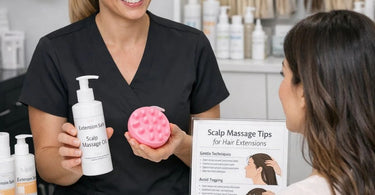
Quality drives success - stock this now. Let's be real for a second, darling. You know that moment of panic when a client with a gorgeous, expensive, floor-length sew-in plops into your Luxury Spa Furniture and requests a deep tissue scalp massage? Your brain immediately starts screaming, "Will I get my fingers tangled in those micro-rings? Will I accidentally rip out a $2,000 row of beaded wefts?" We have all been there, sweating bullets while trying to look professional. But fear not, because adding scalp massage to your service menu for extension clients isn't just possible; it is a massive upsell opportunity waiting to happen. When you master this skill, you become the hero who soothes the itch, relieves the tension, and sends them out the door with their investment pieces still firmly intact. No stress, no tangles, just pure relaxation magic.
Hair extensions are a commitment, and let’s be honest, they can get heavy. Between the weight of the added hair and the tension of the braids or bonds, your client’s natural scalp is screaming for a little TLC. But performing a Professional Scalp Treatment on this terrain requires a shift in technique. You cannot just go in like a washing machine on spin cycle. You need finesse, a solid strategy, and the right tools to make sure you are relieving stress, not creating a matted mess. Today, we are diving deep into the do's and don'ts of handling these precious heads so you can book those services with confidence.
The Extensions Lowdown: Know What You Are Touching
Before you even turn on your Towel Steamers and start prepping the room, you need to play detective. Not all extensions are created equal, and blindly massaging a head is how disasters happen. You have your tape-ins, which lay flat; your keratin bonds, which are little tubes; your sew-ins with the braided tracks; and your micro-rings or I-tips. Each one has a different vulnerability point. For example, running your fingers aggressively over a row of micro-rings can actually loosen the clamp, causing the extension to slide down the hair shaft. Yikes. Take two seconds to ask, "How are these attached?" This small talk isn't just polite; it is a safety inspection that saves you from a liability nightmare later.
Furthermore, check for Lash & Brow Service Supplies level of precision here: look for "matting." If a client hasn't been maintaining their extensions properly, they might have tight tangles at the root. Trying to massage over a tangle is like trying to comb through a knot with your fingers—it just makes it tighter. If you feel resistance, stop. You have every right to say, "Honey, I want to give you this amazing Aromatherapy Supplies scalp rub, but the roots are a little unhappy. Let's do a quick detangle first, or I can focus solely on your neck and shoulders today." Setting that boundary keeps you safe and the client happy.
Gravity is Your Best Friend (Seriously)
The biggest mistake therapists make is pressing down toward the scalp. When you push down on the base of a braid or a bonded extension, you are essentially pushing the bulk of the hair into the follicle, which causes friction and tangling. Instead, we want to lift. The safest and most effective scalp massage technique for extension clients is the "Glide and Lift." Place your fingertips flat against the scalp and, instead of swirling in circles, you are going to move the scalp skin itself. You want to gently glide the skin back and forth over the skull, not the hair over the skin. This requires a slightly firmer pressure but with zero sliding friction on the hair shafts. It feels incredible to the client because you are releasing the fascia, and it keeps every strand in place.
If a client has a sew-in, you often cannot access the scalp directly through the cornrows. Do not stick your finger into the row! This stretches the hair and creates a halo of frizz. Instead, work in the "channels" between the rows of braids. Use the pads of your thumbs or knuckles to perform a kneading motion on the wide flat areas of the scalp. Imagine you are giving a Wellness Tools & Supplies type of treatment using just your hands; you are working the muscle underneath, not scrubbing the hair. Small, precise movements are the name of the game here.
The No-Pull Pressure Points
We all love a good Professional Massage & Wellness Products routine that includes the temporal region. However, with extensions, you have to watch the hairline like a hawk. The edges are the most fragile area, and traction alopecia is a real risk, even from a massage. When working around the nape of the neck or the temples, never pull the hair taut. You want to apply pressure with the heel of your palm or your thumbs in a "static" hold. Press, hold for three seconds, release, and move. Do not drag your fingers through the baby hairs. This static pressure releases the trigeminal nerve endings (hello, instant relaxation mode) without risking the ripping out of those fine strands holding the bulk of the extension weight.
Another pro tip: Watch the ears. Clients with tape-ins often have sensitive skin where the tape sits. If you are doing a Hot Stones and Warmers treatment or a manual massage, avoid catching the edge of the tape. If you flip a tape extension with your thumb, the sticky side picks up every piece of lint and loose hair in the vicinity, and suddenly you have a sticky, gooey mess on your hands. Keep your movements two inches away from the attachment point. The scalp is large; you don't need to live on the border.
Product Picks: Less is More (But Oil is Divine)
Here is where a lot of Spa Masters get nervous. Does oil ruin the bond? Does conditioner slip the beads? Generally, professional-grade Massage Oils, Lotions, and Creams for Therapists are safe for most extension types, but you have to be strategic. Avoid heavy petrolatum-based creams that leave a residue. These can build up at the bond site and cause the extension to slip out. Instead, opt for lightweight, easily absorbing oils or lotions. Fractionated coconut oil or jojoba oil are fantastic because they nourish the scalp and add shine without breaking down the adhesive. However, never apply oil directly to the bond. Work the product into your hands first, then lift the extension track and apply the oil to the scalp only using a Q-tip or a fine-tip bottle. If you slather oil all over a keratin bond, you might be rebooking that client for a reinstallation sooner than she planned.
Also, if you are using a Facial Steamers as part of a luxury scalp ritual, be mindful of the heat on metal beads or rings. Metal heats up fast! If you are steaming the face and the client has micro-ring extensions, the steam can heat the metal, hitting the client's neck like a tiny hot coal. Always drape a cool towel or a barrier (like a Professional Cotton strip) between the metal and the skin. Thermal conductivity is real, folks, and no one wants a burned neck when they are trying to zen out.
The "Lazy Girl" Technique: The Inversion
Let's talk about the face-down position. If the client is lying prone (on their stomach) in your Top Quality Massage Tables Chairs for Relaxation & Wellness, their hair is usually falling over the face cradle. If they have long, heavy extensions, that hair is a rope pulling on the front hairline. Ouch. Before you lay them down, show them the "Inversion Flip." Have the client flip their head over and gather all the hair into a high, loose ponytail (using a silk scrunchie—stock up on Silk Scrunchies!) right on the crown of the head. Then, when they lay face down, the weight of the hair falls forward over the face cradle, not pulling backward on the edges. This is a game-changer for client comfort. It prevents that nasty "I can't turn my head" tension headache that can happen after a long massage.
If you don't have a scrunchie handy (and you should, they are cheap!), you can use a Hygienic Table Paper for Waxing, Spa & Massage Tables folded into a strip as a temporary hair tie. But honestly, investing in cases of satin scrunchies to sell as retail or give as gifts is a high-end touch. It says, "I know how to take care of your investment," which builds massive client loyalty.
Aftercare: Avoiding the Post-Massage Dread
You have finished the service. The client is floating on cloud nine. But then they sit up, and if you haven't managed the hair, you are looking at a rat's nest. Scalp massage naturally lifts the cuticle and creates friction, which leads to tangles if you just let it fly. Never let an extension client just fluff and go. Before you even dim the lights to finish, take two minutes to do a "Detangle for Peace." Use a soft-bristled brush like a Wet Brush (specifically designed for extensions) starting six inches away from the scalp, working your way up. Hold the root of the extension tight against the scalp so you don't pull the bond. This removes the surface tangles caused by the massage motion.
Additionally, recommend a leave-in conditioner or a Scalp Spray that is extension-safe. Premium Hair Care Products for Salons & Barber Shops often have lightweight detanglers that seal the cuticle back down after your massage has ruffled it. Selling this as an add-on? Cha-ching. You just turned a basic scalp massage into a high-ticket extension maintenance ritual. This is the profit zone, my friends.
When to Say "No, Thank You"
Sometimes, you just have to be the bad guy, but a polite one. If a client walks in with Ingrown Hair Products-level irritation, scabs, or sores under the extensions, do not massage that scalp. Massage increases blood flow, which is great for healing, but it can also spread a bacterial infection or rip off a healing scab, causing bleeding and scarring. If the scalp looks angry, red, or has pustules, you need to refer them to a dermatologist. You are a Spa Essentials for Professionals expert, but you are not a doctor. Protect your High-Quality Towels from getting stained by an infected scalp. Just say, "Honey, let's reschedule this until your scalp has had a chance to breathe and heal." They will thank you later when their hair doesn't fall out.
Also, avoid deep tissue friction techniques on the occipital ridge if the client has heavy beaded rows. The beads pressing into the bone during a deep friction rub is painful. You will feel the metal digging into your fingers, and they will feel it inside their skull. Stick to lymphatic drainage or light effleurage in those specific zones. Nobody likes the feeling of a metal bead grinding on their spine.
Tools of the Trade: Get the Right Gear
Don't use your fingernails. Just don't. If you have acrylics or natural nails, you will snag the wefts. Use the pads of your fingers, your knuckles, or invest in Massage Bolsters and specialized scalp massage tools. Silicone scalp massagers (the flat ones that vibrate or the handheld ones with soft teeth) are amazing for extensions because the soft silicone moves around the beads and bonds without catching. They provide that tingly stimulation without the tangling. You can find them easily through a search for Scalp Massager Tool. These tools are your best friends when your hands get tired.
And for the love of all that is holy, keep your Protective Gloves & Masks for Salon and Spa Professionals on if you are using any exfoliating scrubs. Salt or sugar scrubs near extension bonds can be disastrous. The granules get stuck in the micro-rings or under the tape, and then you have a gritty, sandy mess that irritates the scalp for days. If you are doing a scrub, keep it strictly to the forehead and neck, away from the extensions entirely. Save the gritty stuff for the Spa Body Treatments on their back, not their head.
Conclusion: You've Got This
Performing a scalp massage on clients with hair extensions doesn't have to be a game of Operation where the buzzer goes off if you touch the metal. With a little knowledge, a lot of gentleness, and the right Must-Have Supplies for Salon & Spa Business Success, you can turn this nerve-wracking task into your signature service. Clients with extensions are often the most loyal because they struggle to find stylists and therapists who understand their specific needs. Become the expert who knows how to handle the hardware while delivering the relaxation, and they will follow you to the ends of the earth. Now go forth, be gentle, and don't pull the hair!
)