
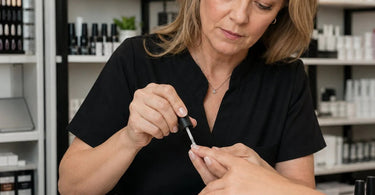
Every great result starts with the right tools... but sometimes, those tools need a gentle touch! If you have ever had a client slide into your chair with nails as thin as parchment paper (bless their hearts), you know the panic that sets in. You want to give them that gorgeous, chip-resistant manicure, but you are terrified their natural plate is going to scream "uncle" the second you pull out the strong stuff. We have all been there, hovering with a bottle of primer like it is a ticking time bomb. Acid-Free Primer is your new best friend in this scenario, but using it safely on delicate nails requires a little finesse, some solid science, and a whole lot of love. Let us dive into how you can be the hero your clients' thin nails are begging for, without causing any post-manicure tears.
First things first, let's talk about why your client's nails might be waving the white flag. Thin, peeling, or sensitive nail plates are usually the result of over-filing, exposure to harsh chemicals, or just plain old genetics (thanks, Mom!). When we reach for traditional primers that contain high levels of acids, we are essentially taking a jackhammer to a surface that needs a soft paintbrush. That is where Professional Nail Care Collections steps up with acid-free formulas. These gentle giants prep the nail by creating a sticky, double-sided tape effect rather than etching and burning into the layers. It is a physical bond rather than a chemical burn, which is music to the ears of anyone with sensitive fingertips!
What Exactly Is An Acid-Free Primer (And Why Does It Feel Like A Hug For Nails?)
If you look at the back of a standard bottle of primer, you might see ingredients like Methacrylic Acid. This stuff works by roughing up the nail plate to create a grip. While effective, on thin nails, this can lead to stinging, burning, and eventually, more peeling. An Acid-Free Primer, however, swaps the harsh etching for ingredients like Isopropylidenediphenyl Bisoxyhydroxypropyl Methacrylate or Ethyl Acetate . These ingredients don't change the pH of the nail plate. Instead, they evaporate, leaving behind a perfectly tacky, non-porous layer that acts like industrial-strength double-sided tape .
Think of it this way: Acid primers are like using sandpaper to rough up a floor before laying tiles. Acid-free primers are like using a high-tech sticky mat. For a solid concrete floor (thick, healthy nail), sandpaper is fine. For a delicate, antique wooden floor (thin nail plate), you want the sticky mat. It is just as effective at holding the tile (your gel or acrylic) in place, but it doesn't destroy the surface underneath. Plus, the lack of burning sensation means your client won't be jumping out of the Pedicure Chairs/Spas mid-service!
Step 1: The Prep Work Is Everything (Seriously, Do Not Skip It)
Using acid-free primer on thin nails is actually 90% preparation and 10% application. You cannot just slap it on and hope for the best. Because the primer isn't chemically etching the nail, the physical prep needs to be immaculate. Start by gently pushing back the proximal nail fold (cuticle). Do not cut living tissue if you can avoid it; we want to keep the matrix safe.
Next, grab your finest grit buffer. We are talking 240 grit or higher. The goal here is not to remove the shine to the point of creating dust and grooves. The goal is to lightly mattify the surface. If you use a rough file, you will actually make the thin nail weaker and cause it to snap off when the product hardens. Use a Nail Files & Buffers that is extra fine. Once buffed, do not touch the nail plate! Your fingers have oils that will ruin the bond. Get a good lint-free wipe and saturate it with a pure Nail Dehydrator. Scrub the nail plate thoroughly to remove all dust and surface oils. On thin nails, some techs even use a second cleanse with isopropyl alcohol to ensure the plate is squeaky clean. Remember, water and oil are the enemies of retention.
Step 2: The "One and Done" Application Rule
Here is where the Acid-Free Primer really shows its magic on thin nails. With an acid primer, you often have to be careful not to flood the sidewalls, but with acid-free, the rules are a little more relaxed (though we still need precision!). Shake your bottle gently to mix the contents. Open it up and wipe one side of the brush against the rim.
Apply a very thin layer to the natural nail plate. Notice I said thin. If you blob it on, it will pool and cause the enhancement to lift later. You want the nail to look wet, but not have any puddles. Because we are dealing with thin nails, some of these plates may have invisible cracks or micro-tears. If you over-apply the primer, it can seep into those cracks and cause irritation or separation. Just one thin, even coat is all you need. Do not go back for seconds. Do not double-dip without wiping. One dip, one brush per nail, you are done .
Step 3: The Waiting Game (Let It Breathe!)
Patience is a virtue, especially in a busy Stylish Salon & Barber Furniture setup. Acid primers often dry instantly because they are volatile. Acid-free primers need a little time to do their thing. You need to wait for the solvents to evaporate. This usually takes between 30 seconds and 60 seconds .
How do you know it is ready? Look at the nail. It should look matte or satiny, not glossy. If you touch the nail with your brush (don't!), it should feel slightly tacky or sticky, but not wet. This sticky layer is the "grip" that will hold your base coat. If you rush this step and apply your gel or acrylic over wet primer, it will mix together, cure incorrectly, and lift off in one solid sheet a day later. Use this time to prep the next hand or grab your Top-Quality Equipment & Furniture for Spas & Salons to get ready for the next step. Breathe. Wait. Then proceed.
Step 4: Sealing The Deal With Compatible Products
Not all base coats are created equal. Some rubber bases or hard gels are formulated specifically to work with acid primers. When you switch to an acid-free system on thin nails, make sure your Professional Gel Polish or Acrylic Nail Supplies are compatible. Generally, acid-free primers work beautifully with all modern gel polish systems and acrylics, but if you are using a very old stock of liquid monomer, you might want to test it first.
Apply your chosen base coat (again, thin layers are your friend on delicate nails). Cure according to the lamp's specifications. Because the primer hasn't damaged the keratin layers, the flexibility of the thin nail is preserved, while the adhesion remains rock solid. This reduces the risk of "greenies" (pseudomonas) because there are no air pockets caused by lifting at the edges. A tight seal is a safe seal.
What To Avoid (The Don't List)
Even with the safest Acid-Free Primer, there are some rookie mistakes that will ruin a thin nail plate. First, avoid getting the primer on the skin. While it doesn't burn like acid primers, it is still a chemical adhesive. If it gets on the skin, it can cause the enhancement to lift from the skin edge, or worse, cause a contact dermatitis over time. Keep it on the nail plate only .
Second, do not shake the bottle like a Polaroid picture. Shaking creates bubbles. If you apply bubbly primer to a thin nail, those bubbles become weak spots. Instead, roll the bottle between your palms to warm it up and mix it gently. Finally, do not store your primer in a hot car or a freezing cold back room. These primers are sensitive to temperature and can crystallize or go bad if left in the cold . If it looks chunky, toss it.
Why Your Clients Will Thank You (And Their Nails Will Too)
When you master the art of the acid-free primer, you become the go-to Professional Nail Care specialist for clients who have been told they "can't wear enhancements." You know the ones: the brides with peeling nails, the nurses who wash their hands a hundred times a day, or the former acrylic addicts trying to grow out damage. You can give them length and strength without sacrificing the health of their natural nail.
At Pure Spa Direct, we believe that beauty shouldn't hurt. As a distributor dedicated to the professional community, we stock the safest, most effective primers on the market. Whether you are looking for ItalWax for your waxing room or the gentlest primers for your nail desk, we have your back. Don't let thin nails scare you away from a perfect finish. Grab an acid-free primer, follow these steps, and watch your retention rates soar while your clients' smiles get wider. Now go forth and prime safely, you magnificent nail wizard, you!
)