
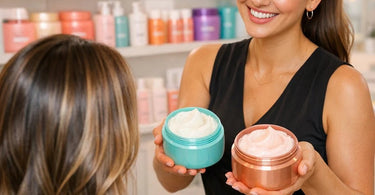
The pros’ secret weapon isn’t just the magic in their hands—it’s the magic they send home in a bottle (or a jar). Let’s talk about the golden goose of salon revenue: retail hair masks for chemically treated hair. If you’ve ever watched a client walk out the door with flawless color and a fresh blowout, only to have them return in six weeks with dry, brittle, faded hair, you know the pain. It’s like painting the Sistine Chapel ceiling and then watching someone take a power washer to it. The missing link? A targeted, professional-grade hair mask for the maintenance phase. Selling these isn’t about being pushy; it’s about being a complete haircare expert. It’s the final, crucial step in your service that transforms a great salon visit into a long-term client victory. And let’s be honest, it also transforms your bottom line from “meh” to “marvelous.”
Think of your chemical service—whether it’s balayage, a platinum transformation, or a sleek relaxer—as a surgical procedure. You wouldn’t send a patient home after surgery without antibiotics and wound care instructions, right? Your client’s hair has just undergone a controlled chemical trauma. It’s more porous, its protein structure is altered, and it’s desperately thirsty. The shampoo and conditioner from the grocery store aisle? That’s like using a band-aid on a bone fracture. Your job is to prescribe the intensive care. This mindset shift, from stylist to trichological guide, is what makes retail sales feel natural, ethical, and incredibly successful.
Step 1: Diagnose Before You Prescribe (The Consultation is Key)
You can’t sell a solution if you haven’t identified the problem. The consultation is your investigative phase. Go beyond “What are we doing today?” Ask specific questions: “How often are you coloring?” “What at-home products are you using now?” “Do you feel your hair gets dry two days after washing?” “Is your color fading faster than your interest in a bad dating app profile?” (A little humor breaks the ice!). During the service, as you apply color or lightener, verbally note what you see. “I can see the porosity is really high here from your previous highlights—that’s why it’s grabbing the color faster. This is exactly where a strengthening mask will help balance things out.” You’re not inventing issues; you’re educating. This builds trust and sets the stage for your recommendation.
Step 2: The In-Service “Demo” – Let the Product Sell Itself
This is your most powerful tool. Never, ever just *talk* about a hair mask. **Use it during the service.** After rinsing out the chemical service, apply a generous amount of a targeted mask. For high-porosity bleached hair, use a bond-building or protein mask like those from Wella or Rusk. For color-treated hair needing moisture, use a rich, color-safe hydrating mask. While it processes, don’t just set a timer and walk away. This is your sales floor moment. Let the client feel the texture of the product from the jar. Describe the hero ingredients: “This has keratin peptides that act like spackle for the holes in your hair shaft,” or “This hyaluronic acid complex is going to pump water into each strand like a tiny moisture IV drip.” When you rinse it out, narrate the results. “Feel that slip? That’s the cuticle lying flat.” “See how much shinier this section is already? Imagine that all over, every time you wash.” You’re not selling; you’re providing a tangible, feel-able experience. The product becomes the hero of the service.
Step 3: Master the Language of Benefits, Not Features
Clients don’t buy “hydrolyzed quinoa protein.” They buy “less breakage when I brush my wet hair.” They don’t buy “UV filters.” They buy “my expensive caramel highlights staying vibrant for 8 weeks instead of 4.” Frame every recommendation around their life and their vanity. “This mask will save you 15 minutes of detangling in the shower.” “This means you can stretch your gloss appointments further, saving you time and money.” “This will give you that ‘fresh from the salon’ shine on Tuesday morning when you have a big meeting.” Connect the dots for them. A feature is a fact; a benefit is a feeling. Sell the feeling.
Step 4: Create a No-Brainer “Home Care System”
Isolate the sale. Instead of saying, “You need this mask,” present a simple, three-part system. “To protect this gorgeous color and health we’ve achieved today, your perfect home routine is: 1) This sulfate-free shampoo (like these), 2) This conditioner, and 3) THIS mask, which you’ll use as a conditioner twice a week. Think of the mask as your conditioner on steroids.” Presenting it as a non-negotiable part of a system makes it feel essential, not optional. Have the products physically sitting together at your station. Use tools from your professional toolkit to apply it during the service, subtly reinforcing your expertise.
Step 5: Overcome Objections with Empathy & Logic
Be ready for the classic hurdles, and have warm, genuine responses prepared.
Objection: “It’s too expensive.”
Your Response: “I totally get that. Let’s look at the cost per use. This jar will last you 2-3 months. That’s about the cost of one fancy coffee a week to protect the $200 service we just did. It’s actually the most cost-effective way to keep your investment looking amazing.”
Objection: “I don’t have time.”
Your Response: “That’s the best part! You apply it in the shower, leave it on while you shave your legs or wash your body—5 minutes tops—and rinse. It actually saves you time fighting with tangles and frizz later. It’s a time-*saver*.”
Objection: “I’ll just get something at the drugstore.”
Your Response (with a smile): “You could! And those are great for some hair types. But the formulas in professional lines are like the difference between over-the-counter pain relievers and what a doctor prescribes. The ingredient concentration and technology are specifically designed to address the specific damage from chemical services. What we use in-salon is pharmaceutical-grade for your hair.”
Step 6: The Power of Bundling & Loyalty
Make it easy and rewarding to buy. Create a “Chemical Care Kit” bundle price for the shampoo, conditioner, and mask. Offer a loyalty card: “Buy 5 masks, get the 6th free.” When they do purchase, make it a celebration! “Yes! You’re going to be so happy you did this. Your hair is going to thank you.” Put it in a beautiful bag with a sample of a sugar scrub or cuticle oil as a thank you. Follow up in a week with a text: “Hi Jane! Just checking in to see how you’re loving your new mask!” This turns a transaction into a relationship.
Stock Your Arsenal: Must-Have Mask Types
Ensure your retail shelf is stocked for every need. Pure Spa Direct is your partner here, with wholesale access to top brands:
Bond Rebuilders: For severely bleached or relaxed hair. Look to brands like Wella INVIGO or Quantum.
Intensive Moisturizers: For dry, curly, or color-treated hair. Rusk and Clairol Professional have amazing options.
Protein Fillers: For gummy, over-processed hair that lacks strength. A must for frequent chemical clients.
Color-Depositing Masks: A genius add-on for brunettes or fashion colors. They refresh tone between services, making clients thrilled.
Ultimately, selling retail hair masks is the ultimate act of client care. It extends the life of your artistry, builds unwavering trust, and creates a consistent revenue stream that isn’t tied to your hours in the chair. It turns clients into walking, talking billboards for your work—with hair that looks salon-fresh every day. So diagnose, demonstrate, and prescribe with confidence. Your clients’ hair—and your booking app—will thank you for it. Now go forth and mask the world!
