
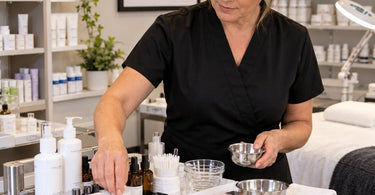
Smarter tools for brighter results... and fewer frantic searches for a missing fan brush five minutes before your next facial! Learning how to standardize facial treatment trays across multiple estheticians can transform a busy spa from a collection of individual work habits into a beautifully coordinated operation. Whether your business has three treatment rooms or a dozen estheticians sharing equipment, a consistent tray setup makes daily services more predictable, professional, and efficient. The goal is not to turn talented skincare specialists into identical robots. It is to give every professional an organized foundation so they can concentrate on their clients instead of playing hide-and-seek with the cotton rounds.
A thoughtfully standardized tray system supports sanitation procedures, inventory control, staff training, and the overall client experience. It also helps managers identify supply shortages before they interrupt appointments. With the right professional spa essentials, clear preparation procedures, and a little teamwork, creating a reliable system is easier than you might think.
Why Standardized Facial Treatment Trays Matter
Every esthetician has a preferred workflow. One professional keeps her brushes on the left, another places them beside the treatment bowls, and a third has a mysterious collection of supplies tucked into a drawer that nobody else dares open. Individual preferences are understandable, but they can create problems when treatment rooms, carts, and supplies are shared.
Standardizing the essentials provides a common starting point for every facial appointment. Staff members know where to locate frequently used products, managers can monitor consumption more accurately, and newly hired estheticians have a clear setup to learn.
The benefits extend beyond appearance. Consistent organization can reduce unnecessary movement during treatments, minimize interruptions, and make it easier to maintain clean and contaminated zones. It also helps prevent unnecessary product dispensing and duplicate supply purchases.
Most importantly, standardization creates consistency without eliminating professional judgment. Estheticians still select appropriate treatments based on client consultations, skin assessments, contraindications, and established service protocols.
Start With a Master Facial Tray Checklist
Before purchasing matching trays or rearranging treatment rooms, create a master checklist of supplies required for your most frequently booked facial.
Choose a basic facial as your starting point. Review its treatment sequence and identify the tools, disposables, products, and supporting materials used during each stage. Ask several experienced estheticians to review the list together. Their collective knowledge will help identify overlooked necessities and distinguish genuinely essential items from personal preferences.
A standard facial setup might include:
- Preparation supplies: Clean treatment bowls, headbands, towels, and protective materials.
- Application tools: Facial brushes, spatulas, and other appropriate applicators and spatulas.
- Disposable essentials: Cotton rounds, cotton swabs, gauze, and compressed sponges.
- Skincare products: Approved cleansers, exfoliating products, masks, serums, moisturizers, and sunscreen as required by the service.
- Professional implements: Appropriate tools from your spa tools and implements inventory.
- Protective supplies: Gloves and other personal protective equipment appropriate to the procedure.
- Sanitation support: Access to approved cleaning and disinfection supplies, designated waste containers, and a separate location for used implements.
Not everything belongs directly on the treatment tray. Large equipment, bulk skincare containers, and cleaning chemicals may be better positioned in designated storage areas or on separate cart shelves. A standardized setup should make the workspace easier to use, not turn the tray into a miniature supply warehouse.
Design a Consistent Layout That Follows the Treatment Sequence
Once the essential supplies have been identified, decide where each item belongs. The simplest approach is to organize the tray according to the order in which products and tools are needed.
For example, one section might hold preparation supplies, another might contain clean application tools, and a third might accommodate pre-dispensed treatment products. Frequently used materials should be accessible without requiring the esthetician to reach across clean supplies or the client.
Consider the following principles:
- Keep clean implements and unused supplies separated from anything that has been used or contaminated.
- Use consistent positions for treatment bowls, applicators, and disposable materials.
- Place frequently used tools within comfortable reach.
- Use stable, appropriately sized containers that are compatible with your cleaning and disinfection procedures.
- Avoid crowding the tray with backup inventory or unnecessary decorative accessories.
A clearly arranged tray helps staff members recognize missing items immediately. It also creates a polished visual presentation that clients may notice when entering the treatment room.
Matching facial treatment trays, mixing bowls, and storage accessories can help establish consistency across multiple workstations. Choose materials and designs based on functionality, durability, ease of cleaning, and compatibility with the products being used.
Create a Core Tray and Service-Specific Add-On System
One mistake spa managers sometimes make is trying to design a single tray that contains everything needed for every facial service. That approach can quickly produce clutter, unnecessary product handling, and a remarkable collection of items that never actually get used.
A more efficient solution is to separate your setup into two categories: a universal core tray and service-specific additions.
The core tray contains supplies used during nearly every facial, such as clean bowls, approved applicators, cotton products, and other routine essentials.
Service-specific additions contain materials required for particular treatments, such as specialized masks, exfoliation products, or approved professional devices and accessories.
For example, a standard customized facial may require only the core tray and selected skincare products. A service featuring dermaplaning will require additional procedure-specific supplies, safety precautions, and appropriate handling of sharps. A hydrodermabrasion treatment requires equipment-specific supplies and preparation procedures.
These additions should have their own documented checklists and follow the applicable training, manufacturer instructions, sanitation requirements, and scope-of-practice rules.
This modular approach keeps basic treatment trays manageable while allowing the spa to offer a varied service menu.
Standardize Skincare Dispensing Without Sacrificing Customization
Consistent tray organization works best when paired with consistent product handling procedures. Otherwise, one esthetician may use three pumps of cleanser while another pours enough product into a bowl to wash a small automobile.
Develop practical dispensing guidelines for commonly used formulas. These can specify an initial amount, approved dispensing method, appropriate container, and instructions for obtaining more product when needed.
Guidelines should reflect the product manufacturer's directions and the treatment protocol. They should not create rigid limits that prevent estheticians from responding to individual client needs.
Professional skincare products from collections such as Premium Skincare Products for Spas and Salons and Advanced Facial Treatment Products can be organized by treatment category and approved service use.
When choosing bottles and jars for dispensing or storage, confirm that the containers are suitable for the products and permitted by the manufacturer and applicable regulations. Required labeling, identification, and handling instructions must be maintained. Avoid transferring products into decorative containers simply because they match the spa's color scheme.
Use clean dispensing practices that prevent contamination of bulk containers. Never return leftover dispensed product to its original container, and never save client-contacted products for another appointment.
Build Sanitation Into the Tray System From Day One
A beautifully arranged tray means very little if clean supplies and used implements are mixed together. Sanitation should be part of the standardized workflow rather than an afterthought squeezed into the few minutes between appointments.
Establish clearly documented procedures for preparing, using, clearing, cleaning, disinfecting, and storing treatment trays and their contents.
Before each service, the esthetician should verify that the tray and required reusable implements have been properly cleaned and disinfected as applicable, that single-use supplies are fresh, and that the workstation is prepared according to salon policies and local regulations.
During the facial, used materials should be handled in a way that prevents contamination of clean supplies. Single-use items must be discarded after use, while reusable implements must enter the appropriate cleaning and disinfection process before being used again.
After the appointment, remove waste, collect used materials, clean the tray, and apply an appropriate disinfectant according to its label directions and the surface manufacturer's instructions. Observe the required contact time and allow the tray to be ready for safe reuse before restocking.
Maintain a dedicated selection of professional cleaners and disinfectants suitable for the relevant surfaces and implements. Follow state board requirements and any applicable local regulations, including rules for reusable tools and contaminated materials.
Keep soiled implements in designated containers rather than returning them to clean storage. A tidy-looking tray is not automatically a disinfected tray, and an ultraviolet storage cabinet should not be assumed to replace an approved disinfection or sterilization procedure.
Documenting these steps helps every esthetician follow the same hygiene expectations, regardless of who prepared the room.
Use Visual Setup Guides for Faster Staff Training
Written checklists are useful, but a photograph of a properly arranged treatment tray can be even more effective. Create a visual reference showing the exact placement of approved supplies.
Photograph the tray from above, label important sections, and keep a copy in each treatment room or staff preparation area.
Include the visual guide in onboarding materials so new estheticians can practice preparing the standard setup before working independently. A trainer can compare the finished tray against the reference image and correct any inconsistencies immediately.
Visual guides are especially valuable in spas with rotating treatment rooms, part-time employees, and several professionals sharing the same supply areas.
Keep the instructions practical. A one-page setup diagram paired with a short checklist is often more usable during a busy shift than a lengthy manual nobody has time to open.
Remember to update the photographs whenever products, equipment, or treatment protocols change. The only thing more confusing than missing supplies is a training picture featuring products your spa stopped carrying last year.
Assign Responsibility for Restocking and Inventory
Even a perfectly standardized tray becomes frustrating when staff members discover that the last cotton round disappeared three appointments ago.
Assign clear responsibilities for restocking and inventory checks. Decide which supplies each esthetician replenishes after a service and which items are maintained by a designated stockroom coordinator or manager.
A practical system can include three checkpoints:
- Opening check: Confirm the tray is properly prepared and essential supplies are available before the first appointment.
- Between-client reset: Complete required cleaning and disinfection, replace used disposables, and prepare the tray for the next scheduled treatment.
- Closing check: Inspect inventory, identify shortages, and ensure reusable supplies are properly processed and stored.
Establish minimum stock levels for frequently used materials. Items such as professional cotton, sponges, and wipes, protective gloves and masks, and facial applicators are particularly useful categories to monitor.
Base reorder points on appointment volume, typical consumption, vendor lead times, and a reasonable safety stock. A simple inventory sheet can record what is used, what remains, and when new supplies should be ordered.
Pure Spa Direct offers a broad assortment of professional supplies that spa operators can source while developing consistent purchasing lists. As a wholesale distributor rather than a manufacturer, Pure Spa Direct gives businesses access to multiple product categories and brands for their operational needs.
Choose Equipment That Supports a Repeatable Setup
The tray itself is only one part of an organized facial workstation. Supporting furniture and equipment should also help estheticians follow the established workflow.
Consider whether your spa rolling carts have enough stable, accessible space for clean supplies, treatment products, and appropriately separated storage. Drawers and shelves can help organize backup materials without crowding the working surface.
Review the placement of facial steamers, magnifying lights, and other treatment equipment to reduce unnecessary reaching or repositioning during services.
Clean professional towels should be available through a reliable preparation and storage process. Where applicable, towel steamers may support the service experience, provided staff follow the equipment manufacturer's operating and cleaning instructions and applicable towel-handling requirements.
Standardization does not require every treatment room to be an architectural twin. It requires a predictable arrangement of essential materials, even when room dimensions or equipment models differ.
Give Estheticians a Voice in the Standardization Process
One of the fastest ways to make a standardized tray system unpopular is to design it without consulting the people who actually perform the treatments.
Experienced estheticians understand which materials they reach for repeatedly, which tools need additional clearance, and which arrangements create awkward movements. Their input can reveal improvements that may not be obvious from a management perspective.
Invite staff members to test a proposed layout during routine service preparation. Ask whether supplies are easy to locate, whether the arrangement supports hygienic handling, and whether any essential items have been overlooked.
Consider a small trial involving two treatment rooms before introducing the new system across the entire spa. Adjust the layout based on documented feedback, then establish an approved version for everyone to follow.
Allow reasonable flexibility for handedness, accessibility, and individual ergonomics as long as the essential supply positions, sanitation controls, and service protocols remain consistent.
Employees are more likely to adopt a new system when they understand why it exists and have helped make it practical.
Measure Whether Your New Tray System Is Working
A standardized setup should improve daily operations, not merely look impressive in a training manual.
After implementation, review a few simple performance indicators. Track how long staff members spend preparing trays, how often essential supplies are missing, and whether product waste or unnecessary emergency restocking decreases.
You can also evaluate the consistency of room readiness and the number of interruptions caused by missing materials.
For a useful comparison, record baseline information before introducing the system and review the same measures several weeks afterward. Avoid assuming that every improvement comes from the new trays, since staffing levels, appointment schedules, and service mix can influence results.
Ask estheticians whether the standardized arrangement makes their work easier. Their experiences can help identify problems that numbers alone may not reveal.
Review the system periodically, especially after changing service menus, introducing new skincare products, or purchasing additional equipment.
Common Facial Tray Standardization Mistakes to Avoid
Even well-intentioned organizational projects can create additional work if the details are overlooked. Watch for these common mistakes:
- Overloading the tray: Keeping every possible product within reach creates clutter and makes proper cleaning more difficult.
- Ignoring sanitation workflow: Clean and contaminated tools must remain appropriately separated throughout the service.
- Using inconsistent products: Unapproved substitutions can create confusion and interfere with treatment protocols.
- Skipping labels: Proper product identification and required labeling are essential when supplies are stored or dispensed in secondary containers.
- Forgetting backup inventory: A consistent layout cannot function without reliable restocking procedures.
- Making the system too rigid: Standard procedures should support professional judgment rather than prevent appropriate client-specific adjustments.
- Neglecting staff training: A checklist is only useful when employees understand and consistently follow it.
Start with a manageable system, train everyone properly, and improve it as your team gains experience.
A Simple Five-Step Rollout Plan for Spa Managers
Ready to put the idea into practice? Here is a straightforward rollout plan that works for small and growing spa businesses.
Step 1: Audit existing trays. Compare current room setups, identify commonly used supplies, and note differences that cause delays or confusion.
Step 2: Establish the standard. Build a master checklist, select approved tools and products, and document cleaning and disinfection procedures.
Step 3: Assemble a model tray. Arrange essential items in a logical sequence, photograph the completed layout, and prepare service-specific add-on lists.
Step 4: Train and test. Introduce the system to a small group of estheticians, evaluate the workflow, and make practical adjustments before expanding to additional rooms.
Step 5: Maintain and improve. Assign restocking responsibilities, monitor inventory, and revisit the setup when treatments or operational needs change.
This approach helps avoid unnecessary spending on organizational supplies before the team has agreed on a useful system.
Make Every Facial Treatment Room Ready for Success
Learning how to standardize facial treatment trays across multiple estheticians is ultimately about making excellent service easier to deliver consistently. A reliable setup saves staff from avoidable interruptions, supports responsible product handling, and helps maintain an organized, professional treatment environment.
The best system combines a thoughtfully designed core tray, service-specific additions, clear sanitation procedures, visual training materials, and dependable inventory management. It gives estheticians the supplies they need while preserving the professional flexibility required for customized skincare services.
Whether you are organizing your first shared treatment room or refining procedures across a busy multi-esthetician spa, explore the selection of Spa Essentials for Professionals, Applicators & Spatulas, Professional Cotton, Sponges, and Wipes, and Must-Have Supplies for Salon & Spa Business Success available through Pure Spa Direct.
Because the only surprise during a relaxing facial should be how wonderful the client feels afterward, not the discovery that every treatment room has a completely different definition of where the fan brushes belong!
