
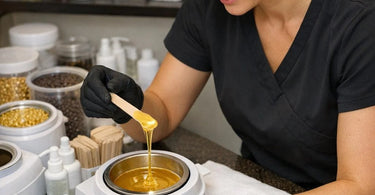
Because quality is non-negotiable... but neither is keeping your schedule on track. Lets face it, we have all been there: a new esthetician fresh out of school, armed with a spatula, good intentions, and the speed of a sloth on a coffee break. Watching them apply hard wax can feel like watching paint dry, except the paint is warm, sticky, and your next client is already tapping their foot in the lobby. Training new talent on hard wax application speed and efficiency isnt just about saving time; it is about saving your sanity, your booking software, and keeping your clients from feeling like they aged a year during a single lip wax. Welcome to the jungle, baby; we are going to fix this.
Speed in waxing isnt about being reckless. It is about muscle memory, smart workflows, and understanding that hard wax is not a sculpting medium for a modern art exhibit (though some newbies might disagree when they create a wax mountain on a clients leg). The goal here at Pure Spa Direct is to turn your nervous newbie into a swift, confident, and terrifyingly efficient waxing wizard. We are talking Harry Potter levels of wand-waving, but with a professional wax warmer instead of a magic wand. So, grab a cup of coffee (or something stronger, we dont judge), and lets break down how to train for speed without sacrificing the silky smooth results your clients are paying for.
Why Speed Matters (Beyond Just Fitting in More Clients)
Before we dive into the how, lets talk about the why. Obviously, faster estheticians equal more appointments and more revenue. Cha-ching, right? But for the client, speed equals comfort. The longer that wax sits on their skin, the more it cools, hardens, and adheres to live skin cells instead of just the hair. A slow application leads to ouch-town, population: your client. Efficient application means the wax is removed while it is still flexible but set enough to grip the hair, which drastically reduces pain and ingrown hair risks later on.
Plus, lets be real. Getting a Brazilian is stressful enough without having to wonder if your esthetician is going to need a snack break halfway through. Speed builds trust. When a client sees you zip through a brow wax with the precision of a ninja, they relax. When they relax, you work faster. Its the circle of life, Simba. So, we are training for speed to respect the clients time, their pain tolerance, and frankly, to save their leg hair from being pulled out strand by agonizing strand.
Ditch the Spoon, Embrace the Drag (The Right Way)
One of the biggest time sucks for new estheticians is treating the wax spatula like a butter knife spreading cold butter on stale bread. They scrape, they dab, they pat, and suddenly ten minutes have passed and they have only covered half an underarm. We need to talk about the drag. Hard wax is designed to be applied in a thick, even layer that follows the contours of the body. You want to train your staff to load the wax spatula generously and use a fluid dragging motion.
Think of it like icing a cake, not frosting a single cookie. You want to pull the wax from the pot, turn the spatula slightly, and drag it against the skin in the direction of hair growth. Do not lift the spatula constantly; keep it in contact with the skin. This creates a uniform edge and speeds up coverage by about 400%. To practice, have your new estheticians practice on an orange or a balloon (be careful with the balloons, they pop and its hilarious but messy). They need to learn the rhythm of the wrist flick that lays down a perfect ribbon of wax in two seconds flat. Brands like ItalWax and Starpil have low-melting point waxes that are incredibly forgiving for this dragging technique, so make sure your waxing kits include quality products that facilitate speed.
The Three-Zone Method: Stop Wandering Around!
I have seen new estheticians wax a right leg, then the left armpit, then back to the right leg, then stop to tweeze one hair. Its chaos. Efficiency is about compartmentalization. Train your team to use the Three-Zone Method. Zone One is the initial application (apply all the wax on the left leg, for example). Zone Two is the removal (flip back to the start of the left leg and start pulling). Zone Three is the post-check (tweezing stragglers and applying pre and post-waxing products).
By the time they finish applying wax to the bottom half of the leg, the top half is ready to rip. This overlapping workflow eliminates dead air. No more standing around waiting for wax to dry. No more staring at the ceiling fan. Its continuous motion. Train this by setting a timer. Give them a training manikin arm and have them apply wax to three sections. Once the third section is applied, they must pull the first section. Repeat until the timer runs out. You will see their brains rewire to understand that waiting is the enemy of speed.
Thickness is Your Friend (Stop Being Stingy)
I know, I know. Wax costs money. But hear me out. The number one reason new estheticians are slow is because they apply the wax too thin. They try to stretch the product, thinking they are being frugal. Then, the wax dries into a brittle, cracker-like sheet that shatters when you try to pull it. Now they have to pick off a million tiny wax flakes. That takes forever, and it hurts like a band-aid on a hairy arm.
Hard wax needs a structural thickness to act as a handle. You need a thick enough tab at the bottom to grab. Train them to leave a little lip or tab that is noticeably thicker. This gives them something to hold onto. When you can grab a firm, thick edge, you can pull with speed and confidence. A thin edge breaks. A broken edge means digging with your fingernail. No one has time for that. Plus, using a quality wax like Lycon or Cirepil means it stays flexible even when thick, allowing for a faster, lower-tension pull that clients barely feel. Remember, you are selling a service, not saving wax. Efficiency pays for the product ten times over.
The Wrist Flick: Anatomy of a Fast Pull
Speed is not in the arm; it is in the wrist. If your new esthetician is pulling from the shoulder like they are starting a lawnmower, they are going to be slow, tired, and their clients are going to hate them. Train the wrist flick. Hold the skin taut with the non-dominant hand. With the dominant hand, grab the wax tab. The pull should be a quick, sharp flick of the wrist parallel to the skin, not a yank straight up into the air. The motion is almost like snapping your fingers, but with a wax tab.
Practice this with a piece of tape on their own arm. Have them practice the flick over and over. The speed of the flick is what breaks the surface tension and releases the hair follicle. A slow pull is a painful pull. A fast, parallel flick is virtually painless. Set up a mirror and have them watch their form. If their shoulder is moving, they are wrong. If their elbow is moving, wrong. Only the wrist should move. Once they master this, they will be pulling wax so fast the client wont know what happened until they see the smooth skin. This is also where investing in good waxing supplies like non-slip spatulas helps maintain grip during that fast flick.
Pot Position and Workspace Flow
Speed is often killed by bad ergonomics. If your wax warmer is on the other side of the room, your esthetician is going to be doing a lot of walking. That is cardio, not waxing. Train your staff to set up their station in a strict triangle: Client on the table, wax warmer on the dominant side within elbow reach, and waxing accessories (spatulas, sticks, post-wax oil) on the other side.
Everything should be within a 12-inch radius. We call this the Cockpit Method. When they are in the cockpit, they should not have to twist, turn, or reach. If they drop a spatula, it should land in a trash can that is also within the cockpit (teach them to aim). Have them practice silent drills where they close their eyes and try to grab every item they need for a service. If they have to hunt for the cotton rounds, the setup is wrong. Speed is a product of preparation. A clean, organized, and tight workspace is a fast workspace.
Simulation Training: The $20 Bill Drill
Lets gamify this, shall we? New estheticians love competition (even if they pretend they dont). I want you to take a high-quality towel and lay it over a training manikin leg. Place a $20 bill under the towel. Tell your trainee that they have to apply hard wax to the designated area (say, the lower leg), wait for it to set, and rip it off. But there is a catch: if they take longer than 45 seconds total for that area, you get the $20. If they beat 30 seconds, they get the $20.
Suddenly, every motion becomes intentional. They stop overthinking. They stop dabbing. They just move. This teaches them to trust their instincts. Hard wax is forgiving. You can always go over a missed spot. But you cannot get back time. This drill also teaches them to visually estimate drying time based on the wax cooling, rather than poking it with a finger. You can do this drill for different body parts: 15 seconds for the lip, 2 minutes for the underarm. Speed is a skill, and skills need pressure testing.
Dealing with the Oops Moments (Meltdown Management)
Lets be real. When a newbie panics because the wax dripped onto the spa bedding or they accidentally flicked wax onto the spa apparel, they freeze. Freezing kills speed. Train them on the One-Second Recovery. If a drip happens, ignore it until the end of the zone. Do not stop the rhythm to clean a drip. That drip is a 2-second fix later. If the wax is applied too thick? Pull it anyway. Thick wax pulls better than thin wax. If they miss a hair? Mark it with a mental pin and grab it with tweezers during the Zone Three check.
Train them to keep moving no matter what. The only reason to stop a zone is if the client is bleeding or on fire. Otherwise, keep going. This confidence comes from repetition. Have them practice on volunteers (boyfriends are great for this, and usually very hairy) where you intentionally knock the pot or create distractions. If they can keep their cool and their rhythm while you ask them what they are doing for dinner tonight, they are ready for the real floor.
Product Pairing for Faster Results
Did you know the right prep work cuts application time in half? If a client comes in with oily skin or lotion residue, the wax will slide around and refuse to stick to the hair. Your esthetician will be chasing the wax around the leg like a dog chasing its tail. Train them to always use a pre-wax cleanser and a dusting of powder. The powder absorbs moisture and oil, creating a dry surface that the hard wax can instantly grip.
This one step can turn a 10-minute leg wax into a 4-minute leg wax because the wax sets faster and adheres only to the hair. Similarly, using a high-quality post-wax oil that removes residue quickly prevents them from spending five minutes scrubbing off sticky bits. Time spent prepping is time saved executing. Train them that for every minute they spend on prep, they save three minutes on the back end. It is math, and math doesnt lie. Stock up on those pre and post products from Gigi or Satin Smooth to make this a no-brainer.
Retraining the Perfectionist (The 80/20 Rule)
Finally, we need to address the elephant in the room: the perfectionist. You know the one. She will spend 15 minutes tweezing three blonde vellus hairs that no one can see from two feet away. She is killing your efficiency. Train her on the 80/20 Rule. Eighty percent of the result comes from twenty percent of the effort (the wax pull). The last twenty percent of perfection (tweezing every single invisible hair) takes eighty percent of the time.
Teach your staff to know when to stop. Is the skin smooth to the touch? Is there no visible stubble? Then move on. You are not performing surgery; you are removing hair. The client is not looking at their skin under a 10x magnifying magnifying light (hopefully). They are looking at the overall smoothness. If the esthetician is stuck in the tweezing vortex, set a timer. When the timer goes off, they have to stop tweezing and apply cuticle oil to the area (or aloe, whatever) and walk away. Speed requires letting go of toxic perfectionism. Good enough is often excellent.
So, there you have it, fearless spa leaders. Turning a slow, nervous new esthetician into a hard wax speed demon is a process of drills, laughter, a few ripped $20 bills, and a whole lot of wrist flicks. Remember, efficiency is a culture you build, not a magic spell you cast. Equip your team with the best tools from Bulk Wax Deals to Quality Wax Strips, keep the vibes positive, and watch your turnover times drop faster than the hair on a sugar scrub leg. Now go forth and wax swiftly!
%20Guide%20to%20Mastering%20the%20Art%20of%20the%20Quick%20Pull)