
Tools that simplify your success... and let's be honest, nothing complicates a Tuesday quite like a client's expensive wig turning into a frizzy mess because someone thought a high-heat dryer was a good idea. Training your staff on safe and effective wig drying techniques is not just about maintaining a hairpiece; it is about preserving your client's investment and your salon's reputation. We're diving deep into the do's, the don'ts, and the how-tos of wig drying, so your team can handle these delicate pieces with the confidence of a bomb disposal expert (but with way more hairspray).
Whether you are a bustling salon, a high-end spa, or a niche barber shop, offering wig services can set you apart. But with great hair comes great responsibility. Let's face it: human hair wigs are an investment, and synthetic ones have their own quirks. A single mistake in the drying process can lead to shedding, matting, or a shape that looks less 'glamorous Hollywood' and more 'scarecrow chic.' That is why establishing a bulletproof training program is non-negotiable.
Why Wig Drying Techniques Are Non-Negotiable
Imagine this: A client comes in for a wash and style for their premium human hair wig. Your junior stylist, fresh out of school, decides to speed things up with a high-heat blow dryer. The result? Fried ends, a loosened cap, and a client who is less 'thank you' and more 'I'll see you in court.' Drying wigs is fundamentally different from drying natural hair. The fibers, whether human or synthetic, are more vulnerable. Excessive heat can literally melt synthetic fibers , and high temperatures can weaken the knots on both types, causing hair loss . The goal is to remove moisture without compromising the integrity of the hair or the delicate foundation. Proper training ensures your staff understands this distinction and treats every wig like the masterpiece it is. This is where understanding the right equipment becomes crucial.
The Golden Rule: Air Drying is Your Best Friend
If there is one mantra to drill into your team's head, it is this: air drying is the safest and most effective method for drying wigs . It is the most gentle, preserving the wig's style, texture, and overall lifespan. Training should start with mastering this technique before anyone touches a blow dryer. Step one is always the gentle blot. After washing, staff should lay the wig on a clean, dry towel and gently blot the excess water. No rubbing, wringing, or twisting! This can cause friction and damage the delicate fibers and the wig cap . Then, place the wig on a proper wig stand or mannequin head to allow air to circulate around the cap and through the fibers. This helps the wig retain its shape and ensures it dries evenly, without any musty smells hiding in the cap . For synthetic wigs, this is often the *only* safe method. Using a hair dryer on a synthetic wig is a one-way ticket to a melted, unsalvageable disaster .
When Speed is Key: Mastering Blow-Drying with Caution
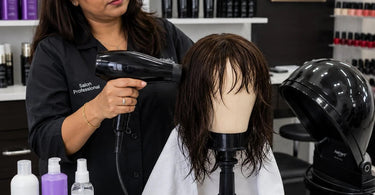
Okay, we live in a fast-paced world, and sometimes air drying for 6 to 12 hours just is not an option . There will be times when a client needs their wig dried in an hour. This is when safe blow-drying techniques come into play. Training your staff to use a blow dryer safely is essential. First, they must understand the settings. Always use a low or cool setting. Heat is the enemy . Second, keep the dryer moving. Concentrating heat on one spot is a recipe for disaster, especially on a lace front wig. Third, for human hair wigs, always apply a heat protectant spray to create a barrier between the heat and the hair . It is also wise to equip your stations with a high-quality dryer that has a diffuser or concentrator nozzle for more controlled drying .
Creating Your In-House Wig Drying Training Program
Training should be comprehensive and hands-on. Here's how you can structure it for your team. The key is to make it practical. Do not just tell them; show them and have them practice on a training manikin before a real client ever sits in your chair. This provides a safety net and builds their confidence. The focus is to protect the wig's construction, regardless of the drying method used . Consider creating a step-by-step guide for your back-of-house, but for now, let's outline the core components of your training program.
1. Understanding the Wig Type
This is the starting point. Staff need to be able to identify if a wig is human hair or synthetic. The care and drying protocols are vastly different. As a general rule, human hair wigs can tolerate more styling and low heat, while synthetic wigs require extreme caution and often cannot be exposed to heat at all . Training should include a simple test or guide to help staff identify the fiber type, so they know how to proceed.
2. The Towel Blotting Technique
This might sound basic, but it is often where damage occurs. Staff should be trained to press the wig gently with a towel to soak up excess water, avoiding any rubbing motion. This simple practice prevents tangling and friction damage, which can cause frizz and knotting .
3. Safe Detangling
When is it safe to comb a wig? Not until it is dry! Combing a wet wig can cause the fibers to stretch and break. Staff should be taught to wait until the wig is completely dry before using a wide-tooth comb or special wig brush to style it. This is a crucial step to prevent shedding and maintain the wig's original style .
4. Equipment Maintenance
Staff should also be familiar with the tools they are using. This includes knowing how to clean the hairdryer filters and how to maintain professional wig dryers if you have them. A well-maintained machine is a safer machine, which benefits both the equipment and the client's wigs.
Final Thoughts: Turning Training into Expertise
Training your staff on safe and effective wig drying techniques is an investment that pays off in client retention and professional reputation. By emphasizing the importance of air drying, teaching safe blow-drying practices, and creating a structured program, you can ensure that every wig leaving your salon is as flawless as it was when it walked in. Remember, a well-cared-for wig is a long-lasting investment for your client, and a testament to your salon's professionalism. Equip your team with the right knowledge, and they will be ready to handle any wig with confidence, care, and a dash of style!
