
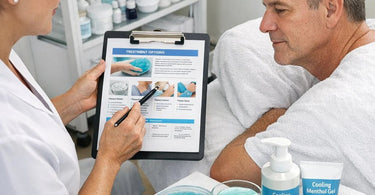
The best tools for the best results often come with a chill warning label—literally. Cooling menthol gels are the unsung heroes of the spa and massage world, swooping in to save sore muscles and calm post-wax firestorms. But let’s be real for a second: there is a very thin line between “refreshingly cool” and “holy smokes, did I just apply a polar vortex to my client’s spine?” We have all been there. You grab that trusted blue gel, apply it with confidence, and suddenly your client starts shivering like they just saw the electric bill. Fear not, fearless aestheticians and massage therapists. Mastering the art of the chill is easier than you think, and I am here to make sure your clients leave feeling soothed, not frozen solid.
Using cooling menthol gels is a game-changer for muscle recovery, post-waxing tenderness, and cryotherapy alternatives. However, unlike that one friend who keeps the thermostat at 60 degrees year-round, your clients probably don't appreciate frostbite. This blog is your survival guide to using menthol like a pro—keeping the relief high, the shivers low, and the compliments flowing. Plus, we might crack a few jokes about penguins along the way.
Why Menthol is the MVP of Your Treatment Room
Before we teach you how to tame the ice dragon, let’s talk about why you love this stuff. Menthol is a natural compound derived from peppermint or other mint oils. When you rub a menthol gel into a tight trap muscle, it triggers the body’s cold receptors (without actually changing the tissue temperature dramatically). This creates a cooling sensation that distracts the brain from pain—a little magic trick known as the Gate Control Theory of pain relief . It is brilliant for sore backs, stiff necks, and those angry little knots that feel like rocks.
But here is the catch: while menthol tricks the brain, it can also overwhelm the skin if you get heavy-handed. Too much product, or applying it right after a hot shower, and you turn your massage table into an ice rink. We want cooling, not crying. So, how do we hit that sweet spot? Let’s break down the golden rules of gel application.
Rule #1: Less is Always More (Seriously, Put The Paddle Back)
I know, I know. We are used to slathering on lotions and oils like we are buttering a giant piece of toast. Cooling menthol gels are not your average base oil. They are concentrated warriors. For a large area like the back, you generally need a dollop roughly the size of a walnut—or a grape if you have small hands. For smaller areas like the neck or calves, a dime or quarter is plenty .
Over-application is the number one cause of the dreaded “Over-Chill.” When you put on too much, the product doesn’t absorb faster; it just sits there, evaporating and taking your client’s body heat with it. This leads to shivering, involuntary twitching (which is bad for your massage bolsters), and a generally unhappy client. Start small. You can always add a little dab to a specific tight spot later. You cannot, however, un-freeze a client who looks like Jack Nicholson at the end of The Shining.
Rule #2: The "No Heat Zone" is Real (Put Down the Heating Pad)
This is where we separate the pros from the amateurs. If you are using a cooling menthol gel, you must avoid heat. I don't mean avoid spicy food; I mean avoid heat on the skin. Do not—I repeat, do NOT—apply menthol gel right before, during, or immediately after activities that raise skin temperature. This includes hot showers, towel steamers, saunas, or heavy exercise .
Why? Because heat opens the pores and increases blood flow, which causes the body to absorb the menthol much faster and more intensely. You might think a hot towel after a menthol rubdown feels luxurious, but your client will likely feel like they are being flambeed in a freezer. The result is a burning sensation followed by a deep, unpleasant chill. Wait until the skin has returned to its normal temperature—about 15 to 20 minutes—before introducing any heat. And whatever you do, never apply a heating pad over an area treated with menthol unless you want to see your client levitate off the table.
Rule #3: Timing is Everything (Don't Ruin the Happy Ending)
Picture this: You finish an incredible deep tissue massage. The client is blissed out, floating on cloud nine. You then decide to apply a massive amount of cooling gel. Ten minutes later, they are getting dressed, shivering, and their “zen” has turned into “brrr-n.” Timing your application of topical analgesics is crucial for the guest experience.
If you are using the gel during the service to address a specific injury (like a pulled hamstring or tennis elbow), use it early in the session. This allows the intense cooling sensation to mellow out into a gentle relief by the time the client gets off the table. If you are using it after a wax or a vigorous scrub, apply it as the very last step, followed immediately by a light, breathable clothing suggestion. Do not make the mistake of sending a client out into a Florida afternoon drizzle with wet, mentholated skin. That is a recipe for a very uncomfortable Uber ride home.
Also, note the frequency. For over-the-counter gels, the standard recommendation is application no more than 3 to 4 times daily . Unless you are running a 24-hour spa (and if you are, hire me), you probably don't need to worry about this during a single session.
Rule #4: Skin Sensitivity & The Art of the Patch Test
Every body is different. Some clients have skin like a rhino; others have skin like a Victorian ghost. Cooling menthol gels generally come in various strengths, usually ranging from 1.2% to 6% menthol . The higher the percentage, the higher the chill factor.
Even if a client isn’t allergic, they might find a 6% gel to be painfully intense. For first-time users, elderly clients, or anyone with dry or sensitive skin, stick to lower concentrations or do a small patch test on the inner arm before going whole-hog on their lower back. Avoid applying to broken skin, rashes, or right after a vigorous sugar scrub . Abraded skin absorbs chemicals faster, turning a soothing gel into a chemical burn nightmare. And for the love of all that is holy, keep it away from the eyes, nose, mouth, and other “sensitive” membranes. That lesson only needs to be learned once.
Rule #5: Application Techniques for Max Comfort
How you put the gel on matters almost as much as how much you use. Clean hands are a must—not just for hygiene, but because you don't want to accidentally wipe your own eye later (see note above about crying). Warm the gel slightly in your palms before application; cold gel on cold skin is a shock to the system.
Use long, slow, connected strokes. Do not vigorously rub the area thinking you are “activating” the gel more. In fact, you should rub it in gently and thoroughly until it is absorbed . Aggressive rubbing generates friction heat, which, as we established in Rule #2, makes the cooling effect spike and then crash. Slow and steady wins the race. And don't forget to wash your hands immediately after with cool water . Otherwise, you’ll be the one shivering at the front desk while checking out the client, and that’s just unprofessional.
Beyond the Table: Where Else to Use Cooling Gels in Your Biz
While we mostly think of massage tables when we see that blue tinted bottle, cooling menthol gels have a VIP pass to the rest of your spa or salon. Waxing professionals, listen up. That burning sensation after a Brazilian wax or a leg wax? A tiny dab of a gentle, alcohol-free cooling gel can be a lifesaver. It takes the heat out of the follicle instantly, reducing redness and making your client much less likely to curse your name on Yelp.
Similarly, Nail technicians can use mentholated creams during a pedicure for clients with tired, achy feet. Just be careful near any open cuts or blisters. And for the hair salon folks? While we don't recommend putting this on the scalp (yikes), it is fantastic for working out knots in the barber’s own shoulders at the end of a long day of cutting.
The Final Verdict: Keep It Cool, Keep It Professional
Navigating the world of massage tools, and spa essentials? Whether you need Biofreeze alternatives, Sombra, or bulk sizes to keep your practice icy (in a good way), we’ve got the hookup. Don't let your clients freeze—let them float.
)