
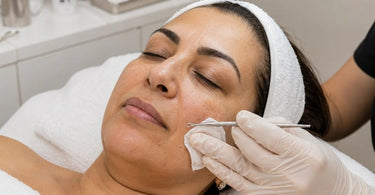
Stand out with this... Let's be real, the word "extraction" often gets the same reaction as a dentist appointment—a necessary evil that we all kind of dread, am I right? As a skincare professional, you know that managing client expectations for professional extractions on closed comedones (those pesky little whiteheads that seem to have a personal vendetta against smooth skin) is practically an art form. It's where your clinical expertise meets your inner therapist, hand-holder, and sometimes, comedian, all rolled into one glorious professional package. But fear not, because mastering this skill is the secret sauce to turning a potentially nerve-wracking experience into a trust-building triumph that has clients booking their next appointment before they've even left the table.
Let's dive deep into the world of closed comedones and uncover how you can be the hero your clients' pores have been waiting for. By the end of this, you won't just be extracting; you'll be a magician of expectations and a master of the extraction arts. And no, you don't need a wand, just a comedone extractor, a steady hand, and a whole lot of charm.
Understanding the Enemy: What Exactly Are Closed Comedones?
Before we can manage expectations, we need to ensure our clients understand what we're dealing with. Closed comedones are the skincare equivalent of a party pooper. They're those tiny, flesh-colored bumps that feel like a rough patch of sandpaper on your client's face. Unlike blackheads (open comedones) which have a dilated opening and are exposed to air, closed comedones are trapped under a thin layer of skin. That little white head is basically a time capsule of dead skin cells, sebum, and bacteria, just waiting to be released. As the Milady Esthetics fundamentals point out, "In treating acne or blemished skin, the most important step for the esthetician is the effective removal and cleansing of blemishes."
But here's the kicker for your clients: they can't just pop them at home. Home extractions are a recipe for disaster, leading to potential scarring, infection, and spreading the bacteria. This is where your expertise comes in, saving the day (and their skin) from the perils of YouTube tutorials. Explaining this helps them see the value in your service and sets the stage for why professional extractions are a non-negotiable part of achieving clear skin.
The Consultation: Where Expectations Are Born (and Managed)
The secret to a stress-free extraction experience isn't just in the skill of your hands; it starts with the skill of your words. The moment a client asks, "Do you perform extractions during the treatment?" consider it a golden opportunity. As Douglas Preston, a 40-year veteran in professional aesthetics, suggests, "follow up with a question that reveals the reason for the client's query, 'Why are extractions important to you?'" This simple question is your entry point to understanding their skin goals, their fears, and ultimately, managing their expectations.
During the consultation, be brutally honest. Explain that closed comedones require a little more finesse than blackheads. As noted in professional textbooks, "Closed lesions are removed in the same manner as blackheads except that an opening in the dead cell layer must first be made," often using a sterile lancet. This is a vital step that clients need to understand. They need to know that their treatment might not result in a completely smooth face in a single session. Some congested areas, like the chin or cheeks, might be deep and require multiple visits to fully clear without causing damage. Setting this expectation early on prevents disappointment and positions you as a caring, thorough professional.
Prepping for Battle: The Importance of Priming the Skin
You wouldn't try to dig up a tree stump without softening the ground first, right? The same logic applies to stubborn closed comedones. Trying to extract a firm, unyielding whitehead is a recipe for frustration (for you) and pain (for your client). The goal is to soften the plug of dead cells and sebum, making the extraction process smoother and more comfortable.
This is where your pre-extraction routine becomes your best friend. Using a Facial Steamer is an absolute game-changer. The gentle, warm steam works wonders, helping to open up the pores and soften the contents of those comedones. It essentially gives the debris a "warning shot," letting it know eviction is imminent. This means less pressure is needed during the extraction, which translates to significantly less discomfort for your client—a total win-win.
Beyond steaming, incorporating Advanced Facial Treatment Products like an enzyme peel or a desincrustation fluid can supercharge your prep work. As Milady's notes, "Before extractions, the use of desincrustation fluid or an enzyme peel will help to prep the skin by softening the plug of dead cells, sebum, and debris from the follicular shaft." This step actively breaks down the bonds holding the impaction together. Pair this with the steam, and you've created a dream team that turns a difficult extraction into a much more manageable one, making you look like the absolute pro you are.
Technique Talk: The Art of the Gentle Extraction
Now for the main event. It's go-time, but it's crucial to maintain a calm, authoritative presence. Your client is likely holding their breath, bracing for the worst. This is where your communication skills need to shine as brightly as your Magnifying Lights.
First and foremost, use the right tools. A comedone extractor is the professional's tool of choice. Remember the golden rule: "place the loop over the lesion so that the lesion is inside the loop." For closed comedones, you'll likely need to use a sterile lancet to create a tiny opening in the skin's surface. The key is to position the lancet "almost parallel to the surface of the skin and pricking the dead cell layer." This minimizes trauma and ensures the debris has a clear path out.
Pause and think about what you're communicating to your client. Explain what you're doing before you do it. A simple, "I'm just going to make a tiny opening to give this pore a way out, you might feel a small pinch," goes a long way in quelling their anxiety. As our previous blog on Extraction Etiquette highlights, using an "anchoring hand" technique—one hand stabilizing the area while the other performs the extraction—provides comforting pressure that distracts from the discomfort.
And always remember the 10-minute rule. "Most clients will tolerate 10 minutes of extractions," and once the skin becomes resistant, it's time to stop. Forcing an extraction isn't just painful; it risks causing trauma and infection. Know when to fold 'em. If it's not budging, it's not ready. Rebook them and try again next time.
Soothing and Sealing: The Aftermath
Congratulations! You've successfully navigated the extraction minefield and emerged victorious. But your job isn't over. The aftercare is just as important as the extraction itself. Your client's skin is now in a sensitive state—it's a bit traumatized and needs TLC, not harsh chemicals or picking.
Immediately follow extractions with a Tuel Skincare calming mask or a calming mask. As the textbooks suggest, "After extractions, a calming, healing mask is beneficial. Antibacterial products and the high-frequency machine kill bacteria and help heal the skin." This step is crucial for reducing redness and inflammation, making your client look like a glowing, post-facial goddess rather than a slightly irritated tomato. Using a High Frequency Machine at this stage provides a gentle, antibacterial buzz that feels like magic, effectively killing bacteria and speeding up the healing process. This not only shows your client you know what you're doing but also provides a tangible "wow" factor that makes the service memorable.
Don't forget to cool them down, too. Using chilled Compressed Sponges or cool water can significantly calm the skin. This simple act of pampering after the intensity of extractions helps reset the client's experience, leaving them with a feeling of relief and rejuvenation. It's the skincare equivalent of a cozy hug after a stressful meeting.
The Home Care Conversation: Setting Them Up for Success
Your service may be over, but your advice will echo in their bathroom. This is where you solidify your role as their trusted skin expert. Clients often leave with their skin looking red and slightly bumpy, and they need a roadmap for the next 48 hours to ensure optimal healing.
Explain what they should expect: slight redness, maybe a bit of flaking in a day or two. This is normal! The worst thing they can do is go home and start picking at the area or applying harsh, drying products. This is where you can offer them premium solutions. Recommend a gentle cleanser like a Premium Skincare Product and stress the importance of sun protection. As Milady's emphasizes, "Daily application of sunscreen is imperative! After finishing a stimulating, nourishing facial, do not send your client out with a newly exfoliated face without sun protection." This is non-negotiable. Offering retail products that support their skin's recovery isn't just good business; it's good practice. It gives them the tools to maintain the results of your hard work, leading to even better outcomes and, of course, repeat business.
The Art of the Unspoken & A Dash of Humor
The extraction phase is more than just physical labor; it's a sophisticated communication dance. Your body language, your tools, and even the background music all speak volumes. Keep your hands warm, your movements confident, and your voice calm. As the Extraction Etiquette blog notes, "how you handle it can transform a potentially uncomfortable experience into a trust-building masterpiece." Your client's nervous system is highly attuned to your energy, so projecting calm and control is key.
And speaking of unspoken cues, learn to read your client. Are they clutching the table? Are they clenching their jaw? These are signs they're stressed. Pause, check in, and ask if they need a break. This simple act of empathy builds immense trust and demonstrates that you respect their comfort.
Finally, don't underestimate the power of a well-timed joke. Humor is your secret weapon! It releases tension and helps your client relax. Maybe you're tackling a stubborn blackhead that seems to have its own zip code. A lighthearted, "This one seems to have paid rent through next year—we're serving an eviction notice!" can turn a tense moment into a shared laugh. As long as you're reading the room and adjusting to your client's personality, a little humor can make you unforgettable.
Managing client expectations for professional extractions on closed comedones is a journey, not a destination. It requires a perfect blend of technical skill, transparent communication, and genuine empathy. By setting clear expectations, prepping the skin like a pro, mastering your extraction technique, and following up with impeccable care, you can turn even the most anxious client into a raving fan. You're not just clearing pores; you're building a loyal clientele who trusts you with their skin—and their peace of mind. So go ahead, rock that extraction, master that consultation, and remember to have a little fun while you're at it. Your clients will thank you for it!
