
Take the guesswork out of quality... because nothing ruins a Tuesday faster than a client looking in the mirror and asking, "Why are my brows purple?" We have all been there. You are a rockstar Lash Artist or Brow Specialist, your Luxury Spa Furniture looks pristine, your lighting is on point, but that tint? It turned into a mess. It was too runny, too thick, didn't take to the hair, or stained the skin like you used permanent marker. Before you throw your Mixing Bowl across the room, let's talk about the real culprit. It isn't you, bestie. It is your developer game. Whether you are wielding Refectocil Original or playing with Intensive Tint, the chemistry between your tint and your developer is the secret sauce. Get the ratio wrong, and you are painting with mud. Get it right, and you are a wizard.
Let's be honest: when we first started out, many of us just "eyeballed" it (pun absolutely intended). A squirt of this, a dash of that. But in the world of Lash & Brow Enhancement Services for Professionals, being off by a few drops can mean the difference between a soft, natural enhancement and a chemical disaster. Whether you are using a Intense Brow[n]s cream or a liquid alternative, the physics of how it sticks to the hair changes. So, grab your Applicators & Spatulas, put down the energy drink, and let's fix your mixing ratios for good.
The Great Debate: Cream vs. Liquid Lash Developers
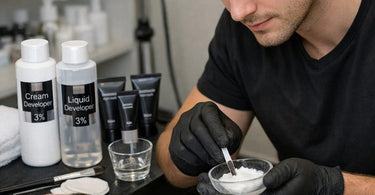
Walking through the aisles of Our Brands at Pure Spa Direct, you will see two main families of oxidants. You have the Cream Developer (the bodybuilder) and the Liquid Developer (the marathon runner). They do the same job—they open the hair cuticle using hydrogen peroxide so the pigment can slide in and do its dance—but they do it with very different vibes.
Cream Developers are the MVPs for brows. They are thick, luscious, and they stay exactly where you put them. If you are working on a client who is a little wiggly, or you are trying to sculpt a precise arch, cream is your jam. It doesn't drip into the eyes (major win for the "no-lawsuits" policy) and it holds moisture longer, which is great for coarse hair that needs extra time to process .
Liquid Developers are the speedsters. They mix instantly and are often preferred for Lash Lift & Perm services where you need the tint to flow easily down the length of the natural lash. However, they are messy. One sneeze, one blink, and suddenly your client looks like they lost a fight with a marker. Liquid requires a steady hand and a trusty Professional Cotton pad at the ready for drips.
Why Mixing Ratios Are Non-Negotiable
Here is where the science meets the slapstick. You might think "a little extra developer will make it lighter," or "a little less will make it darker." Wrong! Well, mostly wrong. The Proper Mixing Ratios For Cream vs Liquid Lash Developers is dictated by chemistry, not vibes.
Too much developer (over-oxidizing): The mixture becomes watery. It will run, stain the skin, and actually break down the pigment molecules before they can lodge into the hair. Result? Pale, sad, invisible lashes.
Too little developer (under-oxidizing): You get a paste thicker than cold peanut butter. It clumps. It doesn't spread. It sits on top of the hair like a clay mask and washes right off. Result? Zero color pay-off and a client wondering why they paid for a tint .
The Golden Rule? For most professional lines like Berrywell Cream Dye or Combinal Cream Dye, the standard is a 1:1 ratio. But let's break it down by texture.
Mixing Ratios for Cream Developer
Cream developer is forgiving, but only if you measure. For brows, we want a consistency similar to toothpaste or a thick cake batter. It should stand up on your Tint Brush without dripping.
The Standard Ratio:
1 Part Cream Tint : 1 Part Cream Developer
(Example: 1cm of tint + 1cm of cream developer)
However, some brands like the classic Refectocil Original suggest a specific drop ratio. For cream developers, you often see instructions like: Mix 2cm of tint with 15 to 20 drops of Oxidant Cream . Why drops? Because the cream is thick; counting drops ensures you don't add too much volume, which would thin out the paste. If your mix is too stiff, add one drop at a time of developer. If it is runny, you added too much—start over. Don't try to fix it by adding more tint; the pH will be off.
Mixing Ratios for Liquid Developer
Ah, liquid. The diva of the industry. Liquid developers are usually used for body tints or specific lash tints. Because it's watery, you need less volume to achieve the same chemical reaction, but you need to be faster.
The Standard Ratio:
1 Part Tint : 2 Parts Liquid Developer (by volume) OR specific drop counts.
Most liquid systems recommend mixing 2cm of tint paste with only 10 drops of the liquid developer . Notice that is fewer drops than the cream? That is because liquid is more concentrated per drop. If you pour liquid developer like you are making a cocktail, you will end up with a soup that stains every pore on the client's forehead.
Pro Tip for Liquid: Use a Mixing Bowls that is dry and room temp. Cold liquid developer slows down the chemical reaction .
Developer Strengths: 3% vs 6%
Now, let's talk about the kick. Developers come in volumes (or percentages). This is the amount of hydrogen peroxide.
- 1.5% to 3% (10 Vol): This is your gentle giant. It is perfect for virgin hair, fine lashes, sensitive clients, or those with Brow Lamination Supplies for Perfect Brows where the hair has already been processed. It lifts the cuticle just enough for a natural tint .
- 6% (20 Vol): Bring out the big guns. This is for resistant hair, coarse grey brows, or if you want a dramatic, deep color change. Warning: Never use 6% on lashes unless the client has very thick, healthy hair, and you have serious speed. It can cause breakage or "frizzling" of the natural lash .
If you use a 6% developer with the liquid mixing ratio (10 drops), you will likely over-process the hair in under 2 minutes. If you use 3% with a cream ratio (20 drops), you might need to leave it on for 15 minutes. Know your chemistry, queen!
How to Avoid the "Angry Bird" Brow
We have all seen the memes. The client leaves with brows so dark and sharp they look like they are permanently surprised. That is usually a ratio issue combined with a timing issue.
If your mixture is too liquid, it seeps into the skin pores and dyes the skin itself. When the skin tint fades, it leaves a weird, blocky shadow behind—hello, Angry Bird!
If your mixture is too thick (creamy), it sits on top of the brow hair but doesn't saturate the??, leaving bald patches in the tint. You take the tint off, and they have leopard-spot brows.
The fix for perfect brows is the "Toothpaste Test." For cream developers, your mixture should squeeze off the spatula like a smooth ribbon—not crumbly, not drippy. For lashes with liquid, it should look like thin paint, but you must use Professional Cleaners & Disinfectants for Salons and Spas to prep the skin first so the liquid doesn't stick to the natural oils.
Tools of the Trade: Don't Use Metal!
Before you mix, a quick safety rant. Use a glass dappen dish or a plastic mixing palette. Do not use metal bowls. The peroxide in the developer reacts with metal ions (like iron or copper), which neutralizes the oxidation process. You could have the perfect ratio, but if you mix it in a metal dish, you just killed the active ingredients . You wouldn't serve a steak on a dirty plate, so don't mix your Professional Lash and Brow Tint for Spas & Salons in a metal bowl.
Also, always use a Applicators & Spatulas that is clean. Leftover wax or oil on your spatula will create a barrier between the tint and the hair. That barrier means the tint slides right off. Oil and water (or developer) do not mix.
Step-by-Step Mixing Guide for Lash Tints
Let's run a service scenario. You have a client in your Pedicure Chairs/Spas waiting for a brow tint while her feet soak. Here is the workflow to nail the mix:
- Prep: Clean the brows/lashes with an oil-free remover. If there is makeup, the tint won't hold.
- The Squeeze: Dispense 1cm (about the size of a small pea) of tint cream into your mixing dish.
- The Drops (Cream): Add 15-20 drops of Cream Developer (like RefectoCil Oxidant) directly onto the tint .
- The Stir: Use a wooden or plastic stick to mix. Fold it, don't whip it. Whipping adds air bubbles, which creates patchy color.
- The Consistency Check: Lift the stick. The mixture should fall back into the bowl in a slow, thick plop. If it runs like water, add a tiny pinch more tint. If it stands up in a peak like meringue, add 2 more drops of developer.
- Application: Apply within 5 minutes of mixing. Once the chemical reaction peaks, the developer starts losing steam .
For Liquid developers: Squeeze 1cm tint, add 10 drops liquid. Stir immediately. It will look like thick chocolate milk. Apply fast because it dries faster than cream.
Brand Specific Guidelines (Because We Have the Goods)
At Pure Spa Direct, we distribute the best. Here is how to handle a few of our best-sellers:
- Intensive Tint: Stick strictly to 1:1. Mix equal parts Intensive 3% Developer with your chosen tint (e.g., Middle Brown or Blue Black) until it forms a creamy paste .
- Berrywell Cream Dye: This is a rich, creamy formula. Use a 2:1 ratio (2 parts dye to 1 part developer) if you want a super-pigmented, intense stain. Use 1:1 for a standard tint.
- Refectocil Original: Stick to the 15-20 drops rule for the cream oxidant. If you overdo the drops, the color will bleed .
Why This Matters for Your Business
Consistency is what builds your book. When you master the Proper Mixing Ratios For Cream vs Liquid Lash Developers, you stop wasting product. You stop re-doing services. You stop panicking when a client asks for "soft brown" and you deliver "burnt sienna."
Imagine this: You nail the mix every single time. Your Lash & Brow Service Supplies last twice as long because you aren't dumping out bad mixes. Your clients rave about the "natural" look because the tint actually saturated the hair shaft evenly. You become the brow guru. That is the power of paying attention to the little bottle of developer.
So, the next time you are setting up your Top Quality Massage Tables Chairs for Relaxation & Wellness or prepping your Towel Steamers, give a little nod to the developer. It is the hardest working product on your cart. Treat it with respect, measure it right, and it will never let your client leave looking like a cartoon character. Now go forth and mix like a pro!
