
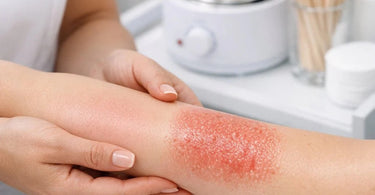
Your journey to success starts now... by channeling your inner Sherlock Holmes, because when a client's skin starts talking (usually in the form of redness, bumps, or a full-on diva meltdown), you need to know exactly what it's saying. Is it a true rosin allergy, a drama queen worthy of a Broadway stage? Or is it just a garden-variety irritation, a brief protest against the fact that you dared to remove hair from its delicate surface? We've all been there. You apply the wax, do your expert removal, and then... it appears. The red splotches. The raised bumps. The client looking at you like you've just introduced their face to a cheese grater. Before you panic and start questioning every life choice that led you to this career, let's get one thing straight: a client's reaction doesn't automatically mean you've done something wrong. More often than not, it's a communication issue between their skin and your wax. And just like any good relationship, the key to resolving it is figuring out who's really at fault. Today, we're putting on our magnifying glasses and diving deep into the world of skin reactions. We're going to decode the mysterious language of redness, bumps, and post-wax trauma. We'll help you distinguish between a true allergy (the kind that means you need to switch products forever) and simple irritation (the kind that a little TLC and technique tweaking can solve). So grab your favorite applicator, warm up your wax, and let's turn you into the ultimate skin detective.
First, let's get our terminology straight because in the world of waxing, words matter. A rosin allergy is an immune system response. It's your client's body saying, 'Hey, I do not like this specific ingredient (rosin, a natural resin from pine trees), and I am going to make a big stink about it.' Think of it as a personal vendetta. The reaction is usually more intense, can appear quickly, and often involves more than just redness. We're talking hives, intense itching, swelling that spreads beyond the waxed area, and potentially even blistering. It's a full-scale protest, and it means that particular ingredient is now public enemy number one for that client's skin . On the other hand, irritation is a non-allergic response. It's a temporary hissy fit caused by something that disturbed the skin's barrier. Maybe the wax was a touch too hot, the removal technique was a little too aggressive, the skin wasn't prepped properly, or the client decided to hit the gym right after their Brazilian. It's a 'right now' problem, not a lifelong grudge. The reaction is usually milder, localized to the waxed area, and typically calms down within a few hours to a day . Think of it as a hangover versus a food allergy. One you can fix with some TLC and time; the other means you need to avoid that substance forever.
The Telltale Signs: Cracking the Case of the Angry Skin
Alright, detective, let's look at the evidence. When that reaction pops up, what does it look like? If you're dealing with a true rosin allergy, the symptoms are often immediate and aggressive. You might see hives—those raised, itchy welts that look like mosquito bites—not just where you waxed, but maybe spreading down the neck or beyond. The itching can be intense, often described as a deep, maddening itch. Swelling might be present, and in severe cases, you could see small blisters. This is your client's immune system waving a red flag, and you need to wave back by stopping the use of any product containing rosin. If it's simple irritation, the scene is a bit more contained. You'll likely see redness (erythema) right where you waxed. There might be some minor bumps (folliculitis), especially if the client is prone to them or if the hair was particularly stubborn. The skin will feel warm to the touch, which is normal, but the client will describe it as a 'stinging' or 'sunburn-like' sensation, not a deep, unrelenting itch . A bit of redness immediately post-wax is totally normal—it's your skin saying, 'Well, that was a surprise!' But when that redness doesn't fade after a few hours, starts to itch like crazy, or looks like it's trying to stage a coup, it's time to dig deeper. Another clue is timing. Irritation is usually a 'within-hours' issue. An allergic reaction can sometimes be delayed, showing up 24 to 48 hours later, making it a sneaky little puzzle .
The Rosin-Free Revolution: Your New Best Friend
If your investigation concludes that rosin is the culprit, don't panic. The solution is simpler than you think: embrace the rosin-free life. Rosin is a natural resin from pine trees, and it's often used in waxes to give them that classic adhesive grip. For many people, it's totally fine. But for a growing number of clients with sensitive or reactive skin, it's a one-way ticket to Irritation City . That's where rosin free waxes come to the rescue. These formulations ditch the pine resin and opt for synthetic polymers or other gentle adhesives that grip the hair without clinging to the skin. The result? A smoother, more comfortable experience for your clients and a lot less drama for you. At Pure Spa Direct, we've curated a lineup of rosin-free heroes that will make your waxing services shine. Check out the Spa Choice Purple Rosin Free Multidirection Hard Wax. Not only is it free from the icky stuff, but its vibrant purple hue means you can see exactly where you're applying it (no more guessing games), and its multidirectional formula is a game-changer for tricky spots like the bikini line . Or, for a touch of Italian elegance, the ItalWax line offers several rosin-free options, like their Pink Pearl, which is specifically formulated for sensitive skin . And if you want to give your clients the ultimate luxury experience, Starpil has a range of pink waxes that are not only Instagram-worthy but also incredibly gentle . Switching to a rosin-free formula isn't just about accommodating allergies; it's about elevating your entire service menu to be more inclusive, comfortable, and professional. It's a proactive step that says, 'I care about your skin as much as I care about smooth results.'
Protocol Tweak #1: Master the Art of the Patch Test
Now, what if it's just irritation? Well, that's where your protocol comes into play. And the number one tool in your irritation-busting toolkit is the humble patch test. Yes, it takes an extra few minutes. Yes, it might feel like a formality. But let me tell you, a patch test is like reading the first page of a book before you buy it. It saves you from a lot of surprises later. Before you commit to a full Brazilian or a full-leg wax, apply a small amount of your chosen wax to a discreet area—behind the ear, the inner arm, or a small patch on the area to be treated. Wait 24 hours. If the skin throws a fit, you've just dodged a major bullet. You've learned that this particular wax, at this particular time, on this particular client, is a no-go. It's the ultimate risk management strategy . This is especially crucial for clients who mention they have 'sensitive skin' but can't quite articulate what that means. A patch test gives you a concrete answer. It also builds trust. When a client sees you take that extra step, they know you're a pro who prioritizes their safety. And let's be honest, in the age of Yelp reviews, a little prevention is worth a pound of public apologies. So, make patch testing a non-negotiable part of your intake process, especially for new clients and those with a history of skin sensitivities. Your reputation will thank you.
Protocol Tweak #2: Temperature, Technique, and TLC
Irritation can also be a sign that your technique needs a little polish. Think of it as a gentle nudge from the universe (and your client's skin) to level up. Start with temperature. Wax that's too hot is a one-way ticket to burn city, but even wax that's a little too warm can strip the skin's protective barrier and cause inflammation . Always test the wax on the inside of your wrist before applying it to your client. It should feel warm, not hot. For sensitive clients, look for low-temperature waxes, like the ItalWax line, which melts at a lower temp to protect the skin. Next, think about technique. For clients with sensitive skin, consider using stripless hard wax more often than soft wax. Hard wax adheres to the hair, not the skin, which means less tugging, less trauma, and less redness. When using strip wax, apply it thinly in the direction of hair growth, and hold the skin taut when you remove it . And please, for the love of all that is holy, don't go over the same area twice. If you miss a few hairs, pluck them with tweezers rather than re-waxing. Re-waxing is like trying to re-use a band-aid—it just makes a mess and hurts a lot more. Finally, master the art of the post-wax soothe. A calming, fragrance-free post-wax oil or lotion can work wonders. Apply it immediately after removal to calm the skin and reduce inflammation. Products like ItalWax's post-wax products are designed to cool and protect, turning a potentially irritated situation into a pampering moment. A little cool compress held on the area for a few seconds can also do wonders to calm those nerve endings .
The Aftercare Script: Educating Your Clients
Your job doesn't end when the last strip is pulled. A huge part of preventing irritation is arming your clients with the knowledge they need for proper aftercare. And let's be real, clients often think they know what they're doing, but sometimes their 'aftercare' looks suspiciously like 'how to cause a breakout 101.' So, give them a clear, easy-to-follow script. Start with the don'ts: For the first 24-48 hours, no hot baths, no saunas, no intense workouts, and no sun exposure. Heat and sweat are the enemies of a freshly waxed follicle and can lead to a nasty case of folliculitis (those red bumps) . Also, tell them to avoid any scented products, harsh exfoliants, or active ingredients like retinols or AHAs on the waxed area . Then, give them the dos: Keep the area clean with a gentle, fragrance-free cleanser. Moisturize with a light, non-comedogenic lotion to keep the skin barrier happy. And for the love of smooth skin, recommend a gentle exfoliation routine starting a few days after the wax to prevent ingrown hairs. Suggest products like our ingrown hair products to keep things smooth and bump-free. And you know what's a great way to drive home the importance of aftercare? Sending them home with a retail product. It's a win-win. They get the tools they need to keep their skin happy, and you get to boost your retail sales. Plus, every time they use that product, they'll think of you and your excellent advice. It's a beautiful thing. Stock up on spa retail products that align with your professional recommendations, and you'll become their go-to expert for all things skin care.
When in Doubt, Call in the Reinforcements (Your Waxing Supplies)
Ultimately, distinguishing between an allergy and an irritation comes down to careful observation, a solid protocol, and the right products. If you suspect a true allergy, stop using the product, recommend a rosin-free alternative, and suggest your client consult with a dermatologist if the reaction is severe . If it's irritation, tweak your technique, double-check your aftercare instructions, and maybe consider a switch to a more gentle, low-temperature wax. The beauty of being a professional is that you have an arsenal of products at your fingertips to handle any situation. And at Pure Spa Direct, our arsenal is pretty epic. From bulk wax deals to pre and post-waxing products, and all the wax strips and applicators in between, we have what you need to keep your clients' skin—and your business—thriving. So, the next time a client's skin starts speaking in tongues, you won't panic. You'll know exactly what questions to ask, which clues to look for, and which protocol to follow. You'll be the calm, confident professional who can turn a potential skincare disaster into a demonstration of your incredible expertise. Now go forth, be the skin detective your clients need, and may your wax be smooth, your removals be clean, and your aftercare be impeccable. And remember, when in doubt, go rosin-free and let your technique do the talking! After all, a happy client is a returning client, and a returning client is the best compliment you can get.
)