
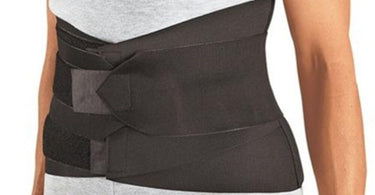
Because details matter... especially when those details involve the hardworking backs of spa, salon, and massage professionals! Between leaning over massage tables, performing detailed nail services, shampooing clients, and spending hours on your feet, your lower back can become the uninvited drama queen of the workday. The Sacro-Lumbar Support with Compression Straps / Small by DJO is designed to provide targeted support and adjustable compression around the lower back and abdominal area. With its low-profile construction, elastic support material, and double side-pull compression straps, this practical support accessory deserves a closer look from busy wellness and beauty professionals who want to make informed decisions about their own workplace comfort.
Professional beauty and wellness work can be physically demanding, even when the treatment room looks perfectly peaceful. That beautiful, candlelit atmosphere may suggest effortless relaxation, but the professional performing the service knows there is plenty of bending, reaching, standing, and repositioning happening behind the scenes. Understanding how a sacro-lumbar support works, how to select the proper size, and when its use may be appropriate can help professionals make more thoughtful choices about their personal support equipment.
What Is the Sacro-Lumbar Support with Compression Straps / Small by DJO?
The Sacro-Lumbar Support with Compression Straps / Small by DJO is an elastic support designed for the lower back and abdominal region. Its primary purpose is to provide support and compression, particularly when addressing strains and sprains affecting these areas. It features a 9-inch-high elastic construction, double side-pull compression straps, and a low-profile design without rigid stays.
Unlike a traditional lumbar cushion that supports the back while sitting, this product is a wearable support that wraps around the torso. The elastic construction provides circumferential compression, while the additional side-pull straps allow the wearer to adjust the compression according to fit and the product instructions.
For professionals exploring Wellness Tools & Supplies for Professional Excellence, understanding the differences between wearable supports, positioning accessories, and ergonomic furniture is an important part of making the right purchasing decision.
Key Features That Make This DJO Support Worth Understanding
The design of this particular DJO support focuses on a few straightforward features rather than an elaborate collection of complicated components. Sometimes practical equipment does not need seventeen buttons, three charging cables, and an instruction manual the size of a phone book.
Low-Profile 9-Inch Elastic Construction
The support measures 9 inches in height and uses an elastic construction intended to provide compression around the lower torso. Its low-profile design may appeal to professionals who prefer support equipment that does not add unnecessary bulk around the waist.
However, actual comfort and compatibility with work clothing will depend on the wearer's body shape, fit, and individual circumstances. A low-profile design does not automatically mean the support will be comfortable under every uniform or during every treatment.
Double Side-Pull Compression Straps
One of the defining features is its double side-pull compression system. These straps provide an additional means of adjusting compression beyond the main elastic body of the support.
Adjustability matters because support should fit securely without being excessively restrictive. The goal is not to squeeze the torso like a suitcase packed five minutes before a vacation. Compression should follow the manufacturer's instructions and any guidance provided by a qualified healthcare professional.
No Rigid Stays
This DJO model does not contain stays. Stays are reinforcing components found in certain orthopedic supports that can add structure or limit particular movements.
The absence of stays distinguishes this product from more structured braces. It does not necessarily make the support appropriate for every activity or condition, and professionals who require rigid stabilization should not assume that an elastic support can provide the same function.
Designed for Low Back and Abdominal Support
The manufacturer describes this model as suitable for providing support and compression for strains and sprains involving the low back and abdominal area.
That stated purpose is important. The product is not a substitute for medical evaluation, rehabilitation, safe lifting practices, or professional treatment. It is a supportive accessory intended for appropriate circumstances rather than a universal solution for every type of back discomfort.
Why Spa, Salon, and Massage Professionals Pay Attention to Back Support
Beauty and wellness professionals frequently work in positions that challenge their posture and endurance. A massage therapist may lean forward repeatedly throughout a session. An esthetician may perform detailed facial work while seated or standing. A nail technician may spend extended periods concentrating on tiny, precise movements.
Hair stylists and barbers can spend much of their workday standing, reaching, and changing positions. Waxing professionals may repeatedly move between treatment areas, equipment, and client positioning tasks.
These activities do not mean every professional needs a back brace. They do highlight why workplace ergonomics, rest breaks, appropriate equipment, and attention to physical symptoms are important topics throughout the beauty industry.
A professionally fitted support may have a role for some individuals when recommended for a specific need. However, wearing a support does not correct poor workstation design, prevent all injuries, or eliminate the physical demands of service work.
How Massage Therapists Can Evaluate Their Support Needs
Massage therapy demands coordinated movement involving the legs, hips, shoulders, hands, and back. Good body mechanics often require maintaining appropriate table height, positioning the feet effectively, and shifting body weight rather than relying solely on the arms or lower back.
Massage therapists considering a sacro-lumbar support should first determine whether it is appropriate for their individual circumstances. A healthcare professional can help assess symptoms, discuss the intended purpose of compression, and identify situations where wearing a support may not be advisable.
For the treatment room itself, equipment selection also deserves attention. Adjustable Massage Tables and Chairs can help therapists establish more suitable working positions. Properly selected Massage Bolsters can improve client positioning during certain services.
Professionals can also explore Massage Oils, Lotions, and Creams for Therapists when evaluating treatment supplies that support the intended techniques and client experience.
The larger lesson is simple: a wearable support is only one potential piece of a much broader approach to professional body mechanics.
Is This Support Useful for Hair Stylists and Barbers?
Hair professionals know that a busy appointment calendar can involve hours of standing, repetitive arm movements, and frequent changes in position. A stylist might transition from shampooing to cutting, coloring, blow-drying, and styling without much time between clients.
For a professional who has been advised to use an elastic sacro-lumbar support, the low-profile design and adjustable compression straps may be relevant features to discuss with a healthcare provider.
However, support equipment should not be treated as permission to ignore fatigue, perform uncomfortable movements, or continue working through concerning symptoms. Adjusting client chair height, positioning equipment conveniently, and taking reasonable movement breaks remain important.
Salon owners reviewing their workspaces can explore Salon & Barber Furniture and Professional Hair Salon & Barber Shop Supplies to consider how furniture and tool placement affect daily workflow.
What About Estheticians, Waxing Specialists, and Nail Technicians?
Not all physically demanding beauty work involves heavy lifting. Some of the most challenging positions come from leaning toward a client, maintaining a steady working angle, or performing delicate tasks for long periods.
Estheticians conducting facials may benefit from reviewing treatment bed height and the positioning of frequently used tools. Waxing specialists should consider whether their treatment area allows convenient access to supplies without repeated awkward reaching.
Nail professionals may need to evaluate table height, chair adjustment, lighting, and the distance between their workstation and the client's hands or feet.
Appropriate Nail Tables and Manicure Stations, Pedicure Chairs and Spas, and Spa Furniture can contribute to a more thoughtfully organized workspace.
The DJO support may be worth considering when an individual has a specific need for lower back or abdominal compression and its use is appropriate. It should not be promoted as a proven way to prevent occupational injuries among estheticians, waxing specialists, or nail technicians.
Getting the Right Size: Why Small Really Means Small
One of the most important purchasing considerations is sizing. The featured DJO product is specifically the Small version, and the listed measurement range is 24 to 33 inches.
According to the product sizing guidance, measurements are taken from the male waist and female hips. Buyers should follow the manufacturer's measurement instructions rather than selecting a size based only on ordinary clothing labels.
The listed size ranges for this support family are:
- Small: 24 to 33 inches.
- Medium: 33 to 39 inches.
- Large: 39 to 45 inches.
- X-Large: 45 to 53 inches.
- 2X-Large: 53 to 59 inches.
- 3X-Large: 59 to 65 inches.
- 4X-Large: 65 to 72 inches.
These ranges describe the available sizes in the product family, not the contents of the featured Small-size listing. When measurements fall near a size boundary, checking current manufacturer guidance before ordering is especially important.
Choosing a support that is too small can lead to excessive tightness, while a support that is too large may not provide the intended fit. A compression support is not the place for optimistic clothing-size math.
How to Approach Wearing a Sacro-Lumbar Support Safely
Wearable compression products require attention to fit, intended use, and individual medical circumstances. Professionals should consult the manufacturer's instructions and obtain healthcare guidance when selecting a support for an injury or ongoing symptoms.
Before using a support, consider the following:
- Confirm appropriateness: Make sure the support is suitable for the condition or purpose for which it is being considered.
- Check the measurements: Use the specified anatomical measurement location and compare the result with the manufacturer's sizing information.
- Follow fitting instructions: Apply the main support and compression straps as directed, without assuming tighter compression is better.
- Monitor comfort: Remove the support and seek appropriate guidance if it causes numbness, tingling, breathing difficulty, increased pain, or skin problems.
- Discuss duration: A qualified professional can advise whether the support should be worn during specific activities or for particular periods.
- Maintain safe movement: Continue using appropriate lifting techniques, workstation adjustments, and movement strategies.
People with medical conditions affecting circulation, breathing, abdominal health, or skin integrity should obtain appropriate medical advice before using compression equipment. The same applies to anyone recovering from surgery or managing a significant back injury.
Does a Lumbar Support Replace Good Ergonomics?
No. This is one distinction every spa and salon professional should understand.
Ergonomics involves adapting tools, equipment, workstations, and work practices to the people performing the tasks. A back support is a separate accessory that may provide compression or stabilization for an appropriate individual need.
For example, a massage therapist working at an unsuitable table height may still experience awkward body positioning while wearing a support. A nail technician leaning forward for an entire appointment still needs an appropriately arranged workstation. A stylist lifting bulky equipment still needs to use safe handling practices.
Consider establishing a routine that includes checking treatment heights before appointments, keeping frequently used products within easy reach, changing positions when practical, and scheduling opportunities for movement and recovery.
Professionals building or refreshing a treatment area may want to review Portable Massage Tables, Spa Essentials for Professionals, and Professional Massage & Wellness Products as part of their equipment planning.
Who Might Consider This DJO Sacro-Lumbar Support?
The featured support is designed for lower back and abdominal compression associated with strains and sprains. Its intended audience is therefore broader than any single beauty industry occupation.
A massage therapist, stylist, esthetician, nail technician, or other spa professional might consider this product if a qualified healthcare professional recommends an elastic sacro-lumbar support and confirms that its design is suitable for the individual's needs.
It is less appropriate to purchase a brace simply because a workday is physically demanding or because a coworker happens to wear one. Back symptoms can have different causes, and not every condition benefits from compression.
Severe or worsening back pain, progressive weakness, new bowel or bladder control problems, or numbness around the groin requires prompt medical attention rather than relying on a support garment.
Comparing Elastic Sacro-Lumbar Supports With Other Wellness Accessories
One reason support products can be confusing is that several unrelated accessories are often grouped together under general wellness or back-care categories.
Elastic sacro-lumbar supports: These are worn around the torso and provide compression. The featured DJO model uses a low-profile elastic body and double side-pull straps without stays.
Lumbar cushions: These generally support the lower back while seated. Their function differs from a wearable compression support, and they are commonly evaluated for use with compatible chairs and seating arrangements.
Massage bolsters: These positioning accessories support a client during appropriate treatments. They are not replacements for wearable orthopedic supports.
Structured back braces: Some braces incorporate stays or more rigid components to provide different levels of stabilization. Selection depends on the intended clinical purpose.
Hot and cold therapy accessories: Products in the Hot & Cold Massage Therapy Products category serve different purposes and have their own use instructions and precautions.
Understanding these distinctions helps professionals avoid purchasing a product that is designed for an entirely different need.
Practical Purchasing Considerations for Spa and Salon Owners
Whether buying support equipment for personal use or considering an employee's request, spa and salon owners should focus on proper selection rather than impulse purchasing.
Start by identifying the intended wearer and confirming the correct size. Review the product description to understand the construction, including the absence of stays and the presence of adjustable side-pull compression straps.
Next, consider whether the individual has received appropriate guidance about wearing a sacro-lumbar support. Equipment purchased for an existing injury may require more specific recommendations than a general workplace comfort accessory.
Owners should also distinguish between employee wellness items and equipment used directly in professional treatments. This DJO support is a wearable support product, not a massage technique, treatment device for client services, or replacement for licensed medical care.
Finally, check current product details, care instructions, availability, and ordering information before purchasing. Those simple steps are far more valuable than discovering after delivery that the selected size was based on someone's favorite pair of stretchy leggings.
Frequently Asked Questions About the DJO Sacro-Lumbar Support
What is the Sacro-Lumbar Support with Compression Straps / Small by DJO designed to do?
It is designed to provide support and compression for strains and sprains of the low back and abdominal area. It has a 9-inch elastic construction and double side-pull compression straps.
Does this DJO lumbar support have stays?
No. The product description specifically identifies the support as having no stays.
What size is the Small DJO sacro-lumbar support?
The Small version is listed for measurements of 24 to 33 inches. Follow the specified measuring method, which uses the male waist and female hips, and verify fit against current manufacturer guidance.
Can massage therapists wear this support while working?
Some massage therapists may be able to wear it during appropriate activities when recommended by a qualified healthcare professional. Whether it is suitable depends on individual circumstances, the nature of the work, and the instructions for use.
Will wearing this support prevent back injuries at the salon?
It should not be relied upon to prevent workplace injuries. Proper body mechanics, workstation setup, task variation, and appropriate equipment remain essential considerations.
Can the straps be adjusted?
Yes. The design includes double side-pull compression straps intended to provide adjustable compression. Follow the product's fitting instructions.
Is this the same as a lumbar cushion?
No. This is a wearable elastic support, while a lumbar cushion is typically used with seating to support the lower back.
Where can professionals find the featured DJO support?
The exact Small-size product is listed as Sacro-Lumbar Support with Compression Straps / Small by DJO, product code VW-133309. Buyers should review the current listing before placing an order.
A More Thoughtful Approach to Professional Back Support
Every beauty and wellness professional deserves a workspace that respects the physical demands of the job. From the massage therapist completing a full schedule to the nail technician concentrating on intricate nail art, thoughtful equipment choices can make daily operations more manageable.
The Sacro-Lumbar Support with Compression Straps / Small by DJO offers a specific combination of features: 9-inch elastic construction, a low-profile design, no stays, and double side-pull compression straps. Its stated purpose is to provide compression and support for strains and sprains involving the lower back and abdominal area.
For someone who has been advised to use this type of support, those features may make it a relevant option to evaluate. For everyone else, it is a helpful reminder that choosing the right equipment begins with identifying the actual need rather than chasing a one-size-fits-all solution.
Explore the Sacro-Lumbar Support with Compression Straps / Small by DJO for its specifications and ordering details, or browse Professional Massage & Wellness Products for additional workplace and wellness supplies. Because taking excellent care of clients is important, but paying attention to the people providing those services matters, too. And your back would probably appreciate being included in that conversation!
