
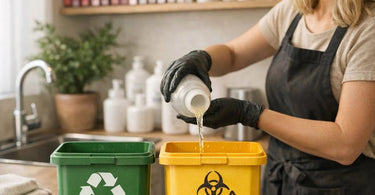
Simplify your day, amplify your success... by finally tackling that cabinet of chemical mysteries! Let’s be honest, every salon has a “chemical graveyard”—a drawer or shelf where half-used tubes of Hair Color, bottles of developer, and leftover perm solution go to live out their golden years. You know you shouldn’t just toss them, but pouring them down the drain feels wrong, too (because it is!). It’s time to clear the clutter and the conscience with a simple, safe guide to disposing of these professional products. Proper disposal isn’t just about following rules; it’s about protecting your local waterways, your team’s health, and your business’s reputation. Consider this your friendly, no-judgment intervention for that expired box of color in the back. We’re going to break it down so you can handle these materials with the same confidence you bring to a color correction or a perfect Lash Lift & Perm.
The truth is, salon chemicals like oxidative hair color, developer, and perm solutions are considered hazardous waste. They contain ingredients that can be corrosive, toxic, or reactive. Just like the Professional Cleaners & Disinfectants for Salons and Spas you use to sanitize your stations, these beauty products require special handling at the end of their life. Improper disposal—like pouring them down the sink, toilet, or storm drain—can pollute our water systems and harm aquatic life. It can also pose a risk to sanitation workers if placed in the regular trash and may even damage your own salon’s plumbing over time. The good news? With a little know-how, managing this waste is a straightforward part of your professional routine.
What Exactly Are You Dealing With? Salon Chemical Waste 101
Before we get to the “how,” let’s identify the “what.” In the salon context, the chemical waste we’re focusing on typically falls into a few key categories that you use every day, from your Professional Hair Color station to your Waxing Supplies area.
- Oxidative Hair Color & Lightener: This includes leftover permanent liquid color, cream color, and powder lightener that has been mixed with developer or is in its concentrated form. Even unopened, expired tubes or bottles fall into this category.
- Developer (Peroxide): This is the liquid catalyst, typically in volumes like 10, 20, 30, or 40 volume. It can be leftover from a service or past its expiration date.
- Perm and Relaxer Solutions: Both the waving lotion/cream and the neutralizer from Salon Perm Solutions and straightening treatments are considered chemical waste.
- Other Liquids: Don’t forget about used Acetone from nail services or leftover professional Sunless Tanning solution.
A crucial distinction: Packaging vs. Product. An empty color tube or developer bottle, once completely emptied and cleaned, may be recyclable as plastic or metal depending on your local guidelines. However, a container with any product residue is considered hazardous waste and must be handled accordingly. When in doubt, treat it as hazardous. Also, note that solid wastes like used wax, pomade, or cleaning products have different disposal streams.
Your Step-by-Step Disposal Action Plan
Okay, you’ve gathered your expired color and lonely perm bottles. Now what? Follow this actionable plan to dispose of them responsibly and safely.
Step 1: Stop & Store Safely (No Mixing!)
First rule of chemical club: never mix different chemicals together. Combining products can cause dangerous reactions, including fires, explosions, or the release of toxic gases. Keep each product type separate. Store them in a cool, dry place away from direct sunlight and heat sources (like your Professional Wax Warmers), and always in their original, labeled containers. If a container is corroding or leaking, place it inside a larger, sealed plastic container (like a bucket) and label it clearly. This is just as important for salon safety as using a clean Hygienic Table Paper for every client.
Step 2: Research Local Hazardous Waste Programs
This is the most critical step for most salons. Household Hazardous Waste (HHW) programs are typically run by your city or county and are designed to handle the exact types of waste your salon generates.
- How to Find Them: Search online for “household hazardous waste” plus your city or county name. You can also contact your local environmental health department or solid waste agency directly.
- What to Ask: Inquire if they accept waste from small businesses like salons. Many do, though there may be limits on quantity or a small fee. Ask about their collection schedule—some have permanent drop-off facilities, while others host collection events a few times a year.
Step 3: Explore Specialized Salon Recycling Services
For salons wanting to go above and beyond, fantastic specialized programs exist. Organizations like Sustainable Salons in Australia (and similar initiatives emerging elsewhere) offer dedicated chemical waste recycling for the beauty industry. Their innovative process neutralizes liquid chemical waste—which is about 95% water—so it can be purified and reused as recycled water for industrial or community purposes, like construction or watering gardens. While this specific program may not be in your area yet, it’s worth investigating if any similar “beauty industry chemical recycling” services operate locally. It’s a powerful way to align your Spa Essentials with a circular economy.
Step 4: Transport and Drop-Off Like a Pro
When it’s time to take your chemicals to the collection site, safety continues.
- Pack Smart: Keep containers upright and secure them in a sturdy box or plastic tub in your vehicle’s trunk or cargo area. Use packing material to prevent them from tipping or banging together.
- Drive Directly: Take your chemicals straight to the drop-off facility. Don’t leave them sitting in a hot car while you run other errands.
- Follow Instructions: At the facility, follow all staff directions. They are the experts in safe handling.
What NOT to Do: The “Pour and Pray” Method is a No-Go
Let’s be crystal clear on the forbidden disposal methods. Never, ever:
- Pour chemicals down the drain, toilet, or sink. This sends pollutants directly into the water system.
- Dump them on the ground or into a storm sewer. This leads to soil and groundwater contamination.
- Put them in your regular trash or recycling bin. This endangers waste collection workers and can cause chemical reactions in garbage trucks or landfills.
- Try to dilute them to “make them safe.” Dilution does not change the hazardous nature of the chemicals.
Proactive Practices: Waste Not, Worry Not
The best way to manage waste is to create less of it. Integrate these smart habits into your salon’s workflow:
- Inventory & First-In, First-Out (FIFO): Regularly check your stock of Hair Bleaches and Lighteners, developers, and perms. Use the oldest products first to prevent expiration. A good inventory system is as vital as having sharp Professional Shears, Clippers, & Trimmers.
- Mix Precisely: Train your team to mix only the amount of color or solution needed for each service. Accurate mixing reduces leftover waste and saves money.
- Choose Concentrates & Refills: When possible, select professional product lines that offer concentrates or bulk refills to minimize packaging waste.
- Partner with Your Supplier: Ask your distributor if they have a take-back program for expired professional products or empty containers. Some manufacturers are leading the way in product stewardship.
Building a Culture of Safety & Sustainability
Making chemical disposal a standard part of your salon’s operation is a mark of a true professional. It shows clients you care about your community and the environment—values that are increasingly important. It also protects your team and keeps you in compliance with local regulations. Just as you invest in quality Top-Quality Equipment & Furniture and Protective Gloves & Masks, investing time in proper waste management is an investment in your business’s future.
So, take an afternoon, rally your team, and tackle that chemical graveyard. With this guide, you have the map. You’ll gain peace of mind, a cleaner storage area, and the satisfaction of knowing your beautiful work doesn’t end with an ugly environmental impact. Now, who’s ready to clear some space for new, fabulous products?
