
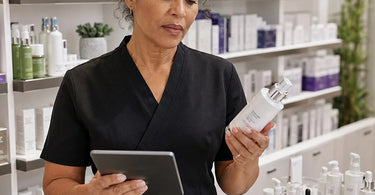
Your key to success is here... and it might just come in a tiny bottle with a concentration percentage that can make or break your client's skin—and your reputation. We're talking about Alpha Hydroxy Acids (AHAs), the holy grail of exfoliation that can turn dull, lackluster complexions into radiant, glowing canvases. But let's be real: retailing AHAs for home care can feel a bit like defusing a bomb while blindfolded and trying to remember if you left the oven on. Get the concentration right, and you're a skin savior. Get it wrong, and you're fielding frantic phone calls about mysterious redness and a peeling face that looks like a snake shedding its skin mid-summer. Fear not, beauty boss. We're about to decode the science, master the art of matching acids to skin types, and turn you into an AHA retailing genius who can send clients home with confidence and a smile (not a flinch).
So, what in the world is an AHA? Alpha Hydroxy Acids are water-soluble acids typically derived from sugary fruits, sour milk, or even nuts. Think of them as the tiny but mighty demolition crew for dead skin cells . Their primary job is to loosen the glue that holds those dull, dead cells to the surface of the skin. As we age, our skin's natural turnover cycle slows down, causing that buildup of dead skin that leads to a dull, rough, and tired-looking complexion. AHAs swoop in to save the day by accelerating the shedding process, revealing the fresh, new skin underneath . This process of Chemical Peels at home may sound intimidating, but with the right professional guidance, it's a total game-changer for your clients' results and your bottom line.
The AHA Cheat Sheet: Know Your Acids
Before you can even think about percentages, you need to be fluent in AHA-ese. Not all AHAs are created equal. They vary by molecular size, which determines how deeply they penetrate and how potent their effects are. If you want to be the go-to guru for skincare advice, you must know your glycolic from your lactic and your mandelic from your malic. Let's break down the heavy hitters in the world of professional and retail skincare, shall we?
- Glycolic Acid: This is the overachiever. With the smallest molecule size, it penetrates the deepest and fastest, making it the most potent for visible results. It's derived from sugar cane and is fantastic for treating fine lines, uneven skin tone, and stubborn texture. However, with great power comes great responsibility—it's also the most likely to cause irritation if not used correctly. Think of it as the espresso shot of acids—strong, effective, and not for everyone all the time .
- Lactic Acid: The gentle giant with a larger molecule size. Derived from milk, lactic acid is not only an exfoliant but also a humectant, meaning it draws moisture into the skin . This dual action makes it ideal for clients with dry, sensitive skin who still want the benefits of an AHA. It's the calming chamomile tea of the AHA world—effective, soothing, and hydrating.
- Mandelic Acid: The slow and steady tortoise. With an even larger molecule size, mandelic acid penetrates the skin very slowly, making it incredibly gentle. It's derived from bitter almonds and is a superstar for clients with acne-prone skin or darker skin tones who are more prone to hyperpigmentation from irritation. It's the wise, patient mentor of acids—gets the job done without causing drama .
When you're stocking your shelves with Premium Skincare Products for Spas and Salons, understanding these differences is your superpower. It allows you to have a real conversation with your clients about what their skin actually needs, not just slapping the most expensive product in a bag and hoping for the best. This builds trust and, more importantly, ensures they see results that keep them coming back for more of your Spa Tools & Implements.
Decoding Percentages: A Guide for Home Care Retail
Now, let's get down to the nitty-gritty: the numbers. When you're selecting products to retail for home use, the concentration of AHA is the single most crucial factor to consider . Sending a client home with a product that's too strong is a recipe for disaster (think: angry, red, peeling skin and a very angry email). Sending them home with one that's too weak is a missed opportunity for results. The goal is the Goldilocks zone—just right.
In general, AHA concentrations for retail home care products typically range from 5% to 15%. These percentages are considered safe and effective for regular use when formulated with a proper pH (more on that later) . Here's a breakdown of what those concentrations mean for your clients:
- 5% to 8%: This is the sweet spot for beginners or those with sensitive skin. It offers gentle, gradual exfoliation that can be used a few times a week without causing major irritation. It's perfect for clients who are new to chemical exfoliation or just want to maintain a healthy glow. Think of it as a gentle nudge for cell turnover.
- 8% to 10%: This is the standard concentration for most over-the-counter leave-on serums and creams . It provides noticeable results in terms of texture, brightness, and fine lines without being overly aggressive for most skin types. This is the workhorse concentration that will become your best-selling go-to for the majority of your clients who are ready to step up their at-home Advanced Facial Treatment Products for Salons & Spas game.
- 10% to 15%: This is where things get a little more serious and results come faster. These products are typically stronger and may be formulated as washes or masks that are rinsed off to minimize irritation. They're excellent for clients who are seasoned AHA users or have more resilient, oily, or heavily textured skin. You're entering the realm of highly effective, intensive care here.
While higher percentages (up to 30%) are used in professional treatments, it is essential to remember that the FDA and many health experts recommend caution for concentrations over 10% for home use. In fact, some studies suggest that many over-the-counter products with higher concentrations can be a major risk for sensitive individuals . This is why your role as the professional is so vital. You must be the gatekeeper of safe and effective skincare. When you're stocking your retail shelves, always start with lower percentages for new clients and explain why you're recommending a specific product. It's not just about selling; it's about ensuring the results are positive and the experience is safe.
The pH Factor: Why It Matters (A Lot)
If you think concentration is the only number that matters, allow me to introduce you to its equally important partner: pH. The effectiveness of an AHA is heavily dependent on the pH of the product . For an AHA to work its exfoliating magic, the product needs to be at a low pH (typically between 3.0 and 4.0). At this level, the acid is in its 'free acid' form, which is what actually breaks down the 'glue' holding those dead skin cells together.
This is a crucial piece of knowledge to drop on your clients when you're explaining why they can't just use any old product. Many over-the-counter products might have a high concentration of AHA, but if the pH is wrong, it's essentially a waste of money. It's like having a Formula 1 car and putting regular gas in it. It's not going to perform. When you're helping clients select products from your Spa Essentials for Professionals line, you can explain that a professional-grade product not only has the right concentration but is also formulated to the correct pH to deliver results safely and effectively. This elevates you from a product seller to a true skin expert. It also gives you the perfect pitch for why retailing professional products is so much better than them buying something off a drugstore shelf.
Matching the Acid and Concentration to the Client
This is where the science meets the art. It's not just about knowing the numbers; it's about knowing your clients. You wouldn't give a first-time waxer a hard wax and a Brazilian treatment without some education, and you shouldn't hand over a 15% glycolic acid serum to someone with sensitive skin and rosacea. Here is your guide to client matching.
The Sensitive Skin Client: This client blushes when you look at her. Her skin gets red and irritated easily. For her, reach for mandelic acid or lactic acid at a 5% to 8% concentration. These options are much gentler and less likely to cause a reaction. Advise her to start slow—maybe every other night—and to always follow up with a good moisturizer and sunscreen. You can also recommend products from the Tuel Skincare Collection or June Jacobs lines, which are known for their gentle yet effective formulations.
The Oily/Acne-Prone Client: This client battles shine and breakouts. She needs a deeper clean to unclog pores and smooth out bumpy texture. Glycolic acid in the 8% to 10% range is a fantastic starting point. It can help unclog pores and reduce the appearance of acne scars over time. For those with more resilient skin who have used AHAs before, you might recommend a 10-15% rinse-off mask once a week. While you're helping with skin, don't forget to point them toward your Waxing Supplies for Professionals and Ingrown Hair Products to complete their overall beauty regimen.
The Mature Skin Client: This client is concerned about fine lines, wrinkles, and age spots. She is likely looking for serious, noticeable results. Lactic acid or glycolic acid are both excellent options in the 8% to 12% range. The glycolic acid will stimulate collagen production, while lactic acid will provide moisture and plumpness . Again, emphasize the importance of sunscreen. These strong acids make the skin more photosensitive, and the last thing you want is for her to undo all your hard work. You could mention how this pairs beautifully with a professional Microdermabrasion treatment you offer in the spa.
The Newbie: For anyone who is new to AHAs, it's always best to start low and slow. Recommend a 5% lactic acid serum to start. This allows their skin to build up a tolerance without the risk of a bad reaction. Advise them to use it every other night for the first week and then increase to nightly if there's no irritation. It's all about education and trust. When they're ready to level up, they'll come straight back to you because you guided them right the first time.
Maximizing Retail Sales with Education
Let's talk about the real reason you're reading this: selling those products! Your retail area is a goldmine, but only if you're proactive about it. A recent guide on spa therapy emphasizes that recommending products for home use is a critical part of the therapist's role, as clients expect a detailed 'prescription' for their skin . When you explain the 'why' behind a product—why you're choosing a specific acid at a specific percentage—you're providing immense value. Clients are much more likely to purchase something they understand.
Start the conversation during the treatment. As you're working on a client's skin with your professional-grade facial products, mention the key ingredients. Then, when you're wrapping up, give them a concise recommendation. You could say something like, "Your skin is looking fantastic today, and it's really responded well to the gentle exfoliation. I'd love to send you home with this 8% lactic acid serum to keep that momentum going. It's hydrating and will help maintain that glow without irritating your skin." This ties the treatment you just performed directly to a retail product .
Set up your Must-Have Spa Retail Products strategically. Use display stands and keep everything immaculate . If you have a retail section in your reception, use stylish salon furniture to display testers. Clients love to try before they buy. And don't be afraid to show them the products! If they don't usually use a lot of products at home, keep it simple. Show them exactly how to apply it, how much to use, and when to use it .
Finally, remember that you're not just a distributor for all our amazing brands—from Murad to Intrinsics, you are a skin expert. That's what sets you apart from a big-box store. Your knowledge is your strongest sales tool. When you confidently explain why a 5% lactic acid is better for a particular client than a 10% glycolic acid, you're not just selling a product; you're selling expertise and trust. This trust leads to loyal customers who come back for your services and your advice, again and again . And that, my friends, is how you build a beauty empire.
