
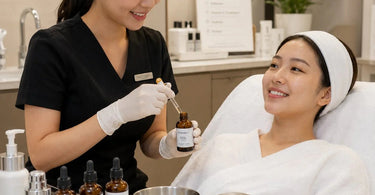
Experience the power of efficiency... and also the power of not looking like a startled citrus fruit. Let's be real, Vitamin C is the holy grail of brightening, the diva of dazzling skin, and the only 'C' your clients should be worried about getting an A+ in. But if you've ever stood in your supply closet squinting at bottles, wondering if a 5% solution is a gentle hug or a weak handshake, you are not alone. Selecting the proper concentration of Vitamin C for brightening services is the difference between sending a client out the door looking like they just had a five-star spa weekend versus looking like they tried to tan through a window screen. As beauty professionals, we know that one size fits all is a lie we tell ourselves about scrub pants, not potent active ingredients. So, grab your Facial Steamer, pour yourself something hydrating (water, please, we have standards), and let's peel back the layers on ascorbic acid without any irritating side effects.
Let's face it (pun fully intended), clients walk in clutching magazine cutouts and squinting at TikTok?? (filters), demanding 'glass skin' and 'that dewy look.' But when you whip out a high-potency serum, they suddenly look like you just offered them a jalapeno facial. Fear not! Understanding the numbers on the bottle isn't just chemistry; it's the art of managing expectations and skin barriers. Whether you run a bustling Salon or a zen Spa, mastering this ingredient will make you the neighborhood hero of hyperpigmentation. We're here to make sure your brightening services pop—without making anyone's face pop off.
Why Vitamin C? The Glow-Getter’s Secret Weapon
Before we dive into percentages, let’s praise the science. Vitamin C (L-ascorbic acid, for those who like to sound fancy at industry parties) is an antioxidant powerhouse. It fights free radicals like a bouncer at a club, inhibits melanin production so dark spots don't crash the party, and boosts collagen like a personal trainer for the face. When you offer brightening services, you are promising a return to radiance. However, too much of a good thing can lead to irritation, breakouts, or a client who looks more 'angry tomato' than 'glowing angel.' That is why selecting the proper concentration of Vitamin C for brightening services is non-negotiable. You wouldn't use a chainsaw to trim a bonsai tree, and you shouldn't use a 30% solution on someone who flinches at a mild breeze. We have the Advanced Facial Treatment Products for Salons & Spas to handle every skin type, but the magic is in the dosage.
The Low-Down on Low Concentrations (5% to 10%)
Imagine Vitamin C is coffee. For some people, a single shot is enough to make them vibrate. A 5% to 10% concentration is your 'sensitive skin savior' or your 'newbie introduction.' This range is perfect for clients with rosacea, eczema, or those who claim their skin 'hates everything.' At this level, you provide antioxidant protection and subtle brightening without the tingly 'Is this burning?' panic. It’s like a warm hug for the epidermis. We love using these concentrations during Hydrodermabrasion treatments because the water-based exfoliation opens the door just enough for the Vitamin C to step in politely, not kick it down. Pair this with a gentle Dermaplaning session, and you have a recipe for smooth, bright skin without the drama. Low concentration is also ideal for post-waxing facial services, because let's be honest, that skin has been through enough already without you adding a chemical exfoliant rave.
Middle of the Road Magic (10% to 15%)
Welcome to the sweet spot, the Goldilocks zone, the 'just right' of brightening. For 90% of your general traffic—the people with normal, combination, or slightly stubborn skin—this is your cash cow. A 10% to 15% concentration is effective enough to visibly fade sunspots and even out skin tone within weeks, but generally safe enough to avoid a lawsuit (I mean, a reaction). When you are selecting the proper concentration of Vitamin C for brightening services for the average client walking in off the street, start here. This level plays beautifully with other professional equipment. Imagine using this potent potion after a Microdermabrasion treatment; the fresh, new skin underneath drinks it up like a desert rainstorm. It synergizes perfectly with the Ultrasonic Skin Scrubbers we have on site, using sound waves to push that brightening goodness deep into the dermis. This is the concentration that makes clients text you at 10 PM asking, 'What IS this magic?!' It's reliable, it's effective, and it doesn't yell at you.
The High Potency Zone (15% to 20%)
Okay, tough guy. Put on your big-girl gloves. The 15% to 20% range is for the professionals only. This is for the client who has tried everything. I'm talking about the person who has 'sun damage' that looks like a leopard print, or the one who doesn't feel a product is working unless it smells like science and stings a little. High potency yields high rewards: drastic brightening, significant collagen production, and serious photoprotection. However, the risk of irritation scales up faster than your rent. When using these levels, you absolutely must pair them with a proper pH balancer and barrier repair moisturizer. We recommend these for clinical peels or for use with High Frequency Machines to oxygenate and calm the skin post-application. Never, ever use this concentration on a client fresh off a Waxing Supplies for Professionals service unless you enjoy watching people cry. High potency is a scalpel, not a sledgehammer. Use it wisely, and you will be a legend. Use it poorly, and you will be buying a lot of aloe vera.
Formulation Matters: L-Ascorbic Acid vs. The Derivatives
Hold onto your Professional Spa Apparel, because this gets nerdy. L-Ascorbic Acid (LAA) is the pure, potent, 'I woke up like this' form. It's effective, but it's also an unstable diva that oxidizes if you look at it wrong. It needs a low pH (under 3.5) to penetrate, which can be irritating. Then you have derivatives like Sodium Ascorbyl Phosphate (SAP) or Tetrahexyldecyl Ascorbate (THD). These are the 'cool, calm, and collected' cousins. They are stable, less irritating, and oil-soluble (meaning they penetrate deeper). When selecting the proper concentration of Vitamin C for brightening services, you need to check the label. A 20% SAP derivative is not the same as a 20% LAA. The LAA will hit harder and faster; the SAP is a slow burn that's great for acne-prone or sensitive souls. For those tricky post-ItalWax - Wax services on the face (yes, we wax faces), stick to derivatives. It keeps the hair away and the glow coming without the ouch. Knowing your chemistry separates the 'button pushers' from the true skincare architects.
How to Layer Without Causing a Chemical Meltdown
Order of operations matters. You wouldn't put your socks on over your shoes, and you shouldn't layer Vitamin C willy-nilly. Cleanse first—obviously, unless you like spreading dirt. Then, if you are using a low pH toner, do that. Vitamin C comes next on dry skin. Wait a minute. Go change your Hygienic Table Paper or fold some Compressed Sponges. Then, apply your treatment serums (hyaluronic acid, peptides), then moisturizer, then SPF. DO NOT mix Vitamin C with Niacinamide (vitamin B3) in the same step unless you like a niacin flush that makes the client look like a lobster. Alternate them or use one in the AM (Vitamin C) and one in the PM (Niacinamide). Also, be cautious mixing with direct acids (AHAs/BHAs) unless your client's skin is made of Kevlar. Layering is a dance, and you are the choreographer. Don't step on anyone's toes.
The Retail Opportunity: Sending Them Home with The Good Stuff
You've done the service. The skin is glowing. The client is snapping selfies in your bathroom lighting. Now is the time to strike—with kindness, of course. Selecting the proper concentration of Vitamin C for brightening services doesn't stop at the treatment room door. If you don't sell them the correct take-home concentration, they will go to the drugstore, buy a 30% chemical peel in a shiny bottle, and burn their face off, blaming you. Keep our Must-Have Spa Retail Products stocked with low (5-10%) and mid (10-15%) options. Tell them, 'Your skin looks amazing now, but if you go home and use this high-octane stuff, you'll look like a tomato by Tuesday. Trust me, start with the gentle stuff and let me see you back in four weeks.' This builds trust, ensures compliance, and boosts your retail revenue. Plus, you look like the wise sage of the epidermis. Win-win.
Equipment Pairing: Making Vitamin C Work Overtime
Don't just slap it on and call it a day. Use technology! We have a warehouse full of toys here at Pure Spa Direct that love Vitamin C. Use Iontophoresis Machines to electrically push the C deep into the tissue—it’s like a cattle prod for skincare, but much gentler and less lawsuit-y. Pair it with Galvanic Machines for that old-school ionization magic. If you're doing a Microcurrent Machines lift, layer a conductive gel with Vitamin C to lift and brighten simultaneously. For those hardcore brightening services, consider a cocktail using Oxygen Facial Machines. Blasting oxygen and Vitamin C together creates a reaction that makes skin look so good, clients might accuse you of witchcraft. And really, isn't that the highest compliment?
What About The Body? Don't Forget the Decollete!
The face gets all the love, but what about the chest? The hands? The 'I forgot to put sunscreen on my back at the beach twenty years ago' zone? When selecting the proper concentration of Vitamin C for brightening services for the body, you can often go a little stronger. Body skin is generally thicker and less reactive than the delicate petal that is the face. A 15-20% concentration works wonders on sunspots on the shoulders or arms. However, be careful with the neck and chest—that skin ages like a rich person's leather car interior; it's thin and prone to crepe-ing. Use lower concentrations there. We recommend doing a quick Spa Body Treatments scrub first to remove dead skin, then apply the serum. For a really fun service, mix the serum into a Sugar Scrubs base for a brightening polish, or use Salt Scrubs for intense exfoliation followed by a Vitamin C spritz. Your clients will leave looking like they've been dipped in liquid moonlight.
Handling the 'Reactive' Client: Damage Control Protocols
Sometimes, despite your best efforts, a client reacts. Maybe they lied about using their retinol the night before (we see you, Karen). Maybe they have sunburn they didn't mention. If you see redness, stinging, or the dreaded 'orange peel' texture, stop. Flush the skin with cool water. Grab a Towel Steamer for a cool towel (yes, they do cold too, read the manual), or use LED Bright Lamps set to green or red to calm inflammation. Apply a thick layer of Massage Oils, Lotions, and Creams for Therapists that are ceramide-rich. Do not send them home with the product. Send them home with a gentle cleanser and a prayer. Explain that 'more' is not always 'more.' This is why we always patch test or start low and go slow. Remember, selecting the proper concentration of Vitamin C for brightening services means sometimes selecting zero Vitamin C for that client today. That's not a loss; that's professionalism.
The pH Factor: It's Not Just Math, It's Magic
You can have the perfect 15% concentration, but if your pH is off, you might as well be splashing them with orange juice. L-Ascorbic Acid requires a pH of less than 3.5 to penetrate the skin barrier. If your formula is pH 5 or 6, it's just expensive, sticky water. This is why professional brands like Tuel Skincare Collection or Murad are worth the investment—they balance efficacy with elegance. If you're mixing your own (DIY is risky, but you do you), invest in pH strips. For sensitive clients, a higher pH derivative is safer, but if you want that 'snap, crackle, pop' brightening effect, you need that low pH. Just warn them about the 'tingle.' Call it the 'tingle of transformation.' It sounds better than 'mild chemical exfoliation sensation.'
Conclusion: You've Got the Power
So, there you have it. From the timid 5% hug to the badass 20% body shot, selecting the proper concentration of Vitamin C for brightening services is your superpower. You are the guardian of the glow, the protector of the moisture barrier, and the only thing standing between your clients and a regrettable online purchase of a 30% powder that needs to be mixed with battery acid (don't ask). At Pure Spa Direct, we have the Premium Skincare Products for Spas and Salons to back you up. Now go forth, brighten responsibly, and always—always—ask about the retinol before you apply the acid. Your clients' faces (and your insurance premiums) will thank you. Now stop reading and go steam something. You've got this, glow-getter.
%20Clients)