
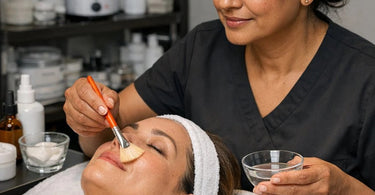
Start strong, finish stronger... but if you are using the wrong Fan Brush for your acid peels, you might finish with a splotchy, streaky face that makes your client look like a confused cartoon character. We have all seen the memes where someone walks out of a chemical peel looking like a tomato with stripes. It is funny until it happens in your chair. Then it is just a liability. The truth is, applying acid solutions like glycolic, lactic, or salicylic acid is high-stakes skincare poker. You cannot just slap it on with a cotton round or, heaven forbid, your fingers (please do not do that). You need precision, even coverage, and a material that does not drink your expensive serum like it is happy hour. That is where the humble Fan Brush struts in to save the day. We are going to dig into why these flat, fanned-out bristles are the unsung heroes of the Advanced Facial Treatment room, and more importantly, how to pick the one that will not fall apart, shed onto a client, or absorb half your product. We are Pure Spa Direct, your friendly neighborhood distributors of all things spa wholesale amazingness, and we are here to make sure your tools are working as hard as you are. Let us get our chemistry geek on and talk about bristles, baby.
First, let us address the elephant in the treatment room. Why do you specifically need a fan brush for acid application? Can't you just use a flat paddle brush or a Applicators & Spatulas? You could. But you would be wrong. The geometry of a fan brush is specifically designed for liquid and thin-gel consistency products. Think about it. A chemical peel is not a thick, chunky Spa Body Treatments clay mask. It is watery. It drips. If you use a standard brush, the liquid beads up. You end up with little racing stripes of product and dry patches of skin. A fan brush, however, spreads the bristles thin. It creates a veil of product rather than a blob. It allows you to paint the solution onto the skin like a watercolor artist, not a house painter throwing buckets of latex. Because the bristles are spread out, the acid sits on the surface of the skin evenly, which is the whole goal of a peel. If the application is patchy, the peel results are patchy. Nobody wants a forehead that is three shades lighter than their chin. That is the kind of service fail that loses you a Google review. Using the right Acid Brush ensures uniform exfoliation, happy clients, and that satisfying feeling when the peel neutralizes perfectly.
Why Synthetic Bristles Are Your Only BFF (Sorry, Naturals)
Let us get real for a second about brush materials. In the world of Beauty Wholesale, you will see natural hair brushes. They are lovely for powder. They are gentle. But for acid application? They are a nightmare wrapped in fur. Natural bristles (like goat or squirrel) are porous. They act like tiny little straws. When you dip them into your Premium Skincare Products, specifically acidic ones, they absorb the product deep into the base of the ferrule. This is wasteful because half your expensive glycolic acid is living in the bristles instead of on your client's face. Worse, natural hair can react with the chemicals. Over time, the acid degrades the hair, making it brittle. That brittle hair then snaps off onto your client's face mid-treatment. Imagine looking down and seeing a little brown hair stuck in a layer of acid on Mrs. Johnson's cheek. Not a good look.
You need synthetic bristles and you need them to be chemical-resistant. High-quality synthetic fibers, specifically polyester or nylon 6.12, are non-porous . They do not absorb the liquid. They just hold it on the surface of the fiber, allowing it to glide off smoothly onto the skin. This gives you total control of the dosage. It also means the brush is highly resistant to the low pH of acids like glycolic or salicylic. They will not corrode or melt. At Pure Spa Direct, we are huge fans of the ForPro Professional Collection and similar medical-grade synthetics because they can handle the heat—or, in this case, the acid. Look for tags that say "resistant to acids, alkalines, and solvents." If it says "natural hair," run away. If it says "synthetic blend," proceed with caution. You want 100% synthetic, baby.
Bristle Density and Stiffness: The Goldilocks Zone
Have you ever used a fan brush that was so floppy it just flopped over like a sad, tired flower? Or so stiff it scratched the client's skin before the acid even had a chance to work? You need the Goldilocks zone. For acid application, you generally want a medium-density brush with medium-soft stiffness. Let me explain why. If the brush is too stiff (like a toothbrush), it acts as a mechanical exfoliator on top of a chemical exfoliator. That is overkill. You will irritate the barrier, cause unnecessary redness, and your client might levitate off the table from the stinging sensation of scraping plus burning. Not relaxing. If the brush is too soft (like a powder blush brush), it offers zero resistance. You try to paint a line, and the bristles just bend backward. You cannot control the product flow, and suddenly you have drips running down the nasolabial folds.
You want a brush that has resistance. When you press it against the skin, the bristles should spread slightly but push the product forward. This allows you to work the acid into the pores gently without aggression. The ideal fan brush for Light Therapy Devices or chemical peels has a bit of "snap" to it. When you flick your wrist, it should snap back into shape. This is often labeled as "bend recovery" on technical spec sheets . Polyester is a rockstar for this because it maintains its stiffness even when wet . It won't go limp halfway through your service because of the moisture from the primer or the acid. You want a brush that feels like an extension of your hand—controlled, firm, but gentle. If you are shopping for Salon Supplies and the brush feels like a mop, put it back. If it feels like a broom, also put it back. You want the sweet spot.
Handle and Ferrule Durability: No Rust Allowed
Here is where a lot of budget buyers mess up. They buy a cheap Professional Salon Equipment brand brush, and after two washes, the metal part (the ferrule) gets those little orange spots. Rust. You cannot use rusty tools on a client's face. That is an infection risk and just gross. Acids, by their very nature, are corrosive. Even the fumes in a closed drawer can break down low-quality metals. You need a ferrule that is either nickel-plated, stainless steel, or completely sealed. Look for brushes that have a seamless ferrule or one that is double-crimped. This prevents the metal from coming into contact with the acid liquid. If the acid seeps up into the ferrule (where the glue is), it will dissolve the glue. What happens when the glue dissolves? The bristles fall out. On. The. Client's. Face.
Handle material matters too. Wood handles look classy. They feel good in the hand. But wood absorbs water and chemicals. Over time, it will crack, splinter, or rot. If you are using a Premium Skincare Products brush in a wet environment, you want acrylic, plastic, or lacquered wood. Honestly, for acid application, I prefer a solid plastic handle. It is non-porous. It bleaches clean. You can spray it with Professional Cleaners & Disinfectants without worrying about ruining the finish. It is hygienic. It is boring, sure, but it is safe. Save the fancy rosewood handles for your dry makeup brushes. We are in the trenches of chemical exfoliation here; we need surgical precision, not a photo shoot.
Size Matters: Width of the Fan
Are you applying acid to the back? The decollete? Or just the nose and chin? The size of the fan brush dictates your speed and accuracy. For full-face Chemical Peels, you want a wider brush, usually between 1.5 inches and 2 inches wide. This covers the large planes of the face (forehead, cheeks) quickly. If you use a tiny brush on a big face, you will be painting for ten minutes. The acid might dry before you finish the second cheek, leading to uneven application. For small areas—like just the upper lip, around the eyes (be careful!), or spot treatments—you want a detail fan brush. These are usually less than an inch wide. They give you the precision of a surgeon. You can get right up to the lip line without going inside the mouth.
If you are a full-service Spa Body Treatments location doing back peels, you need a jumbo fan brush. We are talking 3 inches or more. Trying to paint a back with a face brush is like painting a house with a toothbrush. You will be there all day, and your Bulk Wax Deals customers will hear your arm cramping. You need efficiency. The right size brush cuts your application time in half, which means you can turn over that room faster. Speed plus safety equals money, honey.
The Cleaning Conundrum: Keeping Your Fan Brush Alive
You just spent good money on a high-quality Professional Hair Brushes & Combs (well, similar concept) or a specialized acid brush. You cannot just drop it in a jar of Barbicide and forget it. Acid residue is tricky. If you don't clean the brush immediately after the service, the residual acid will crystallize or continue to eat away at the glue over time. After your peel service, you need to rinse the brush immediately with tepid water (hot water can set the proteins, cold water is fine, but tepid is best). Then, you need a dedicated brush cleanser or a mild antibacterial soap. Gently massage the bristles. Do not mash them into the bottom of the sink. You are trying to save the brush, not punish it.
For chemical-resistant brushes, you might also use a specific disinfectant spray designed for non-porous tools. Lay the brush flat to dry. Do not stand it up on its bristles (water drips down into the ferrule, loosens the glue) and do not lay it on a towel where the bristles get squashed. Shape the bristles back into the fan shape while wet. Let it air dry completely before storing. If you store it wet, you are inviting bacteria to a party on your brush. That bacteria plus an open pore equals a breakout. A clean brush leads to clear skin leads to happy tips.
When to Toss It: The Lifespan of a Hardworking Tool
Nothing lasts forever, especially when it is fighting a war against Glycolic Acid. Even the best ItalWax brush or Berodin applicator has a shelf life. For acid brushes used daily, you need to replace them roughly every 2-3 months. Signs of aging: Splaying. If your fan brush no longer looks like a fan, but rather a starfish that got hit by a car, toss it. Discoloration. If the bristles are turning yellow or brown despite cleaning, the chemical composition is breaking down. Stiffness. If the bristles used to be soft and now they feel like a brillo pad, the acid has denatured the plastic. The Drop Test. Hold the brush by the handle and tap it on the counter. Do bristles fall out? Yes? Immediate death. Do not use a shedding brush on an acid treatment. You will be picking fibers out of the clients skin while the peel neutralizes, and that is awkward for everyone involved.
At Pure Spa Direct, we encourage professionals to treat these brushes as Hygienic Table Paper—consumable but essential. Buy in bulk. Professional Wax Spatulas and Applicators are one-time use usually, but brushes can be reused if cared for like royalty. But do not get attached. The second it looks suspicious, retire it to the glue bin or toss it. Your clients' safety is worth more than the $4.99 cost of a new synthetic fan brush. Trust me, the price of a lawsuit for a scratched cornea from a frayed bristle is much higher than the price of a brush.
Retail Opportunity: Sell the Brush, Sell the Safety
Here is a pro-tip for the Must-Have Spa Retail Products game. Clients are obsessed with at-home care, but they are terrified of chemical peels at home (as they should be). You can leverage the fan brush as a retail item for their gentle serums and masks. Tell them: "Mrs. Jones, I use this specific fan brush to apply your acid because it prevents dragging on the skin. At home, when you use your hyaluronic acid or your gentle enzyme mask, you should use this brush too. It is more sanitary than your fingers and uses half the product."
Boom. You just sold a Professional Fan Brush to a client. Explain that their fingers have bacteria and oils that contaminate the jar. A brush keeps the product sterile and extends the shelf life. Amber Products or Tuel Skincare looks amazing when applied with a brush. It feels luxurious. It feels clinical. It justifies the price tag of the serum. Plus, retailing a brush that is dry-use only (for serums, not pure acid at home) is low liability and high profit. They will love you for teaching them how to stop wasting product. You become the expert. You become the person who saves them money. That is how you build loyalty, and that is how you build a business. Now go forth, pick the right brush, and make those complexions glow!
