
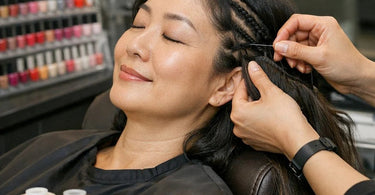
Better outcomes, one smart choice at a time... Let's be real, ladies. There is nothing more awkward than a client coming back two weeks after a flawless sew-in looking like she has a tiny, angry hamster nesting on her head because the thread has stretched, mildewed, or snapped. You work too hard on your salon services to let a spool of weak string ruin your reputation. When it comes to hair weaving, the thread is the literal foundation of the style. It is the silent superhero holding everything together, fighting against humidity, sweat, and the client's enthusiastic dry-shampooing habits. Choosing the wrong type is like building a luxury beachfront hotel on a foundation of wet sand. Looks great at the ribbon cutting, but give it one tide, and you are looking at a disaster. We are here to settle the great debate, spill the industry secrets, and make sure your styling tools are backed by the best threads in the game.
For years, the professional beauty industry has been locked in a silent war: Nylon versus Cotton. Which weaving thread reigns supreme? Which one will survive a humid August day or a hot yoga class? Which one keeps the luxury spa experience intact without the dreaded itch? If you are doing sew-in weaves, wigs, or extensions, you need the gospel truth. We have done the homework, consulted the textile science, and tested the tensile strength so you don't have to. Grab a coffee, put your feet up on your pedicure chair, and let's untangle this mess once and for all.
The Heavyweight Champion: Why Nylon Weaving Thread is the Professional's Secret Weapon
If you look inside the kit of any high-volume extension specialist or professional barber doing precision work, you will almost exclusively find nylon. There is a reason for that, and it is not just industry hype. Nylon thread, specifically pre-bonded or high-tenacity nylon, is engineered for performance. It possesses a specific combination of traits that directly translates to happier clients and longer-lasting styles .
First and foremost, nylon is incredibly strong. We are talking about a tensile strength that laughs in the face of heavy, dense wefts. Unlike cotton, which can snap under pressure (literally), nylon holds tight. It offers a non-slip stitch that keeps those expensive hair extensions exactly where you placed them . Secondly, and this is a big one for hygiene, nylon is hydrophobic. It does not absorb water. Cotton acts like a sponge; it soaks up moisture, sweat, and product buildup. Nylon repels it. This means no mildew, no bacterial growth, and significantly less of that infamous \"wet dog\" smell if the client exercises. Most importantly, this moisture resistance drastically reduces scalp irritation and itching. We all know the \"head pat\" client who is constantly scratching; nine times out of ten, that is cotton thread hosting a mold party . Nylon keeps the scalp happy and the salon disinfectants working on the surfaces that matter.
The Comfort Contender: When Cotton Thread Makes Sense
Now, before you throw all your cotton spools into the nearest hot stone heater, let's give credit where it is due. Cotton thread is not the villain; it is just often misunderstood or misapplied. Cotton weaving thread has been a staple in the industry for decades. Its primary advantage is comfort. Cotton is soft. It is a natural fiber that lacks the sharp, synthetic edges of some lower-grade nylons. For clients with extremely sensitive scalps, or for very short-term styles (think two weeks or less), cotton can be a gentle option .
Cotton also has a specific texture that some stylists prefer for hand-tying or for working with very fine, fragile hair, as the friction is slightly different. It is also generally less expensive, which can be tempting for new businesses trying to stock up on waxing supplies and hair goods on a budget. However, the savings at the register often cost you in client retention. Because cotton swells and weakens when wet, styles loosen up quickly. You will find yourself doing maintenance re-weaves much sooner than you would with a synthetic option .
Head-to-Head: Breaking Down the Features
To make this really clear, let's put these two hair weaving titans side-by-side on the mat. When you are standing at your nail table or styling chair, these are the physical properties that matter most to your bottom line and your sanity.
Strength and Durability: Nylon wins this round by a knockout. It is tough, resistant to abrasion, and maintains its integrity. Cotton is prone to breaking and unraveling, especially when threading the eye of that tiny needle .
Moisture Resistance: Nylon is the champion here. It does not absorb water, preventing bacteria. Cotton is highly absorbent, leading to swelling, breaking, and mildew. That \"itchy weave\" complaint is almost always a cotton issue .
Comfort and Feel: Cotton takes the crown for softness. It feels natural against the scalp. Nylon can sometimes feel rougher, though professional-grade bonded nylons have largely closed this gap .
Color Matching and Appearance: Nylon holds dye exceptionally well and is resistant to UV fading, meaning it stays the color you bought. Cotton is available in many colors, but it fades faster and can look \"fuzzy\" over time. You can find professional lines like the \"Brunettes Series\" that offer specific shades like Jet Black, Burnt Copper, and Mid Brown to disappear completely into the hair .
Real-World Applications: Which Thread for Which Service?
Knowing the science is great, but how does this translate to the services you book every day? You would not use a facial steamer to wax a leg, right? Similarly, you need to match the thread to the skincare or hair service.
For Long-term Sew-in Weaves (4-8 weeks): Do not gamble. Use high-quality nylon thread. The longevity and tension retention are non-negotiable. You want a thread that will not stretch or sag, keeping the professional hair brushes gliding smoothly over the tracks for weeks.
For Sensitive Scalps or Medical Hair Loss: This requires nuance. If the client has a history of allergic reactions, a high-quality, hypoallergenic nylon (specifically marked for medical use) might be best. However, for general sensitivity, cotton might feel better initially, just be aware the replacement cycle will be faster. Always do a patch test if you are unsure!
For Wig Construction (Ventilating): You must use nylon. Cotton is too weak and will rot over time due to scalp oils. Wig caps demand the chemical resistance and durability of materials like nylon or polyester .
For Dreadlock Maintenance: Nylon is the standard here. It needs to hold tension and resist moisture during washing .
Mastering the Application: Tools of the Trade
Having the best thread in the world means nothing if your technique is sloppy. Make sure you are pairing your Spa Masters quality thread with the right hardware. You need a curved weaving needle that matches the thickness of your thread. A needle that is too small will fray nylon; a needle that is too large will leave gaping holes in the weft.
Always cut a manageable length of thread—usually about the length of your arm. Longer than that, and you will spend more time detangling knots than actually sewing. For nylon specifically, some stylists like to give it a gentle tug before starting to \"set\" the twist, ensuring it lays perfectly flat against the scalp. And please, for the love of all that is holy, do not double-thread your needle with thick nylon unless you want to fight with it all day. Single strand, tight stitches, consistent tension .
The Verdict: What Should You Stock Up On?
If you run a busy salon or barbershop, variety is key. However, your workhorse should be nylon. Specifically, look for pre-bonded nylon or bonded nylon threads. The bonding coating reduces friction, prevents fraying (that fuzzy look old thread gets), and helps the thread glide through the hair without damaging the cuticle .
Brands like M&M Headgear produce \"Qfitt\" threads that are polyester/nylon blends, offering the best of both worlds: the durability of synthetic with a slightly softer hand . Keep a few spools of cotton on hand for those ultra-sensitive clients who refuse to switch, but make sure they sign a waiver acknowledging the maintenance schedule will be shorter. You want them leaving your chair looking like a million bucks, not coming back in two weeks complaining about the \"fungus farm\" hiding in their tracks.
Keeping it Fresh: Storage and Longevity
Thread is surprisingly sensitive to its environment. Don't leave your spools sitting on a sunny windowsill next to your towel steamer. UV rays degrade nylon over time, and humidity can rot cotton even before you open the package . Store your threads in a cool, dark, dry cabinet. Keep them in a sealed locker or container, especially if you do spa body treatments where humidity is high. This ensures that when you reach for that perfect shade of brown, it is just as strong as the day you bought it.
Ultimately, selecting the right type of thread for professional hair weaving boils down to understanding the client's lifestyle and your business model. If you want longevity and hygiene, you go nylon. If you want immediate softness for a photoshoot or weekend event, you can grab cotton. But for the day-in, day-out reality of a professional stylist looking to retain clients and protect their scalp health, nylon is the undisputed king. It keeps the sugar scrubs away from the itch and the hair bleach away from the breakage. Now go forth and weave with confidence.
