
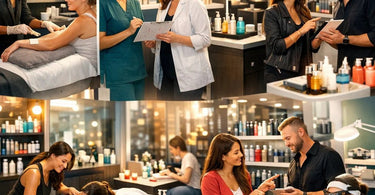
Efficiency redefined for modern professionals starts with cutting through red tape. Let's be honest, navigating salon licensing and product rules across 50 states feels less like a business strategy and more like trying to do a Brazilian blowout in a hurricane—chaotic, confusing, and you're never quite sure if you're doing it right. But here's the good news: understanding these regulations is the unsexy foundation of a thriving, legitimate, and reputable beauty business. This guide is your lifeline. We're going to demystify the complex web of state boards, local health departments, and city offices so you can focus on what you do best: making clients look and feel fabulous. Consider this your first step toward a grand opening that's not just glamorous, but fully compliant.
Think of your salon licenses as the official permission slip for your brick-and-mortar location to exist and operate. They're completely separate from the individual licenses your amazing stylists and technicians hold. These permits are mandatory for critical reasons: they ensure your space meets specific health, safety, and sanitation standards, protecting your clients, your team, and your entire investment from preventable risks and legal nightmares. Ignoring them can lead to fines, forced closure, and a permanent stain on your business record. So, let's grab a metaphorical comb and detangle this together.
The Licensing Labyrinth: Who You Gotta Answer To
You're not dealing with one big boss; you're dealing with a whole committee. Licensing in the U.S. is a multi-level affair, typically involving three key authorities. First up, your State Board of Cosmetology or Barbering. This is the big kahuna for your professional practice, issuing both individual and establishment licenses. Next, your Local Health Department will want a word (and probably an inspection) to ensure your salon meets all hygiene and sanitation codes. Finally, don't forget your City and County Offices. They're the ones who issue general business permits and handle zoning laws to make sure you can even operate a commercial business at your chosen location. Missing any one of these is like forgetting to tone your client's hair—the results will be disappointing and costly.
Your License & Permit Checklist: The Paperwork Parade
When you open your doors, you'll need more than just a stocked salon supply cabinet. Here are the most common licenses and permits you'll be chasing down:
1. State Cosmetology/Barbering Establishment License: This is your primary "shop" license. It's the official state certification that your premises are approved for operating a beauty business. Consider this your diploma for your physical space.
2. Local Business Operating License: Nearly every city and county requires this general license for any commercial venture. It's like paying your dues to play in their sandbox.
3. Health & Sanitation Permit: This comes with a thorough inspection from your local health department. They'll scrutinize everything from how you sterilize your tools and implements to your waste disposal and ventilation systems. A sparkling clean disinfection routine is non-negotiable here.
4. Federal EIN & State Tax ID: If you plan to hire employees, you'll need a Federal Employer Identification Number (EIN) from the IRS. A State Tax ID or Seller's Permit is also crucial for legally collecting sales tax on those tempting retail products.
5. Building & Zoning Permits: Planning renovations or building out a new space? You'll need building permits. Zoning permits are also critical to confirm your location is approved for commercial use—this is especially important if you're dreaming of a home-based salon.
Navigating State-by-State Nuances: Service-Specific Smackdowns
While the core concepts are similar, the devil is in the state-by-state details. The requirements can vary drastically depending on the services you offer. Here's a quick rundown of what different businesses face:
Hair Salons & Barbershops: For hair-focused businesses, ventilation is king to handle chemical fumes from coloring or smoothing treatments. States may have specific rules for chemical waste disposal and tool sterilization. Barbershops often answer to a separate State Board of Barbering with unique rules for straight razors and hot towel procedures. Ensure your team uses top-quality hair color and professional clippers safely.
Nail Salons: Get ready for intense focus on hygiene and ventilation. Regulations will hammer on the daily disinfection of all implements (think: files, clippers), strict protocols for cleaning foot spa basins after each client, and systems to manage fumes from polishes and acrylics. Proper disposal of nail dust is a big checkmark for inspectors.
Esthetician Suites & Spas: If your heart is in skincare, waxing, and massage, you'll need an esthetician business license. This means strict rules for private, clean treatment rooms, impeccable handling of skincare products, and absolutely no double-dipping of wax applicators. States may have extra permits for advanced services like microdermabrasion or dermaplaning.
Home-Based Salons: The convenience comes with extra hurdles. Beyond your professional license, you'll likely need a home-based business license. You must check local zoning laws, as many residential areas restrict commercial activity. Health departments often require a service area physically separate from living spaces, a private client entrance, and ultra-stringent sanitation protocols.
The Product Puzzle: More Than Just a Pretty Label
Licensing isn't just about your space and your hands; it's about what you put in and on those hands. Product regulations are a minefield where federal and state rules intersect. The U.S. Food and Drug Administration (FDA) oversees the safety of cosmetic products, but they don't approve them before they hit the market. Their authority kicks in if a product is adulterated or misbranded. However, they explicitly state that other agencies regulate workplace safety, and your state and local licensing authorities will have their own product requirements.
This gets real with chemicals like formaldehyde. The Occupational Safety and Health Administration (OSHA) has found that some hair smoothing products—even those labeled "formaldehyde-free"—can contain and release formaldehyde at levels above safe limits when heated. Using such products triggers a whole set of OSHA requirements for air testing, ventilation, worker training, and protective equipment. Failure to comply has led to significant fines for salons. The lesson? Know what's in your styling products. Rely on reputable brands you trust, and always follow manufacturer and safety guidelines to the letter.
Your 5-Step Path to Compliance (Without the Headache)
Feeling overwhelmed? Let's break the process into manageable, less-terrifying steps:
Step 1: Research Your Specific State & Local Rules. (Do not skip this!) Visit your state's Board of Cosmetology/Barbering website. Then, check your city and county websites for local business licenses and zoning ordinances. This is the most important homework you'll ever do.
Step 2: Register Your Business Entity. Officially register your business name and legal structure (LLC, S-Corp, etc.) with your state's Secretary of State. This creates your legal business "persona."
Step 3: Complete Applications & Pay Fees. Fill out every form accurately. Missing info is the top cause of delays. Be ready to pay non-refundable application fees for each license.
Step 4: Prepare for & Pass Inspections. Your space must be showroom-ready for health, fire, and building inspections. Ensure it's clean, compliant, and fully equipped with your salon furniture and equipment before scheduling.
Step 5: Display Your Licenses Prominently. Many states require you to post your salon license and individual practitioner licenses where clients and inspectors can easily see them. Frame them with pride!
Don't Forget the Financial Safety Net: Insurance
Licenses keep you legal; insurance keeps you in business when the unexpected happens. Essential policies include General Liability (for slips, falls, or property damage), Property Insurance (for fire, theft, or damage to your furniture and tools), Professional Liability (for claims of service mistakes or damages), and Workers' Compensation (mandatory in most states if you have employees). This is your financial security blanket.
The Bottom Line: Compliance is Your Competitive Edge
Staying on top of licensing and regulations isn't just about avoiding fines. It builds immense trust with your clients. A compliant salon is a professional, safe, and reputable salon. It shows you care about the well-being of everyone who walks through your door. While this guide provides the national landscape, your specific blueprint lies with your state board and local offices. Do the research, build relationships with your inspectors, and consider joining professional associations to stay updated on changes.
Then, once the paperwork is filed and the licenses are hung, you can get back to the beautiful part of the business. Let your creativity run wild, knowing your foundation is rock solid. Now, go forth and be fabulous—legally!
