
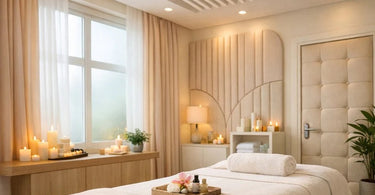
Solutions made for professionals... who are tired of their massage room sounding like a hair dryer convention. Let’s be honest, you went into the spa and salon business to create a sanctuary of peace, not to run a soundstage for the world’s loudest leaf blower competition. Yet, here you are, trying to get a client to relax their shoulders while the reception phone rings, a blow dryer screams from the styling floor, and the wax warmer decides to hum its own little tune. It’s not just annoying; it’s the enemy of relaxation. When a client is paying for “tranquility,” they aren’t paying for a front-row seat to your daily operations. So, how do we turn down the volume without turning off the business? We soundproof. And no, you don’t need to build a concrete bunker. We’re going to dive into the art and science of Soundproofing your treatment rooms to save your sanity, protect your clients’ peace, and maybe even save your hearing.
Let’s face it, the modern salon or spa is often built with aesthetics in mind first. And we love the look of shiny tile floors, sleek glass partitions, and open-concept layouts. But acoustically? Those surfaces are basically a megaphone. Sound waves bounce off hard floors, ricochet off the walls, and ping-pong around the ceiling until they become a chaotic wall of noise. Research shows that in environments like this, ambient noise levels can skyrocket, making it hard for clients to relax and for staff to communicate without shouting . One study even highlighted that salon workers can experience ear pain and fatigue from long-term exposure to high sound levels . So, when we talk about “the acoustics of relaxation,” we’re talking about creating a space that feels as quiet and serene as it looks.
The Usual Suspects: What’s Making All That Racket?
Before we start throwing acoustic panels at the walls like we’re in a game of dodgeball, let’s identify the culprits. In a typical spa or salon, the noise pollution comes from a few key areas. First, there’s the main styling floor. Hair dryers, clippers, and the buzz of conversation create a constant, low-level roar . Second, your shampoo stations—with their running water, tile backsplashes, and porcelain sinks—act like a mini amphitheater for sound. Third, and most critical for this blog, are the treatment rooms. Whether it’s a massage room, a waxing suite, or a facial room, these spaces demand privacy. But if they share walls with the main salon, have hollow-core doors, or share ductwork with the noisy areas, you’ve got a problem. Sound loves to travel through the path of least resistance, and often, that path leads straight to a client trying to meditate.
Treatment Room TLC: Creating Your Quiet Zone
Now, let’s get to the good stuff: fixing those treatment rooms so they actually feel like a retreat. Think of this as a three-pronged attack: Absorption, Blocking, and Sealing.
1. Absorption: Taming the Echo
If your room echoes like a church, you need to absorb that sound. This is where you get to have some fun with decor. Forget those old, ugly foam squares. Today’s acoustic panels are beautiful. Fabric-wrapped panels can be custom-colored to match your brand, or you can install a suspended acoustic cloud from the ceiling for a modern, sleek look . Don’t want to do construction? Bring in the heavy artillery: plush area rugs over those beautiful but noisy tile floors, thick velvet curtains over windows, and large upholstered furniture. Even a strategically placed bookshelf filled with products (which, conveniently, you can sell) can help break up sound waves. The goal is to reduce the “reverberation time,” meaning the sound doesn’t bounce around for as long, making the room feel instantly calmer.
2. Blocking: Building a Wall of Silence
Absorption handles the sound inside the room. Blocking handles the sound trying to get in from outside. If you’re doing a renovation, or even just a minor upgrade, pay attention to the walls. Standard interior walls are often not very soundproof. If your massage room shares a wall with the styling floor, that’s a direct pipeline for the sound of hair brushes and blow dryers. To fix this, you need to add mass. The most effective way is to add another layer of drywall to the shared wall with a damping compound like Green Glue in between . This adds mass and decouples the layers, turning a sound highway into a quiet, winding country road. For a less invasive option, consider mass-loaded vinyl (MLV), a heavy, flexible material that can be applied directly to existing walls and then covered with a new layer of drywall or even decorative panels.
3. Sealing: The Sneaky Sound Leaks
Sound is a ninja; it will find the tiniest crack to slip through. You can have the best walls in the world, but if there’s a quarter-inch gap under your door or your HVAC vent acts like a speaker, you’re toast. Start with the door. If it’s hollow, replace it with a solid-core door. Then, install an automatic door bottom and acoustic door seals around the frame . This seals the perimeter and blocks sound from escaping. Next, look at the ductwork. In many buildings, the ceiling plenum (the space above the drop ceiling) is open from room to room, meaning sound travels right over the walls. To fix this, you can install soundproofing ceiling tiles or even add a layer of drywall to the ceiling to create a “hard lid” that blocks sound from going over the top. You can also wrap HVAC ducts with sound-dampening insulation. It’s the unsexy work, but it makes a world of difference.
The Unexpected Perk: Happier Staff, Happier Clients
Let’s talk about the real win here: your team. We spend so much time thinking about the client experience, but what about the esthetician doing six back-to-back advanced facial treatments? Or the massage therapist trying to focus their energy while hearing the clatter of the reception area? A noisy environment leads to fatigue, stress, and even hearing issues over time . When you invest in a quieter workspace, you’re investing in your employees’ well-being. They’ll feel less frazzled at the end of the day, communicate more clearly, and provide better service because they aren’t battling background noise. One salon owner reported that after installing acoustic panels, the staff felt less ear pain and could finally answer the phone at the front desk without yelling over the chaos . That’s a business improvement you can actually hear.
Your Acoustic Arsenal: What Pure Spa Direct Offers
Now, we can’t sell you drywall or green glue (sorry!), but what we can do is fill your treatment rooms with the quietest, most luxurious gear that complements your new, serene atmosphere. Because what’s the point of a soundproof room if your facial steamer sounds like a freight train?
We offer a huge selection of professional equipment designed for performance and quiet operation. Imagine a room where the only sound is the gentle hum of a high-frequency machine or the quiet whisper of a ultrasonic skin scrubber. We’ve got you covered with leading brands. For your waxing suites, keep things efficient and discreet with ItalWax and their pre and post products, ensuring your services are smooth and sound-free. Don’t forget the little things that add to the ambiance: aromatherapy diffusers that offer a gentle white noise, plush high-quality towels from Boca Terry that muffle sound when folded, and massage table warmers that keep clients cozy without a mechanical racket.
And let’s not forget about your clients’ comfort during the quieter parts of their service. The best way to block out the sound of a busy salon next door? Give their ears something pleasant to focus on. Offer them a pair of noise-canceling headphones with a curated relaxation playlist. Or, use the sound of essential oils diffusing in the room as a natural sound masker. Even the soft rustle of hygienic table paper being rolled out can be part of a ritualistic, calming soundscape rather than a jarring interruption.
We also love brands that help you create a holistic, quiet luxury experience. Think about adding a hot stone heater from thermaBliss—the gentle warmth is a comfort, and the unit itself is designed to be unobtrusive. For the nail techs, consider professional gel polish from CND or OPI, paired with quiet nail files and buffers that minimize that grating, scratchy sound. It’s about curating every element to support the atmosphere you’re building.
From Chaos to Calm: A Real-World Success Story
Let’s paint a picture. There was a salon owner who moved into a beautiful new space with hardwood floors, exposed brick, and high ceilings. It was a dream… until the clients arrived. The echo was so bad that opening day was described as “bedlam” . Clients couldn’t hear their stylists, stylists were shouting, and the atmosphere was anything but relaxing. Sound familiar? This owner invested in a solution that didn’t require a full renovation. They installed acoustic panels on the ceiling—only about 60 square feet—and the echo vanished. Conversations became clear, the noise level dropped, and the staff felt an immediate sense of relief. The best part? The panels blended into the decor, and the owner was so thrilled they added more near the reception area. This story proves that you don’t have to tear down walls to see results. A few strategic, affordable changes can completely transform the energy of your space .
Wrapping It Up: Your Soundproofing Action Plan
So, ready to turn down the volume and turn up the relaxation? Here’s your quick-hit action plan:
1. Assess the Enemy: Walk through your space with a critical ear. Where is the noise coming from? Is it the echo (need absorption), outside noise (need blocking), or sneaky sound leaks (need sealing)? 2. Start with Soft Things: Before you buy any acoustic foam, look at your soft furnishings. Add rugs, curtains, and upholstered seating. This is the easiest and most stylish way to absorb sound. 3. Invest in Your Doors: If you have hollow-core doors in your treatment rooms, prioritize replacing them with solid-core doors and adding weather stripping or door seals. It’s a single upgrade that pays massive dividends. 4. Think About Airflow: Check your HVAC vents. If you hear noise coming through them, consult an HVAC professional about adding sound-baffling duct liners or inline silencers. 5. Upgrade Your Gear: Visit Pure Spa Direct to ensure the equipment inside your quiet rooms is worthy of the peaceful environment. Browse our aromatherapy supplies for calming scents and our spa retail products to continue the relaxation at home.
Creating a truly relaxing spa or salon environment is about more than just the services you offer. It’s about the atmosphere you cultivate. And the most fundamental part of that atmosphere is sound. By taking the time to address the acoustics of your treatment rooms, you’re not just soundproofing a space; you’re protecting the peace of your clients, the sanity of your staff, and the very essence of your brand. Now go forth and enjoy the silence!
)