
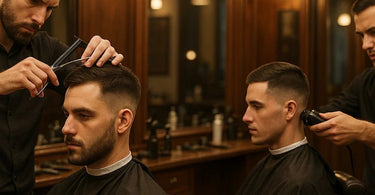
Your journey to excellence starts now... and if you're a barber or stylist, that journey likely involves navigating the great fade debate that's been raging in barber chairs since, well, forever. Is it the artistic, soft-handed approach of the scissor-over-comb fade or the sharp, precise magic of the clipper fade? It's the professional's version of choosing between a classic painting and a digital masterpiece—both are art, just created with different tools. Let's be real: every client who sits in your chair thinks they want a 'fade,' but it's your expertise that determines whether they leave with a harsh line that'll grow out like a bad decision or a soft, natural-looking transition that makes them look like they woke up this flawless. Understanding the difference isn't just barbering 101; it's what separates the professionals from the product-pushers.
Whether you're working with a client who demands that Instagram-ready sharpness or someone who prefers a more lived-in, natural look, mastering both techniques means you're not just giving haircuts—you're providing customized experiences. And in our world, that's what brings clients back and has them referring everyone they know. So grab your favorite tools, and let's break down this artistic showdown.
The Scissor-Over-Comb Fade: Where Artistry Meets Precision
Imagine creating a fade not with the mechanical buzz of clippers but with the gentle snip-snip of shears—that's the magic of the scissor-over-comb technique. This method is all about control, texture, and creating a soft, natural transition that grows out gracefully. It's the technique you use when you want to show off your skills without relying on guard numbers.
Here's the professional lowdown: the scissor-over-comb technique involves holding the comb in your less dominant hand to lift sections of hair, while your dominant hand uses shears to cut the hair that extends past the comb. The goal is to follow the head's natural contours, creating a seamless blend that looks more organic than mechanical. This method gives you incredible control over the weight and shape of the haircut, allowing you to remove bulk where needed while maintaining a softer finish.
Why choose this approach for your clients? The scissor-over-comb fade delivers a more natural, textured finish that avoids the harsh lines clippers can sometimes leave behind. Since you're cutting with more variation and following the natural growth patterns, the grow-out period is significantly more graceful. Clients won't suddenly develop that obvious 'line of demarcation' two weeks after their appointment. This technique works beautifully on medium to longer styles and is particularly flattering for clients with curly or wavy hair textures that need a softer approach.
The trade-off? This technique requires more time, skill, and patience. You'll need to maintain your professional shears in perfect condition and have the confidence to work without the safety net of clipper guards. But the result—a custom-blended fade that looks effortlessly good—is worth the extra minutes in the chair.
The Clipper Fade: Sharp, Structured, and Social Media Ready
Now let's talk about the crowd-pleaser: the clipper fade. This is the technique that creates those sharp, clean, Instagram-worthy fades that have become synonymous with modern barbering. Using electric clippers with precise guards, this method delivers consistent, uniform results with incredible efficiency.
Clipper fades are all about precision and structure. The technique involves using different guard sizes to create a graduated effect, typically starting with shorter lengths at the bottom and blending into longer sections higher up. Whether it's a low fade that starts just above the ears, a mid-fade that begins around the temples, or a high fade that kicks in near the parietal ridge, the clipper method delivers clean, sharp lines that make a strong style statement.
The benefits are clear: speed, consistency, and that sharp, structured look clients often see and request from social media. For barbers working in fast-paced environments, clippers allow for efficient service without sacrificing quality. The technique is perfect for creating dramatic contrast in styles like undercuts or hard parts, and it's the go-to method for very short styles like buzz cuts or crew cuts.
On the flip side, clipper fades tend to grow out more noticeably, often requiring touch-ups every 2-3 weeks to maintain that sharp appearance. The uniform cutting action can also result in a less textured finish, which might not be ideal for clients seeking a more natural, lived-in look. But for that crisp, clean aesthetic that turns heads, nothing beats a well-executed clipper fade.
Side-by-Side Showdown: Choosing the Right Tool for the Job
So when do you reach for which tool? Let's break it down like professionals:
| Aspect | Scissor-Over-Comb Fade | Clipper Fade |
|---|---|---|
| Technique | Hand-cut with shears following head contours | Electric clippers with guard system |
| Time Investment | Longer (30-60 minutes) | Quicker (15-25 minutes) |
| Final Result | Softer, textured, natural blend | Sharp, structured, uniform graduation |
| Best For Hair Types | Curly, wavy, or medium to long hair | Straight, thick, or very short styles |
| Grow-Out Period | Graceful, lasts 4-6 weeks | Noticeable, needs trims every 2-3 weeks |
| Styling Flexibility | Natural movement, textured finishes | Structured looks, sharp lines |
Understanding these differences means you can properly consult with clients and set expectations. That client who travels frequently and can't get regular trims? They'll thank you for recommending a scissor fade. The young professional who wants that crisp, corporate look for Monday meetings? That's your clipper fade candidate.
The Professional's Playbook: Mastering Both Techniques
The truth is, the most skilled professionals don't choose sides—they master both techniques and know when to use each (and often combine them). Here's how to elevate your fade game regardless of your tool of choice:
For scissor-over-comb perfection: Always start with damp hair for better control. Stand to the side of your client for a better view of the head's contours. Keep your scissors moving smoothly and use the center of the blades rather than the tips for a more blended cut. Long scissor blades typically work better for this technique, as shorter blades might cause your hand to obstruct the view. Remember to work fairly quickly to prevent horizontal steps from forming in the haircut.
For flawless clipper fades: Start with a longer guard than you think you need—you can always go shorter. Pay attention to the head's shape, as imperfections can be emphasized with clippers. Use a mirror to check your work from all angles, and don't be afraid to switch to scissors for final blending and detail work around the hairline.
The real magic often happens when you combine both techniques. Many top barbers use clippers for the initial structure and bulk removal, then switch to scissors for refining the blend and adding texture. This hybrid approach gives you the best of both worlds: the sharpness of a clipper fade with the natural finish of scissor work.
Beyond the Fade: Creating the Complete Client Experience
A great fade doesn't exist in a vacuum—it's part of a complete grooming experience that keeps clients coming back. While you're perfecting their cut, consider how other services and products can enhance their visit and your bottom line.
That client waiting for their fade? That's the perfect time to offer a brow enhancement service or recommend a take-home hair care product. The attention to detail you show in their haircut will make them trust your recommendations for other services.
And while we're talking about the complete experience, don't forget about your own comfort and efficiency. Investing in quality barber furniture and cleaning supplies makes those detailed scissor sessions more comfortable and professional. Your tools matter too—keep your shears sharpened and your clippers well-maintained for consistent results.
The Final Verdict: It's Not a Competition, It's a Conversation
So which technique reigns supreme? The answer is both—because professional barbering isn't about limiting your toolbox; it's about having the right tool for each unique client and style. The scissor-over-comb fade offers artistry, texture, and a natural grow-out, while the clipper fade delivers sharpness, structure, and efficiency.
Your value as a professional comes from understanding these differences and making informed recommendations based on your client's hair type, lifestyle, and style preferences. That consultation before the cut is where the real magic begins—listening to what they want, assessing their hair, and knowing which technique (or combination) will deliver the best results.
Mastering both methods means you're not just following trends—you're creating personalized experiences that build loyalty and reputation. So the next time a client asks for a fade, you'll know exactly how to respond: 'Let me show you what's possible.'
