
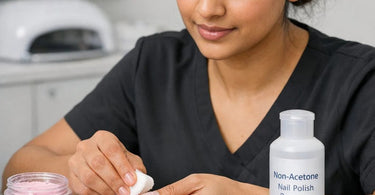
The easiest way to excellence in a nail salon is keeping your clients happy, but let's be real—keeping their natural nails intact while removing Dip Powder is the actual boss level. We have all seen it: the frantic client who just realized her vacation nails are now super glued to her fingers, or the poor soul who tried to peel off that rock-hard dip at home (cue the gasp of horror from every nail tech within a 50-mile radius). But here at Pure Spa Direct, we believe in science, not struggle, which is why we are diving deep into the test tube to look at The Chemistry Of Non-Acetone Polish Removers On Dip Powder.
Spoiler alert: it does not involve soaking your client's fingertips in a tiny bowl of pure chaos (aka 100% acetone). While acetone is the brute force of the removal world—think of it as the Hulk smashing a wall—non-acetone removers are more like a master locksmith. They understand the chemical structure of the dip powder and the adhesive layers, and they know exactly how to break the bonds without taking the door (or the nail plate) off its hinges. For the busy professional juggling back-to-back pedicure chairs and chatting up a storm, knowing your chemistry is the secret to turning a tedious removal into a relaxing hand massage moment.
Wait, What Is Actually In That Bottle? The Solvent Squad
Let’s pop the hood on that bottle of remover, shall we? Non-acetone removers usually rely on a solvent called Ethyl Acetate or Isopropyl Alcohol. These guys are the polite relatives at the family reunion compared to acetone. Acetone works by tearing apart the acrylic polymers in the acrylic nail supplies and dip powders through a rapid process called dissolution. It is aggressive, effective, and frankly, a little rude to the skin and natural oils.
Non-acetone solvents work via a slower chemical dance. They weaken the hydrogen bonds holding the dip powder's polymer chains together without completely obliterating the structure of the natural keratin underneath. Think of it like melting sugar versus smashing a rock. This is why using non-acetone remover on dip powder takes a little longer (patience, grasshopper), but the result is a natural nail that does not look like a dry, flaky piece of paper. For your professional nail care collections, this is a game changer for retention on the next fill.
Dip Powder Chemistry 101: Why It Fights Back So Hard
To truly appreciate the gentleness of non-acetone removers, you have to respect the beast that is dip powder. Dip powders are basically super finely milled acrylics (usually Polyethyl methacrylate (PEMA) or Polymethyl methacrylate (PMMA)). When you brush on the Resin Activator (the glue step), it creates a cross-linking reaction. Those tiny powder particles link arms in a chemical conga line that forms a hard, durable plastic shell.
This shell is designed to resist chips, cracks, and—you guessed it—chemicals. If you spill coffee on it, fine. If you spill hand sanitizer, it laughs. This is why pure acetone became the default; it is one of the few things strong enough to break that party up. But because non-acetone polish removers are a mix of solvents, they work by swelling the top layers of that plastic shell. They sneak in between the molecular chains and push them apart slowly, creating micro-cracks that allow the remover to sink deeper. It is less like an explosion and more like a gentle wave eroding a sandcastle. If you are stocking up on nail art supplies, switching to a gentler removal process means your intricate designs last longer for the client who hates change.
The Soak-Off Showdown: Acetone vs. The Gentle Hero
Let’s put these two in the ring for a quick comparison. We know you have a client waiting and that towel steamer is beeping, so let us keep it snappy.
Acetone: Fast (10-15 minutes). Very drying. Strong fumes (opens windows in winter, ugh). Can melt plastic tools. Leaves nails brittle. Risk of irritation around cuticles. Great for speed, bad for skin health.
Non-Acetone Remover: Slower (20-30 minutes). Much less drying. Low odor. Safe on natural nails and most plastics (like your pretty Nail Art Rhinestones). Often infused with conditioning agents (Vitamin E, Aloe). Better for clients with thin or damaged nails.
For the high-volume Nail Tables and Manicure Stations in a busy spa, having both options is crucial. Use acetone for the client in a rush who just needs a quick rebuild. Use non-acetone for the client who screams, “My nails are paper thin!” or for the removal of glitters and lighter dip layers. It is about offering a premium service that values nail health over just getting the body out the door.
But Does It Work On All Dip Powders? (The Sticky Truth)
Here is where we get brutally honest. Does non-acetone remover work on every single Dipping Powder Systems for Salons? Not always. Some budget or ultra-hard industrial dip powders are formulated with different polymer densities that are highly resistant to ethyl acetate. If you have a client who wears a 5-layer thick camouflage dip, you are going to be there until next Tuesday with a non-acetone remover.
However, for standard professional dip powders—especially those designed to be “soak-off”—non-acetone works beautifully when paired with the right technique. You cannot just slosh it on and scroll Instagram. You need heat. Wrapping the fingers in foil or using a heated table warmer speeds up the chemical reaction immensely. Heat agitates the solvent molecules, making them bounce around faster and attack those polymer bonds with more energy. It turns a 30-minute soak into a 12-minute breeze. Science! (And also pure magic).
How To Properly Remove Dip Powder Without Losing Your Mind (Or Your Client's Nail)
Alright, pro, let's get clinical. Here is the Pure Spa Direct protocol for using non-acetone remover on dip powder like a boss. You will want to add this to your Nail Treatments for Healthy Nails menu.
Step 1: Break the Seal. Use a coarse Nail File (180 grit) to gently etch the top coat of the dip. You are not trying to file the color off; you just want to rough up the shiny surface so the remover can penetrate. Think of it as opening a door for the solvent.
Step 2: Saturation Station. Soak a cotton pad or lint-free wipe in your non-acetone remover. Place it directly on the nail. Pro tip: Use a little bit of Cuticle Oil around the skin beforehand to protect the cuticle area from any potential drying, even though non-acetone is mild.
Step 3: Wrap It Up. Secure the cotton with foil or plastic nail clips. Have the client place their hands under a warm towel or a heating pad. Go grab a coffee. Check on your Facial Steamer in the other room.
Step 4: The Gentle Push. After 15-20 minutes, remove one finger. The dip should look “crumbly” or cracked. Use a wooden orange stick or a metal pusher (gently!) to scrape off the softened product. It should slide off like cream cheese off a bagel. If it is hard, rewrap and wait 5 more minutes. Do NOT force it. Forcing it is how you get divots in the nail plate, and nobody wants that angry text from a client.
Step 5: Hydration Station. Once the dip is off, buff the nail lightly to remove any residue. Follow up with a heavy dose of Cuticle Oil and a nutrient-rich base coat. Your client will weep tears of joy that their hands do not feel like the Sahara desert.
Myth Busting: Does Non-Acetone Ruin Your Tools?
Have you ever left a plastic Applicator or Spatula in a bowl of pure acetone? If you have, you know it turns into a sticky, melty horror show. One of the best hidden benefits of using non-acetone polish removers in your nail salon is that it is much kinder to your expensive equipment. It will not dissolve your acrylic nails for practice, nor will it ruin the finish on your expensive manicure tables. It is a team player. It cleans up spills without ruining your varnish. It is the golden retriever of solvents—friendly, safe, and good for morale.
What About The Smell? (Asking For A Friend With A Migraine)
Let’s address the elephant in the room. If you have a small spa room with poor ventilation, straight acetone can literally bring tears to your eyes (and your client’s). Non-acetone removers generally have a much less offensive odor, often smelling slightly fruity or like a glue stick (which is surprisingly nostalgic). This makes them the superior choice for luxury spa environments where you want the air to smell like lavender and eucalyptus, not a chemical plant. It elevates the client experience from “medical procedure” to “pampering session.”
When NOT to Use Non-Acetone Remover
Because we love a bad relationship analogy: Non-acetone remover is great for a long-term relationship, but sometimes you need a one-night stand with intensity. Do not use non-acetone if:
1. The dip is 6 weeks old and thicker than a bowl of oatmeal. Just use acetone. Save your sanity.
2. You are doing a “dry” fill. If you are just filling the regrowth, you do not need to soak off the whole nail.
3. The client has gel polish extensions underneath. Honestly, just cut them off. (Kidding, please soak them off properly).
For all your other removal needs, check out our massive selection of Professional Cotton and Wipes and Cleaners to keep your station sparkling.
Your Retail Shelf Needs This Right Now
Here is a hot take for the business owners out there: Stop hiding the non-acetone remover in the back cabinet. Retail it! Your clients who get dip powder at home (the brave ones) are destroying their nails with drugstore acetone. Sell them a bottle of professional-grade non-acetone remover from your Longwear Nail Polish section. Teach them how to use it to take off glitters or touch up a lifting corner. It is an easy $10-15 add-on that saves their nails and keeps them loyal to you. Pair it with a cute glass bowl from our Bottles and Jars collection, and you have got a gift set ready to go.
The Final Verdict: Is It Worth The Extra Time?
Absolutely. In the world of professional nail care, healthy clients are repeat clients. If you wreck their natural nail plate with harsh chemicals every month, they will eventually quit getting services. Using the correct chemistry—respecting the dip powder's structure while preserving the keratin—is the mark of a master technician. It shows you care about the long game, not just the quick cash.
So, the next time a client sits down in your pedicure chair with beat-up, over-dipped fingers, reach for the gentle giant. Grab that non-acetone remover. Be the hero they need. And while you wait for the chemistry to do its thing, maybe take a minute to browse Pure Spa Direct for some new rhinestones to reward yourself. You have earned it, you beautiful chemist, you.
)