
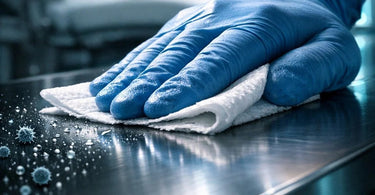
Upgrade your game plan and let's talk about the one thing in your spa or salon that's less fun than a Brazilian wax on a sensitive client—disinfectant contact times. I know, I know, you'd rather be picking out a gorgeous new Luxury Spa Furniture piece or stocking up on that must-have Nail Art Rhinestone. But here's the deal: getting your disinfectant routine wrong is the fastest way to turn your serene sanctuary into a place with more drama than a reality TV show. And at the heart of it all is the "contact time"—that magic number of minutes your disinfectant needs to sit, wet and undisturbed, to actually do its job. It's not a suggestion; it's the law, both the law of science and often federal law. So, grab your favorite spray bottle and a fresh roll of those Hygienic Table Papers, because we're diving deep into the nitty-gritty of tuberculocidal disinfectant contact times to keep your business safe, compliant, and thriving.
Think of contact time like a good face mask. If you rinse it off after 30 seconds, you get zero benefits. You have to let it sit and work. The Environmental Protection Agency (EPA) defines contact time as "the time the product must be applied to the surface for it to be effective". For a disinfectant to be registered as "tuberculocidal," it has undergone rigorous testing, like the AOAC 965.12 standard, to prove it can kill hardy Mycobacterium species within a specific window. This isn't just about tuberculosis (an airborne illness); it's a benchmark. If a product can kill these notoriously tough mycobacteria, you can trust it against a whole host of other pathogens, including viruses like HIV and Hepatitis B that are a real concern in our industry.
The 10-Minute Myth and the Reality of Modern Disinfectants
Raise your hand if you've ever been told all hospital-grade disinfectants need a 10-minute wet contact time. It's a common belief, but the reality is far more interesting—and thankfully, often faster. While the CDC notes that many EPA-registered hospital disinfectants have a label contact time of 10 minutes, they also state that multiple studies have demonstrated efficacy against pathogens with a contact time of at least 1 minute. The key is on the label of the specific product you buy.
Looking at the EPA's own list of registered tuberculocidal products reveals a huge range. Some wipes, like those with hydrogen peroxide, claim a 1-minute kill time. Others, particularly dilutable concentrates with specific active ingredients, may require 5 or 10 minutes. For example, a sodium hypochlorite (bleach) solution might need 10 minutes, while a ready-to-use quaternary ammonium and alcohol blend might only need 3. This is why blindly spraying and wiping is a major no-no. You must find the "Directions for Use" section on your product's label and follow it to the letter. Using it any other way is technically a violation of federal law. It's like using a Professional Gel Polish without curing it—you're just asking for a messy failure.
Why Tuberculocidal? It's Not (Just) About TB
Let's clear the air (pun intended). Tuberculosis is primarily spread through the air, not via contaminated spa tables. So why is a "tuberculocidal" claim so important for salons and spas? Two big reasons: the OSHA Bloodborne Pathogens Standard and the "benchmark" theory.
Historically, in the early days of the HIV epidemic, the Occupational Safety and Health Administration (OSHA) required a tuberculocidal disinfectant for cleaning up blood and other potentially infectious materials (OPIM). The logic was solid: mycobacteria have a thick, waxy cell wall that makes them some of the hardest microbes to kill. If a chemical can destroy them, it can almost certainly destroy the viruses of concern, like HIV and Hepatitis B. While OSHA's guidance has evolved and now recognizes disinfectants with specific HIV and HBV kill claims, the tuberculocidal standard set a high bar for efficacy that many health inspectors and savvy spa owners still look for. It's the gold standard for intermediate-level disinfection.
For you, this means when you have a spill of blood during a Dermaplaning service, a nick during a manicure, or any other incident involving OPIM, you need a disinfectant that is up to the task. A general cleaner or a simple quaternary ammonium compound without the proper claims won't cut it. You need a product from our Professional Cleaners & Disinfectants collection that is proven effective.
The #1 Rule: The Label Is Your Bible (And Your Legal Shield)
I cannot stress this enough. Your disinfectant label is not just marketing copy; it is a legal document approved by the EPA. The "Directions for Use" section is your step-by-step guide to compliance and safety. Here's what you MUST check every single time you use a disinfectant:
1. The Contact Time for the Correct Pathogen: Don't just look for the big "tuberculocidal" word. Find the chart or list that shows the contact time for Mycobacterium tuberculosis or other bloodborne pathogens. It might be different than the time for, say, influenza. Use the longest time listed if multiple pathogens are a concern.
2. The "Wet and Visible" Requirement: The surface must remain visibly wet for the entire contact time. In our warm, often breezy treatment rooms, liquids evaporate quickly. This often means you need to apply more product partway through the contact period. If it dries after 2 minutes and your contact time is 5, you must reapply and restart the clock. Think of it like keeping a Hot Stone at the perfect temperature—you have to maintain the conditions for it to work.
3. Pre-Cleaning is Non-Negotiable: Disinfectants are not magic potions that work through dirt and grime. Organic matter like skin cells, oil from a Massage Oil, or leftover Sugar Scrub residues can shield microbes and neutralize the active ingredients in your disinfectant. You must clean surfaces with soap and water or a detergent first, then apply the disinfectant for the full contact time. The CDC strongly recommends this two-step process.
4. Proper Dilution: If you're using a concentrate, like many in the Prosana line, the dilution ratio is sacred. Adding too much water makes it useless; adding too little can damage surfaces and be hazardous. Use a dedicated measuring system.
Choosing the Right Product for Your Spa & Salon
Now that you're a contact time connoisseur, how do you choose? Consider your workflow and surfaces.
For Speed & Hard Non-Porous Surfaces: Look for ready-to-use sprays or wipes with a short contact time (1-3 minutes). Many alcohol or hydrogen peroxide-based wipes offer this. They're perfect for wiping down Nail Tables, Portable Massage Tables arms, and tool handles between clients. Just ensure the surface stays wet!
For Dilution & Cost-Effectiveness: Concentrates are often more economical for larger businesses. A product like a diluted bleach solution (1:100 for spills) or a quaternary ammonium compound may have a 10-minute contact time but is powerful and affordable. These are great for daily deep cleans of floors, Pedicure Chairs bowls, and other large areas.
For Compatibility: Always test a disinfectant on a small, hidden area first. Some chemicals can damage the exquisite finish on your Stylish Salon Furniture or cloud the acrylic of a Continuum Pedicure station. The label will list compatible surfaces.
Remember, your commitment to correct disinfection is a huge part of your professional reputation. It protects your clients, your team, and your business. It allows everyone to relax and enjoy the beautiful services you provide, from a soothing Aromatherapy session to a stunning new set of Lash Extensions.
So, the next time you reach for that bottle, take two extra seconds to read the label. Master the contact time. Own your disinfection protocol. It's the most professional, unglamorous, and absolutely essential thing you'll do all day. And when you need to stock up on EPA-registered, professional-grade disinfectants and all the other supplies that make your business shine, you know where to go.
