
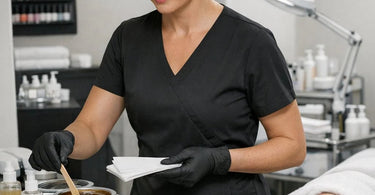
Elevate your business today by protecting its most valuable asset: you. Let's be real for a second, gorgeous. You didn't get into this industry to end up walking like a question mark at the age of 40. You got into it because you love the glow of a client's skin, the satisfaction of a perfectly clean brow, and the smell of lavender oil. Yet, here we are, hunched over a waxing table like Quasimodo trying to see a rogue hair on a bikini line. If that sounds familiar, honey, we need to talk. The future of waxing isn't just about low-temp waxes or faster strip pulls; it is about keeping your spine in alignment so you can have a long, prosperous career without needing a chiropractor on speed dial. Welcome to the ergonomic revolution, where we save your back and your sanity.
For decades, the beauty industry treated estheticians like they were made of rubber. Bend lower! Twist further! Hold that position for ten more clients! It was insanity. But the tides are turning. We are finally waking up to the fact that you cannot pour from an empty cup, and you definitely cannot wax a back if you have thrown your own back out. The modern spa is shifting focus to care-led treatments , and that care has to start with the caregiver. At Pure Spa Direct, we aren't just throwing wax warmers at you; we are looking at the whole picture. How do you stand? How do you reach? How do you survive the double-booking rush on a Saturday afternoon without crying in the supply closet? Let's fix your setup.
Why Your Chiropractor Loves (and Hates) Waxing
Look, waxing is repetitive. It is the same motion—apply, pull, press, soothe—over and over again. According to industry experts, ignoring ergonomics is one of the top career-ending risks in esthetics . Chronic back pain, wrist strain, and "waxer's thumb" are not badges of honor; they are red flags. The future of this industry depends on sustainable practices. We need to move away from the "grind until you break" mentality. If you are constantly looking down at your client, you are putting up to 60 pounds of pressure on your cervical spine. That is like balancing a toddler on your neck for eight hours a day. No wonder you have a headache.
We are seeing a massive shift in how spa equipment is designed. It is no longer just about the client looking cute; it is about the therapist surviving the shift. High-quality wax warmers and adjustable waxing beds are the front line of defense against burnout . If you are still using a rickety folding table that is too low, we need to stage an intervention. Your body is your money maker. Treat it like the luxury investment it is.
Set Up Your Sanctuary (And Save Your Spine)
Let's get practical. You cannot just hope for better posture; you have to engineer it. Walk into your treatment room right now and look at your wax warmer. Is it on your dominant side? Is it close enough that you don't have to twist your torso into a pretzel to grab a spatula? If not, move it. Your workspace should be a cockpit, not an obstacle course. The goal is to keep your elbows at a 90-degree angle or slightly lower when working. If your shoulders are up by your ears, lower the table. If you are bending your back like a fishing rod, raise the table .
Furthermore, let's talk about the waxing supplies themselves. Using the right tool for the job reduces physical effort. For example, using a wider spatula for legs means fewer strokes, which means less repetitive motion for your wrist. It is basic math. And please, for the love of all that is holy, invest in an ergonomic stool. Standing is great, but if you can sit for parts of the service—like when doing brows or underarms—do it. Save those standing reserves for the full-leg marathons.
The Client Position Puzzle: Teamwork Makes the Dream Work
Here is where a little humor and a lot of communication come in. We have all been there: trying to reach that one spot on the back of the thigh while the client is lying there like a starfish, completely relaxed and utterly immovable. You cannot hurt your back trying to be a contortionist. The future of waxing involves client participation. You are allowed to ask them to move!
For intimate waxing, the days of forcing a client into an uncomfortable, vulnerable position just so you can break your back are over. Experts now recommend the 'backward roll' position—where the client lies on their back hugging their knees to their chest . This gives you perfect access to the posterior without them flipping over, and without you leaning over them like a vulture. If you are working in a tight space (and who isn't?), don't be afraid to ask the client to scooch to the other end of the table or turn on their side . It takes two seconds and saves you weeks of physical therapy. Remember, you are the director of this waxing symphony. Conduct accordingly.
Gear Up: The Tools That Save the Body
You cannot build a house with a broken hammer, and you cannot wax safely with junk equipment. Investing in professional-grade wax warmers that maintain consistent temperature means you aren't rushing to beat the cool-down clock. Rushing leads to jerky movements, and jerky movements lead to injury. Slow is smooth, and smooth is profitable.
We also love the rise of low-temperature waxes. Not only are they better for the client (less ouch!), but they often have a better consistency that applies like butter, requiring less elbow grease to spread . Pair that with a high-quality wax strip that releases cleanly, and you have just reduced the physical strain on your pull motion by half. It is a win-win. You feel better, and the client doesn't flinch as much. Plus, don't forget the pre and post products; applying a good pre-wax oil means the wax only sticks to the hair, not the skin, making the removal smoother and requiring less brute force from your tired arms .
Micro-Breaks and Retail Therapy
I know you want to cram in that extra walk-in. I know the money is tempting. But if you run yourself into the ground, you make zero dollars. The most successful estheticians build micro-breaks into their workflow. After you finish a client, take 60 seconds. Stretch your wrists, roll your shoulders, shake out your hands. It feels silly, but it resets your nervous system and prevents repetitive strain injuries .
Use that minute to restock your waxing accessories or to recommend a retail product. Speaking of retail, take the pressure off your body by letting the products do the heavy lifting at home. Send your client home with ingrown hair products or a sugar scrub so they maintain the smoothness themselves. That means less work for you on the next visit because the hair is growing in softer and healthier. Work smarter, not harder, honey.
Conclusion: The Ergonomic Esthetician is the Rich Esthetician
The future is bright, and it is standing up straight. We are done with the era of the broken-down beauty professional. By prioritizing ergonomics, you are not just protecting your body; you are elevating the entire client experience. When you are comfortable, you are confident. When you are not in pain, you are charming. When your back doesn't hurt, you can actually focus on giving the best service of your life.
So, take a look around your treatment room. Is it working for you, or against you? Upgrade your wax warmer, adjust that table height, and start moving your clients like the pawns they are (lovingly, of course). Your spine will thank you, your bank account will thank you, and future you—who isn't hunched over a cane—will send you a fruit basket. Now go forth and wax pain-free!
