
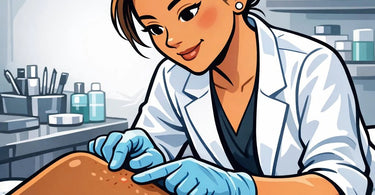
Pros trust this to deliver quality service and a smooth client relationship, but there's one common skin woe that often gets swept under the treatment table: the ingrown hair. It’s the uninvited guest that shows up after a perfect wax or shave—a small, sometimes painful bump where a hair has decided to grow back into the skin instead of outward. While they’re incredibly common and affect anyone who removes hair, discussing them with clients can feel like navigating a minefield. No professional wants a client to feel embarrassed or judged about their skin. So, how do we, as experts, perform the necessary ‘Ingrown Hair Intervention’—offering solutions with empathy, education, and zero shame? The answer lies in reframing the conversation from problem-focused to solution-oriented, positioning yourself as your client’s trusted ally in achieving their smoothest skin ever.
Let’s be honest, we’ve all seen them. A client comes in for their regular wax, and there’s a constellation of little bumps along the bikini line or on the neck. Your first instinct might be to say nothing, fearing you’ll offend them. But here’s the truth: silence can be more damaging. When we avoid the topic, we miss a crucial opportunity to provide care, build trust, and offer products that genuinely help. The client is often already aware and frustrated, possibly picking or digging at the bumps, which only makes things worse. By addressing it professionally and kindly, you transition from a service provider to a skincare consultant. It starts with your mindset. Don’t see ingrown hairs as a client’s flaw; see them as a common skin condition you’re expertly equipped to manage. This shift turns a potentially awkward moment into a value-added consultation.
Understanding the Enemy: What Exactly Is an Ingrown Hair?
To advise clients confidently, you need a rock-solid understanding of the issue. An ingrown hair is simply a strand that, after removal, curls back and re-enters the skin as it regrows. This is more likely to happen with coarse, curly, or thick hair types. The body sees this trapped hair as a foreign object, leading to inflammation—hence the red, itchy, sometimes pus-filled bump. They most frequently appear in areas we shave or wax, like the face, neck, legs, armpits, and the ever-sensitive bikini area. The main causes are typically the hair removal process itself (especially if done improperly), dead skin cells clogging the follicle opening, and friction from tight clothing. When you explain this to clients, you demystify the problem. It’s not about their hygiene or skin being “bad”; it’s a mechanical and biological reaction that many people experience. This factual, non-judgmental explanation is the first step in removing any stigma.
The Art of the Conversation: How to Broach the Topic Tactfully
This is where your skills as a professional truly shine. The goal is to be helpful, not critical. Here’s a script you can adapt:
During the Service: “I’m noticing some minor inflammation/irritation in this area, which is very common after hair removal. This can sometimes lead to ingrown hairs. Have you ever had issues with those?” This opens the door for them to share their experience.
If You Can Safely Extract One: “I can see a hair that’s just under the surface. Would you like me to carefully release it for you today?” Always ask for permission. As you do it, explain what you’re doing: “I’m just using a sterile instrument to gently lift the loop of hair so it can grow out correctly.” This turns the treatment into an educational moment.
The Product Pitch (The Helpful One): “To help your skin stay smooth and prevent these bumps between visits, I really recommend a simple aftercare product. We have a fantastic ingrown hair serum that exfoliates and calms the skin daily. It would make a huge difference. Can I show it to you after your service?” Frame it as a proactive step for their comfort, not a fix for a problem.
The key is to use neutral, clinical language. Say “irritation,” “inflammation,” or “follicular concern” instead of “bad bumps.” Your tone should convey that this is a routine part of your job, as normal as discussing moisturizer after a body treatment.
Your Professional Toolkit: Prevention and Treatment Strategies
Now, let’s talk solutions. Your value comes from offering actionable advice and the right tools. Here’s your multi-point plan for client success:
1. Perfect the Prep & Technique: Prevention starts with you. Ensure you’re using high-quality, professional products. A superior hard wax or soft wax, applied and removed with skill, minimizes hair breakage—a major cause of ingrowns. Always prep the skin with a good pre-wax cleanser.
2. Advocate for Gentle Exfoliation: This is the golden rule. Gently exfoliating the skin 2-3 times a week with a sugar scrub or salt scrub removes dead skin cells that trap hairs. For the face, services like dermaplaning provide excellent exfoliation, though it must be done correctly by a pro to prevent issues. Tools like an Ultrasonic Skin Scrubber can also be a high-tech addition to your treatment menu.
3. Recommend Targeted Topicals: This is your retail powerhouse. Serums or pads containing chemical exfoliants like salicylic acid or glycolic acid are game-changers. They work by constantly keeping the pore clear. Have a reliable ingrown hair product line on your shelf, such as those from trusted brands like Lycon or Satin Smooth.
4. Teach Smart Aftercare: Advise clients to avoid tight clothing and heavy sweating immediately after waxing. Recommend they use a soothing, non-comedogenic moisturizer. A fantastic post-wax step is using a product with tea tree oil or aloe to calm the skin.
5. Know When to Refer: For chronic, severe cases, be ready to suggest longer-term solutions. Laser hair removal or electrolysis can be life-changing for clients who are constantly battling ingrowns, as they target and destroy the follicle. Having a trusted dermatologist to refer to also elevates your professional network.
Building a Shame-Free Zone in Your Business
Your entire space should communicate that all skin concerns are welcome here. Feature informational posters about ingrown hair prevention in your waiting area or treatment room. Include a section on aftercare and ingrown prevention on your service menu. Train every member of your team—from receptionist to senior esthetician—on the same compassionate, informative language to use. When a client knows they’re in a knowledgeable, non-judgmental environment, their loyalty skyrockets. They’ll not only return for every wax but will also trust your recommendations for other services, from a hydrodermabrasion facial to a massage on your portable massage tables.
The Bottom Line: It's About Trust and Results
Addressing ingrown hairs without shaming isn’t just about being nice; it’s smart business. It transforms a routine hair removal appointment into a comprehensive skincare partnership. You solve a real problem that causes physical and emotional discomfort for your client. By providing education, effective professional tools, and a safe space for conversation, you cement your role as an indispensable expert. The result? Smoother, happier clients, increased retail sales from recommended pre & post-waxing products, and a reputation for care that gets people talking. So, take a deep breath and start the conversation. Your clients will thank you for it—with their loyalty and their flawless skin.
