
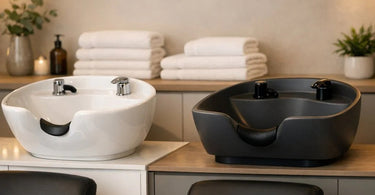
Your business deserves this... a sink that doesn't scream for mercy after the third client of the day. Let's be real: the humble salon sink is the unsung hero of your space. It's where color is rinsed, faces are steamed, and—if you're a nail tech—where feet get their well-deserved royal treatment. But choosing between porcelain and composite? It's a debate that has split more salon owners than a bad pair of thinning shears. One promises timeless elegance, the other boasts superhero-level durability. We're here to settle the score with a healthy dose of reality (and maybe a laugh or two) because a cracked sink is never a good look, and neither is a meltdown over a stain that just won't quit.
At Pure Spa Direct, we believe your equipment should work as hard as you do. We're not here to sell you on a fairy tale; we're here to give you the raw, honest truth about what these two heavy hitters bring to the table (or, you know, the countertop). Whether you're setting up a brand-new nail station, upgrading your pedicure thrones, or just tired of scrubbing what looks like ancient hieroglyphics out of your current basin, this guide is for you. So, grab your favorite beverage (spilled it on the floor? Classic.) and let's dive into the messy, beautiful world of salon sinks.
The Tale of Two Titans: Appearance vs. Armor
When you first walk into a design showroom, porcelain winks at you with its glossy, classic charm. It's the little black dress of the salon world—elegant, timeless, and it photographs like a dream. That high-gloss finish screams "luxury" and pairs beautifully with any aesthetic, from modern minimalist to old-school Hollywood glam. If your spa ambiance is all about creating a serene, high-end experience, porcelain instantly elevates the vibe. It's what many of us grew up with, and that familiarity brings a sense of trust. But here's the catch: that glossy finish is a bit of a diva. It shows every water spot, every dried blob of product, and heaven forbid someone drops a metal bowl in it.
Enter composite sinks. Made from a blend of crushed stone and acrylic resins, composites are the rugged action hero of the sink world. They don't shine; they have a matte, consistent finish that looks sleek and modern. At first glance, they might not have the same "wow" factor as a pristine white porcelain basin, but what they lack in initial flash, they make up for in sheer, unadulterated toughness. If your salon is a high-volume, fast-paced environment where things get bumped, dropped, and splashed, composite is your best friend. It's the work boot to porcelain's stiletto—practical, sturdy, and ready for a 12-hour shift.
Durability: The Drop Test (Please Don't Actually Do This)
Let's talk about the elephant in the room: durability. Porcelain is essentially ceramic, which is glass-like. It's hard, it's heavy, and it's surprisingly brittle. I've seen a single dropped tube of hair color chip a pristine porcelain sink, turning a gorgeous salon centerpiece into a permanent eyesore. Worse, a heavy glass jar falling just right can create a crack that spiderwebs across the basin, leading to a full replacement. Repairs are possible but rarely invisible, and they often cost as much as a new sink. For a busy hair salon where tools are moving constantly, this fragility is a real risk.
Composite sinks, on the other hand, are engineered to absorb impact. The stone and resin mix is non-porous and flexible enough to withstand a surprising amount of abuse. Dropped scissors? No problem. A stray wax applicator? It'll bounce. While you shouldn't use your sink as a hammering station, composite materials are far more forgiving. They resist chipping, cracking, and scratching with a tenacity that porcelain can only dream of. For a high-traffic waxing center or a bustling nail salon, the peace of mind that comes with this durability is priceless. It's the difference between worrying about every stray movement and confidently getting the job done.
Maintenance & Stain Resistance: The Scrubbing Showdown
If you've ever spent your precious break time trying to scrub a ring of hair dye out of a white porcelain sink, you know the pain. Porcelain's glaze is porous on a microscopic level. Over time, harsh chemicals, pigments, and minerals from hard water can seep in and cause stubborn stains. It's not just hair color—think about wax residue, facial acids, or even just the constant drip of disinfectant. Keeping it sparkling requires a gentle but persistent touch. You can't use harsh abrasives without dulling the glaze, making it even more stain-prone. It's a delicate balancing act that adds time to your already packed closing duties.
Composite sinks are the low-maintenance bestie you've been dreaming of. Because they are solid material all the way through (not just a coating), they are inherently stain-resistant. Pigments and chemicals have no microscopic pores to hide in. A simple wipe with a non-abrasive cleaner usually restores them to their original state. Hard water spots? Gone with a quick dry. Spilled ItalWax? Wipes right off. This ease of cleaning is a massive time-saver, especially in environments like a lash and brow studio where precision and cleanliness are paramount. Less scrubbing means more time for clients or, let's be honest, finally sitting down for five minutes.
Installation & Cost: The Bottom Line
When it comes to initial cost, porcelain sinks can vary wildly. You can find budget-friendly options, but the high-quality, thick, well-glazed porcelain sinks that stand up to professional use come with a premium price tag. Installation is generally straightforward—they drop into a countertop cutout—but their weight is a factor. They are heavy, which means your cabinetry needs to be robust enough to support them. If you're retrofitting an older station, this extra weight can be a hidden cost if you need to reinforce the structure.
Composite sinks often land in the mid-to-upper price range, comparable to high-end porcelain. However, they are generally lighter than their porcelain counterparts, making installation easier and putting less stress on your cabinetry. This can be a significant advantage if you're setting up multiple stations or working with a prefabricated nail table. While the upfront cost might be similar, the long-term value of a composite sink—with its superior durability and lower maintenance costs—often makes it the more economical choice over the lifespan of your salon. It's the classic "pay now or pay later" scenario.
Heat & Chemical Resistance: The Day-to-Day Grind
Your sink takes a beating daily. From boiling hot water to rinse color to harsh chemical solutions for disinfection, it needs to handle the heat—literally. Porcelain is excellent at handling high temperatures; it's fired in kilns, after all. However, rapid temperature changes (pouring boiling water into a cold sink) can sometimes cause thermal shock and cracking. Chemically, it's generally resistant, but as mentioned, the glaze can be etched by strong acids or alkalines over time, leading to a dull, stained look that screams "tired salon."
Composite sinks are engineered to be chemical-resistant. The non-porous nature means that harsh solvents, acetone, and bleach don't penetrate the material. They also handle temperature fluctuations well, though you should always check the manufacturer's specs for maximum heat tolerance. In a gel polish or acrylic nail environment where acetone is practically a beverage, a composite sink is a no-brainer. It won't craze, discolor, or lose its integrity under the chemical assault that is part of a normal day in a high-performance beauty business.
The Aesthetic Flexibility Factor
If your design vision is hyper-specific, this is where the choice gets interesting. Porcelain traditionally comes in white, off-white, and occasionally black. It's classic, but your options are limited. If you're going for that timeless, crisp, clean look, it nails it. But if you're dreaming of a sink that matches your salon's bold brand color or a trendy matte black finish to complement your furniture, porcelain falls short.
This is where composite sinks truly shine. Because they are a manufactured product, they come in a vast array of colors—from slate grays and charcoal blacks to sand beiges and even bold colors. They also offer different edge profiles and styles. This allows you to create a truly cohesive, custom look. Imagine a matte black composite sink set into a light oak spa furniture station—it's a statement piece. For salons looking to differentiate themselves with a unique, modern design, the versatility of composite is a huge win.
Making the Final Call: Which Sink Wins Your Heart (and Your Schedule)?
Alright, let's put a bow on this. The choice between porcelain and composite isn't about which is "better" in a vacuum; it's about which is better for your business. If your salon is a lower-volume, high-end environment where aesthetics are paramount, you have a meticulous cleaning staff, and the risk of impact is minimal, a high-quality porcelain sink will provide that classic, luxury feel your clients expect. It's the perfect finishing touch for a serene spa treatment room or a high-end color studio.
But if you're running a bustling, high-volume operation—be it a busy waxing salon, a nail bar that sees a hundred hands a day, or a full-service salon where color and chemicals are flying—composite is the superior choice. Its durability, stain resistance, and easy maintenance will save you time, money, and sanity in the long run. It handles the chaos of a busy day without showing the wear and tear. Ultimately, both materials have their place, and Pure Spa Direct offers a curated selection of both to suit your unique needs. We've got the replacement parts and the essentials to keep whichever you choose running smoothly. Now go forth and sink your teeth into a decision that'll make your business flow a whole lot smoother. You've got this.
