
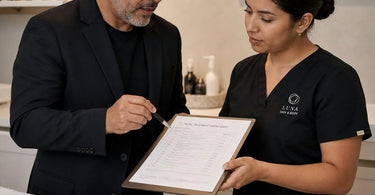
Your key to success is here... and it doesn't involve a magic wand or a miracle worker. It's a humble piece of paper—or a sophisticated digital doc—called a service timing sheet. For new staff, staring at a blank schedule can be more terrifying than a client who wants 'just a trim' and means 'take it all off.' A solid timing sheet is your new best friend, and your team's secret weapon against chaos. Let's be honest, the last thing you need is a new esthetician accidentally booking a 90-minute massage into a 30-minute slot, or a stylist double-booked because they didn't account for clean-up time. Today, we're going to build a better timing sheet that's so intuitive, even your most panicked new hire will feel like a pro in no time. We'll cover everything from the essential columns to the hidden traps that snag even seasoned pros.
Before you even fire up the spreadsheets, you need to understand the core of your business: your services. You can't time what you don't define. This goes beyond just a price list. We're talking about a comprehensive breakdown of every service you offer. For a waxing specialist, this means differentiating between a quick brow wax and a full leg. For a nail tech, it's the difference between a standard polish change and a intricate set of acrylics with nail art. For massage therapists, it could be the difference between a hot stone massage and a sports deep-tissue. Start by listing every service your business provides. Then, get granular. What is the actual service time? This is the hands-on time with the client. But that's only half the story. What about the room flip? The time to sanitize the table, change the linens, and set up for the next client? What about consultation time, especially for complex services like hair color or corrective skincare? Build these 'buffer' minutes into your sheet. If a service takes 50 minutes but you only allocate a 60-minute slot, you're already behind.
Now, let's talk about a key component that many new staff overlook: the *before* and *after*. A service timing sheet isn't just about the service itself. It's about the entire client journey. Build in time for intake and checkout. Your new front desk rockstar needs to know how long it takes to welcome a guest, process payment, and book their next appointment. This ensures a smooth flow and prevents a logjam at the front desk. For your service providers, factor in time for consultation and aftercare advice. For a waxing client, they need to hear about those ingrown hair products. A new nail client might need education on proper maintenance with cuticle oil. This not only improves client outcomes but also opens the door for retail sales. Make sure the timing sheet has a clear column for 'Service Duration,' 'Prep/Cleanup,' and 'Consultation/Aftercare.' When you break it down like this, it's amazing how much more efficient (and profitable) a day can become.
Building the Ultimate Timing Sheet: Columns That Save Lives
Okay, so you have your service times. Now, where do they go? A pristine spreadsheet is just a wasteland of empty cells until you give it structure. For new staff, simplicity and clarity are your watchwords. They shouldn't need a decoder ring. Start with the basics: 'Client Name,' 'Service,' 'Start Time,' and 'End Time.' Make sure your 'Start Time' and 'End Time' are precise. Are you on 15-minute intervals? 10? The more granular you get, the better you can see gaps and opportunities. Then, add a 'Total Time' column. This is calculated based on the service duration you established earlier. New staff can use this to see the expected time slot. Make sure to include a 'Room/Station' column. If you have multiple treatment rooms or styling chairs, this is critical. It prevents two newbies from booking the same pedicure chair or, worse, the same massage table. This simple addition prevents a whole lot of hollering.
Beyond the basics, think about the nuances of your spa or salon. Do you offer a lot of waxing services? Then your timing sheet should have sections for hard wax vs. soft wax services, since they have different application and removal times. A wax warmer needs to be ready, and you can't rush a properly cooled hard wax. For nail techs, do you have a column for 'Nail Art Complexity'? A simple polish is a lot different from a full 3D design with nail art rhinestones. For hair salons, you might have a 'Color Processing Time' column to help staff track when to check on a client. Including these details in the timing sheet means your new hires aren't just guessing; they're following a proven blueprint for success.
Another crucial element often missed is the 'Add-On' column. Upselling is a huge part of a healthy spa or salon business. Encourage your new team to look for opportunities. A manicure could become a full pedicure. A basic facial could add on dermaplaning or hydrodermabrasion. By having a dedicated space for add-ons, it's a visual reminder to ask, 'Would you like to upgrade today?' This simple prompt can dramatically increase your average ticket price and your team's earning potential. It's a win-win.
Product & Supply Check: The Secret to a Smooth Service
A timing sheet isn't just about minutes and seconds; it's also about preparation and flow. One of the biggest time-wasters for a new staff member is running back and forth to the supply closet. They lose time, look unprofessional, and stress themselves out. To avoid this, your timing sheet should link services to the required products. For waxing professionals, this means your sheet should remind them to set up their wax spatulas and applicators and wax strips and rolls in advance. You can even create 'kits' for specific services. This will speed up transitions dramatically. For nail services, the sheet might prompt them to prepare specific gel polish colors or dipping powder systems. For massage, it's the massage oils, lotions, and creams and professional cotton, sponges, and wipes they'll need.
This product mapping also saves you inventory headaches. If a new staff member sees a service on their sheet that requires the ItalWax system, they know exactly what to grab. They aren't hunting for the right product mid-service. And when they're done, it's easier to restock what they used. You can even add a little column for 'Supplies Used' so they can note it down. This is a lifesaver for inventory management. And for the love of all that is holy, make sure their sheet includes the location of the professional cleaners and disinfectants. New staff can sometimes overlook the sanitation step, and that's a big no-no. Clear, obvious prompts on the timing sheet, like 'Sanitize Tools' or 'Change Linens,' can prevent these 'I'm a newbie' moments.
Training and Rollout: Turning a Sheet Into a Strategy
Creating a brilliant timing sheet is only half the battle. You have to teach your new staff how to use it. This isn't a handout; it's a training tool. Your onboarding should include a dedicated session on the timing sheet, going through every column, every abbreviation, and every buffer. Role-play scenarios. 'It's 10:00 AM, and you're running a 15-minute facial. The client is ready, but you need to set up the facial steamer. What does your sheet tell you to do?' This makes it real for them. Show them how to use it in conjunction with your booking software or appointment book. Show them how to check for potential overlaps or double-booking issues. A confident new staff member is an efficient one.
Emphasize the importance of the 'buffer.' This might be the hardest thing for an eager new employee to grasp. They want to be the hero who fits in one more client. But overbooking leads to rushed services, stressed employees, and unhappy clients. The timing sheet, with its built-in buffers, is your ally against this. You can even use real-world examples. 'Remember, if you skip the 10-minute prep for your waxing service and the ItalWax isn't the right temperature, you're going to have a very unhappy client and a mess on your hands. The sheet is there to protect you and your client.' This helps them see the 'why' behind the structure.
Finally, make sure your timing sheet is a living document. Encourage feedback from your new staff. 'This service took longer than the sheet says' or 'I didn't need a 15-minute buffer for that. Can we adjust it?' A great manager values this input. Use it to refine your processes and the sheet itself. Over time, you'll create an incredibly accurate, data-driven scheduling tool that not only helps new staff but also optimizes your entire business. And remember, you can always rely on resources like Pure Spa Direct to supply the high-quality tools your team needs to deliver flawless services. For example, we have an incredible range of equipment from Earthlite Massage Tables and Oakworks to Equipro and Silhouet-Tone to help them do just that. It makes the entire staff look good.
)