
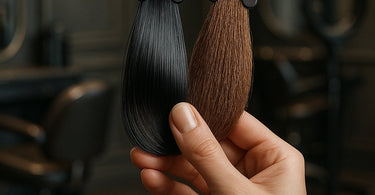
The pro’s top choice for tackling the silver strands taking over their clientele isn’t a single miracle dye—it’s a strategic game plan. Gray hair coverage is the ultimate high-stakes poker game in the salon chair. One wrong move and you’re looking at a brassy, patchy, or washed-out mess that has clients fleeing to the competition. But armed with the right formulas and techniques, you can confidently go ‘all in’ and rake in the profits and loyalty. The first step to winning is knowing your opponent: is this head of gray hair cooperative or downright resistant? The difference dictates your entire strategy, from the developer you grab to the way you apply every single section.
Let's break down the personalities of the gray hair on your client's head. Cooperative gray is typically finer, softer, and more porous. It's like the friend who's always up for anything—it welcomes color with open arms. Resistant gray, on the other hand, is the stubborn cousin. It's often coarser, has a tight cuticle layer that's harder to penetrate, and might even have a wiry, rebellious texture. This type requires a more assertive approach. Misdiagnosing which one you're dealing with is the fastest way to lose the coverage gamble.
Know Thy Enemy: The Science of Stubborn Strands
Why is some gray hair so darn difficult? It all comes down to the cuticle. As we age and pigment production slows, the hair's natural oils can diminish, causing the cuticle to become smoother and more compact. Think of it like a tightly sealed fortress. Resistant gray hair has this super-smooth, flat cuticle layer that simply doesn't want to let the color molecules in. Without a little ‘persuasion,’ the color just slides right off, resulting in weak, inconsistent coverage or rapid fading. This is why a one-size-fits-all formula is a recipe for disaster.
Formula for Success: Conquering Cooperative Gray Hair
For the more amenable silver clientele, your approach can be gentler. The goal is even, natural-looking coverage without over-processing.
Developer Strength: A gentle 10 or 20 volume developer is usually perfect. 10 volume provides deposit-only color, ideal for blending away a few silvers or refreshing existing color. 20 volume offers a bit of lift, helping to open the cuticle slightly for better penetration and coverage on those who are 50-70% gray.
The Formula Magic: Many colorists swear by adding a dash of a natural series (like N or NN) to their formula. This helps neutralize any potential warmth and creates a more opaque, natural result. For example, if your client wants a medium brown, a formula like 5N + 5G (for a hint of gold) or 5N + 5A (for an ash tone) can provide beautiful, multi-dimensional coverage that doesn't look flat or artificial. Don't forget your trusty mixing bowls for creating the perfect blend.
Pulling Out the Big Guns: Formulas for Resistant Gray Hair
This is where the real strategy begins. Stubborn gray requires a stronger offense to breach that cuticle defense.
Developer Strength: You'll often need to upgrade to a 30 volume developer. The extra lift is crucial for forcing the cuticle open enough for the color to deposit effectively. In some extreme cases of 90-100% resistant gray, a 40 volume might be considered, but this should be done with extreme caution and excellent sectioning to avoid overlap and damage.
The Power of Pre-Softening: This is a game-changing technique for resistant gray. Apply your chosen developer to the most resistant areas (usually around the temples and hairline) and let it sit for 5-10 minutes BEFORE applying your color mixture. This pre-softening step begins the lifting process on its own, weakening the cuticle's defenses so the color can march right in and claim its territory.
Formula Fortification: Dense, ash-based colors are your best friends here. Think series 1A, 2A, 3A, or neutral shades like 1N, 2N. These provide maximum coverage. Many stylists also recommend using a specialized “resistant gray” formula from professional lines, which are specifically designed with higher pigment loads. A classic powerhouse formula for dark, resistant gray is a 1:1 mix of a natural base and an ash base with 30 volume developer.
Application is Everything: Technique Trumps All
The best formula in the world can fail with sloppy application. For guaranteed coverage, start applying your color in the areas with the most resistant gray FIRST. These areas need the most processing time. Work your way through the rest of the head, applying to the mid-lengths and ends last, as they are typically more porous and process faster. Using a precise applicator brush ensures you're painting every single strand, leaving no silver behind.
Beyond Color: The Supporting Cast for Flawless Gray Coverage
Winning the gamble doesn't end when the timer goes off. The right pre-and-post-care products lock in your victory and keep the client coming back.
Pre-Color Care: A clarifying shampoo a few days before the appointment can remove product buildup that might block color absorption. Avoid heavy conditioners right before the service.
Post-Color Care: This is non-negotiable. Educate your clients on the importance of color-safe, sulfate-free shampoos and conditioners. Recommend a blue or purple shampoo to combat brassiness and keep those cool tones fresh. A good leave-in treatment can also help maintain moisture in often-drier gray hair.
The Ultimate Prize: Client Trust and Salon Revenue
Mastering gray coverage is one of the most valuable skills in your stylist toolkit. Clients with gray hair are often the most loyal once they find a stylist who can consistently deliver beautiful results. They become regulars, they refer their friends, and they are willing to pay a premium for expertise that makes them feel confident and beautiful. It transforms a potential salon headache into a massive revenue stream. So stock up on your professional color lines, perfect your formulas, and get ready to deal yourself a winning hand every single time.
