
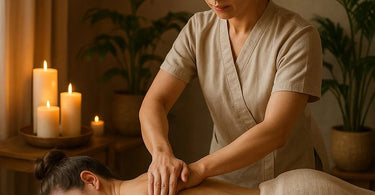
Start your journey to success today by mastering Tui Na Chinese Medical Massage, a 2,000-year-old healing art that’s like acupressure’s energetic cousin who does CrossFit. This dynamic therapy combines rhythmic compression, stretching, and joint manipulations to unblock Qi (pronounced "chee," not "kwee"—we see you, beginners) and leave clients wondering why they ever settled for basic Swedish. Perfect for spas adding specialized massage services, Tui Na delivers drama-free results for pain, stress, and that mysterious "office chair hunch."
Unlike its zen spa siblings, Tui Na practitioners work fully clothed (no awkward drape conversations!) using targeted techniques that range from "ahhh" to "DID YOU JUST FIX MY SCIATICA IN 10 MINUTES?" Below, we’ll break down the protocol like a TikTok tutorial—minus the questionable dance moves.
Pre-Session Prep: Setting the Stage for Qi Flow
1. Client Consultation: Start with a health history deep-dive. Tui Na isn’t recommended for pregnant clients, fresh injuries, or people who think "meridians" are a new streaming service. Pro tip: Keep sanitizing wipes handy for clothed sessions—fabric collects more essential oil residue than a yoga studio’s floor.
2. Environment Setup: Skip the dim lighting and whale sounds. Tui Na thrives in bright, open spaces (think: a massage table near a window). Stock up on grip-enhancing lotions—this isn’t a glide-fest.
The 6 Core Tui Na Techniques (and How to Nail Them)
1. Yi Zhi Chan (One-Finger Meditation): Press your thumb along meridians like you’re typing a VERY important text. Use for headaches or clients who overshare about their ex.
2. Gun Fa (Rolling): Channel your inner baker kneading dough—but on shoulders. The back-and-forth motion boosts circulation better than a triple espresso.
3. Cuo Fa (Rubbing): Rapid palm friction that generates heat faster than a gossip session. Ideal for stiff lower backs.
4. Nie Fa (Pinching): Gently lift and squeeze muscles along the spine. Clients will either love you or plot revenge—no in-between.
5. Dou Fa (Shaking): Hold a limb and vibrate it like a phone on silent mode. Surprisingly effective for joint stiffness.
6. Ba Shen (Stretching): Assisted yoga meets chiropractic adjustment. Audible pops are common; screaming is optional.
Step-by-Step Full-Body Protocol
Back & Shoulders (15 min): Start with Gun Fa on trapezius muscles, then Yi Zhi Chan down the bladder meridian. Finish with Cuo Fa to melt tension.
Arms & Hands (7 min): Use Nie Fa between metacarpals—clients who type 90 WPM will weep with gratitude.
Legs & Feet (10 min): Apply Dou Fa to ankles before Ba Shen stretches. Bonus: Cracked plantar fascia sounds oddly satisfying.
Finale: End with scalp Yi Zhi Chan (imagine petting a very tense cat) and a serene essential oil recommendation.
Pro Toolkit Must-Haves
- Ergonomic bolsters for joint work
- Herbal heat packs to enhance meridian opening
- Disposable face cradle covers (because nobody wants last client’s Qi)
Why Clients Will Book Again
Tui Na offers instant gratification—relief in real-time, not after 12 sessions of vague promises. Market it as "Physical therapy’s feisty ancestor" or "The massage that actually fixes your tech neck." Pair with custom essential oil blends for upselling magic.
Final thought: If your clients leave walking straighter than a royal guard and texting their friends about you, you’ve nailed it. Now go unblock some Qi!
