
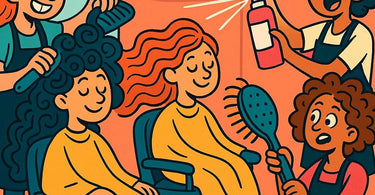
Let quality drive your results... especially when it comes to the magical, mysterious, and sometimes maddening world of textured hair. If you've ever watched a client's face fall when their "beach waves" look more like a bird's nest, or their "defined coils" have decided to frizz out in protest, you know the "Texture Talk" isn't just important—it's essential for salon survival. Managing expectations for curls, waves, and coils is less about magic and more about a clear, honest, and often hilarious conversation that sets the stage for success. It's the difference between a client who leaves feeling like a goddess and one who texts you a crying selfie from their car.
Think of yourself as a texture translator. You're bridging the gap between what clients see on Pinterest and what their hair is genetically programmed to do. This isn't about lowering expectations; it's about aligning them with reality, then using your professional prowess to make that reality absolutely stunning. So, grab your favorite styling brush, a healthy dose of humor, and let's decode the curl conversation together.
Step 1: The Pre-Service Confessional (No, You Don't Need a Priest)
Before a single drop of water hits their hair, you need to have "The Talk." This consultation is your first and best defense against disappointment. Start by asking the right questions: What is their current routine? How often do they wash? What products are they using? (Spoiler alert: it's probably a 3-in-1 shampoo/conditioner/body wash they stole from their partner).
Then, get visual. Ask them to show you pictures of their hair goals. This is where the fun begins. Gently guide them by saying, "I love this inspiration! Her hair looks like a type 3B. Let's see how we can adapt these styles to work with your beautiful 2C/3A texture." This immediately frames their unique hair as an asset, not a limitation. Use this time to explain how factors like humidity, hair density, and porosity will influence the final look. A great tool to have on hand is a magnifying light to really show them their hair's structure up close.
Step 2: Demystifying the "Wash Day" Experience
Clients with textured hair often have a love-hate relationship with wash day. They either overwash, stripping their hair of natural oils, or they underwash, leading to buildup. Explain the "why" behind your process. Are you using a clarifying shampoo to reset their scalp? A deep conditioning treatment to add moisture? Tell them!
"Okay, Sarah, I'm applying this protein treatment because I see some breakage here, which means your hair is hungry for strength. We're going to let it marinate under the facial steamer for 15 minutes to really open up the cuticle and let the goodness in." This turns a passive experience into an educational one. They feel involved and understand that every step has a purpose. For an extra-luxurious touch, consider using a towel steamer for their post-wash wrap—it's a small detail that screams premium service.
Step 3: The Styling Intervention - Tools & Techniques
This is where the rubber meets the road. As you style, narrate your process. Explain why you're using a diffuser on a low heat setting instead of blasting it with a high-powered dryer. Show them how you're "scrunching the crunch" out of their gel cast to reveal soft, defined waves.
Demonstrate different techniques. "If you want more volume at the root, try flipping your head over and diffusing this way. If you want more definition, let's try the 'rake and shake' method with this boar bristle brush." Let them feel the difference in your tools—the tension of a good sectioning clip, the gentle grip of a microfiber towel. This hands-on education is priceless and builds immense trust.
Step 4: The Product Pep Talk & Retail Therapy
You've created a masterpiece. Now, the client's biggest fear is recreating it at home. This is your chance to become their product guru. Don't just list products; explain their function in a way that sticks.
"Think of your leave-in conditioner as your hair's daily glass of water. This curl cream is like its favorite cozy sweater—it defines and adds warmth. And this gel? This is the bouncy castle that holds the whole party together without making it stiff." Use analogies that resonate. Create a simple "recipe" for them to follow: a dime-sized amount of this, a quarter-sized amount of that. Stock your shelves with trusted brands like Wella and Rusk so they can take the magic home.
Step 5: The Reality Check & Maintenance Plan
This is the most crucial part of the Texture Talk. Be brutally honest about longevity. "Jessica, this style will likely last you 3-4 days. On day 5, don't fight the frizz—embrace it as a beautiful, pineapple-shaped updo! Here's how to refresh..."
Teach them the "pineapple" technique for sleeping, how to use a steam from their shower or a continuous spray bottle to reactivate product, and when it's time to come back for a trim or treatment. Setting these clear, manageable maintenance steps prevents them from getting frustrated and blaming you or your work. Recommend follow-up services like a hydrodermabrasion facial to keep their scalp healthy, because great hair starts from the skin up.
Building a Texture-Friendly Salon Empire
Managing expectations isn't just a one-on-one conversation; it's about building a salon culture that celebrates all textures. Ensure your team is educated on curl patterns and cutting techniques. Invest in the right equipment and furniture, like chairs that allow for easy movement during curly cuts.
Display imagery in your salon that showcases a diverse range of beautiful textures. When clients see themselves represented, they walk in with more confidence and trust. Use social media to show the *process*—the transformation from wash to style, the honest conversations. This transparency builds a loyal community around your brand.
Ultimately, the "Texture Talk" is your superpower. It transforms a simple haircut or style into a transformative experience built on education, trust, and a shared sense of humor about the wild, wonderful world of wavy, curly, and coily hair. When you master this conversation, you don't just create happy clients; you create devoted fans who will follow you and your professional shears anywhere.
)