
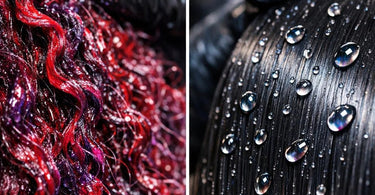
Success starts with this one deceptively simple concept that explains nearly every hair coloring mystery in your salon. You've seen it before: you mix the perfect ash blonde, apply it with your usual precision, and one section turns a gorgeous platinum while another barely takes on a hint of gold. Or, a client returns in two weeks, heartbroken because her vibrant red has already faded to a dull copper. The culprit isn't your skill or the quality of your Professional Hair Color—it's the secret life of the hair cuticle. Welcome to the world of hair porosity, the invisible game-changer that dictates whether hair acts like a thirsty sponge or a waterproof seal. Mastering this is what separates a good color service from a truly foolproof, lasting, and stunning one.
Think of hair porosity as your client's hair's "sponge factor." It describes the hair's ability to absorb and retain moisture and, by extension, color molecules. This all boils down to the condition of the cuticle, the outer layer of the hair shaft made of overlapping scales, like shingles on a roof. How open, closed, or damaged these "shingles" are determines everything—from how hair feels to the touch to how it interacts with your carefully formulated color.
The Porosity Spectrum: From Tightly Locked to Wide Open
Hair porosity typically falls into three main categories, and a client can have different levels on different parts of their head (a common headache for stylists!). Understanding these types is your first step to predictability.
Low Porosity Hair: The Bouncer. This hair has cuticles that are tightly packed and lay very flat. It's like a nightclub with a strict door policy—moisture and color have a hard time getting in. You'll recognize it because water beads up on the surface during a shampoo, it takes forever to dry, and products tend to sit on the hair rather than absorb. The upside? Once you do get color in, it's locked in tight. The challenge is getting it there without over-processing in an attempt to force the cuticle open.
Normal/Medium Porosity Hair: The Goldilocks Zone. This is the dream hair to work with. The cuticles are slightly lifted but still intact, creating a perfect balance. Moisture and color absorb evenly and predictably, and the hair retains them well. It takes color true to tone, holds styles beautifully, and generally looks healthy and shiny. Your goal with these clients is to maintain this perfect balance by recommending the right Premium Hair Care Products to prevent future damage.
High Porosity Hair: The Leaky Bucket. This hair has cuticles that are lifted, gapped, or damaged. Think of a sponge full of holes. It "drinks up" color and moisture instantly because there's no barrier. The terrible catch? It can't hold onto anything. Color fades rapidly, hair feels perpetually dry and frizzy, and it can be prone to breakage. This is often caused by chemical processing (bleach is a major culprit), excessive heat styling, or environmental damage. A great preparatory product, much like the Pre & Post-Waxing Products that prepare the skin, can be essential here.
The Porosity-Color Connection: Why Predictability Vanishes
Now, let's get into the nitty-gritty of why porosity makes or breaks your color service. It's all about absorption and retention.
On High Porosity Hair, the raised cuticles allow too many color molecules to rush into the cortex quickly. This often results in color that grabs too dark, too cool, or too ashy because the hair is over-absorbing pigment. Then, because the cuticle can't close properly to seal them in, those molecules wash out just as fast, leading to rapid, uneven fading and that dreaded "brassy" return as the underlying warm pigments are exposed. It's a frustrating cycle that requires a different strategy, much like choosing the right ItalWax - Wax for a specific hair type and body area.
Conversely, Low Porosity Hair resists the initial penetration. The color developer has to work harder to lift the cuticle, which can lead to uneven processing if not managed. You might see patchiness, areas that don't take color at all, or a result that's lighter and less vibrant than expected because the formula couldn't fully saturate the strand. The fix often involves gentle techniques to coax the cuticle open, similar to how a Facial Steamer prepares the skin for better product penetration.
Your Detective Kit: How to Test for Porosity in the Salon
You don't need a lab coat to diagnose porosity; a keen eye and a few simple tests during the consultation will tell you everything. This step is as crucial as evaluating the skin before a Microdermabrasion treatment.
The Spray Test: Spritz a small, product-free section of dry hair with water. If the water sits on top in beads, you've got low porosity. If it's absorbed almost instantly, it's high porosity. A happy medium absorption indicates normal porosity.
The Feel Test: Take a single strand and slide your fingers up it from tip to root (rubbing downward flattens the cuticle and gives a false smooth feel). Low porosity hair will feel very smooth, like silk. High porosity hair will feel rough, bumpy, or grabby because the lifted cuticles catch on your fingers.
The Float Test (Classic but Instructive): Drop a clean strand into a glass of room-temperature water. If it floats for several minutes, it's low porosity. If it sinks slowly, it's medium. If it plummets to the bottom like a stone, its high porosity hair is sucking in water.
Always assess multiple areas—especially previously colored ends versus virgin roots. This sectional diagnosis is key to formulating correctly.
Pro Strategies: Tailoring Your Technique to the Porosity
Once you know what you're dealing with, you can adapt. This is where you turn frustration into flawless results.
Conquering High Porosity Hair:Your mission is to fill gaps and seal the cuticle. Before color, use a protein-based pre-treatment or bond builder (like those from brands such as Wella) to temporarily fortify the hair shaft. Consider using a "porosity equalizer" or filler on the most damaged sections to ensure even color uptake. During color, you may need to slightly reduce the developer strength or processing time to prevent over-absorption and a darker result. After color, this is non-negotiable: use a acidic, pH-balancing post-color treatment or gloss to help smooth and close the cuticle, locking in color and shine. Recommend take-home products that are rich in moisturizing butters and sealing oils, and always stress the importance of a heat protectant.
Winning Over Low Porosity Hair:Your goal is to gently encourage the cuticle to open. Before color, a thorough clarifying shampoo (found in our Salon & Barber Supplies) can remove any silicone or product buildup that might block color. Applying a warm towel or using a gentle heat cap during the conditioning step of the service can help. During color, a bit more heat or a slightly longer processing time (with careful monitoring!) might be needed. Ensure the hair is fully saturated with the formula. After color, a cool water rinse can help close the cuticle and seal the success.
The Bigger Picture: Porosity Affects Everything
Understanding porosity doesn't just fix color woes; it elevates your entire service and retail game. It explains why a client's curls won't hold (high porosity loses moisture fast) or why their hair looks greasy by day two (heavy products sitting on low porosity hair). By diagnosing and educating your client, you become a trusted expert. You can confidently recommend the perfect leave-in conditioner or treatment mask, knowing it will work with their hair's biology, not against it.
It's the same professional logic behind choosing the right Professional Wax Warmers for efficiency or the perfect Manicure Station for ergonomics. The right tool and technique for the specific job guarantee a better outcome and a happier client. Hair porosity is that essential piece of diagnostic information. So next time a color result has you scratching your head, don't just blame the formula. Put on your detective hat, test for porosity, and unlock the real reason behind the behavior. Your color consistency, your client's satisfaction, and your reputation for flawless work will thank you for it.
